
OBITUARY
Josephine H. Schulte
May 9, 1929 – September 26, 2026
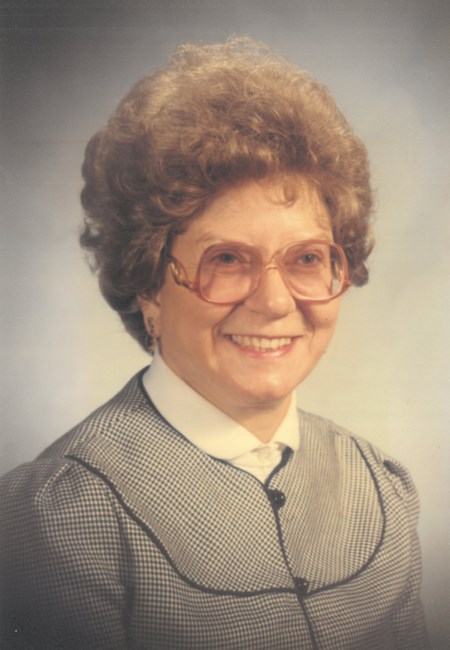
Josephine Helen Schulte, age 97, was born May 19, 1929, in Foley, Alabama to Mathias and Theresia Schulte (nee Honner). Both of her parents were widowed when they married. Mathias Schulte had 13 children from his first marriage and Theresia had six. Two children were born from their union and the eldest, Grace, died in infancy. Josephine was the youngest of all the children and the last survivor of this family.
She graduated from Bishop Toolen High School in Mobile, Alabama; Sacred Heart Jr. College in Cullman, Alabama; and Spring Hill College in Mobile, Alabama. She earned an M.A. in History from the University of Mississippi; a Ph.D. in History from Loyola University in Chicago, Illinois; and a second Masters in German from Trinity University in San Antonio, Texas. She worked for many years in the shipping business in Mobile and was later a research associate and assistant to the Vice President of the Southern Institute of Management which did an audit of Mobile for 1959 and 1960. She taught German in the evening at Brookley Field Air Force Base from 1961 to 1962 and history in the evening at Spring Hill College. She was a teaching fellow at Loyola University in Chicago from 1962 to 1966, and taught History at the University of the Americas in Mexico City from 1967 to 1970. She went on to teach History at St. Mary’s University in 1970 and retired from there in 1996.
In addition to her time spent educating numerous students, Josephine enjoyed travelling the world. She has been to 6 of 7 continents and over 120 countries. Because she was born into such a large, blended family at a time when blended families were not as commonplace, she had an intrinsic interest in genealogy and was known to type biographical information (such as much of the content for this obituary) and connect that information to photographs of individuals. As an historian, she appreciated the importance of knowing who was who, what happened, and how events of a particular moment fit together.
Few people can say that they vacationed to a war zone, but Josephine happened to take a trip to El Salvador during the 1969 “Soccer War” between El Salvador and Honduras. She was visiting a friend, whose husband was a Salvadorian military officer, and spent time in close proximity to troops during a ceasefire in the four-day conflict. Josephine spent much of her life studying the past, preserving its stories, and helping others understand the forces that shaped it. She left behind a history of her own which was marked by an astonishing capacity for living. Her life was long, and maybe more importantly, it was full.
Show your support
Send Flowers
Add a Memory
Share Obituary
Get Reminders
Services
- SEND FLOWERSSEND
FLOWERS SHARE OBITUARYSHARE
- GET REMINDERS
v.1.18.0