OBITUARY
Richard E.W. Dick Dr. Adams
July 17, 1931 – June 2, 2015
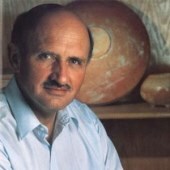
Dr. Richard E. W. Adams, or "Dick" as he was known to friends and colleagues, spent much of his career as a Mesoamerican archaeologist in Central America. He was fluent in Spanish, less so in German, and his use of French would sometimes result in unintended comedy. His professional career spanned the evolution of modern field archaeology from its rough beginnings to the somewhat more sophisticated present. When he began his life's work as an archaeologist, travel to remote ruins was often on foot with the mule-train, or via dugout canoes. This later evolved into the use of trucks and jeeps, and later still to the use of planes and helicopters. He was a passionate advocate throughout his career against the looting of archeological sites worldwide. One of his favorite quotes – originally from a preeminent British archeologist– was that "archaeology is not a science, but a vendetta." In spite of that sentiment, he enjoyed warm relationships with many of his colleagues and peers and he was especially proud of the accomplishments of his students, too numerous to list with specificity here, many of whom have gone on to make formidable professional reputations of their own.
Dr. Adams was a descendant of a New York family that had settled in the Missouri River Valley prior to the Civil War, in an area that later became Kansas City. When not otherwise peaceably occupied as farmers, businessmen, and lawyers, members of his direct line served honorably in the New York militia during the War of 1812, in the Grand Army of the Republic during the Civil War, as well as in the American Expeditionary Forces during the Spanish American War and World War I. Dr. Adams was born in Kansas City, Missouri on July 17, 1931. His father, Luther Wood, died the year that he was born. Five years later, his widowed mother, Hallie Reece Wood, married Caleb Adams who subsequently adopted Richard and officially changed his surname from Wood to Adams. The family moved to San Antonio where Dr. Adams attended Cambridge Elementary School in Alamo Heights. His heritage includes membership in the Osage tribe/nation (B.I.A.).
Upon graduating from Shawnee High School in Kansas City, Kansas, and the University of New Mexico with a bachelor's degree, Dr. Adams enlisted as a private in the United States Marine Corps in 1951. He was a "Mustang", becoming an officer and was honorably discharged as a Captain in 1967. He attained his Master and Doctoral degrees in Anthropology at Harvard University, Cambridge, Massachusetts. His first post as a professor was at the University of Minnesota but after nine years of living in sub-zero temperatures for too many months, he moved the family back to San Antonio, Texas. He was at UTSA at its inception in 1972, serving as its first Dean of Social and Behavioral Sciences before there were any students, professors, campus or buildings. He pursued a career in Academics as a professor, a University administrator, and as a field archaeologist until his retirement from the University of Texas at San Antonio in 2007. Dr. Adams was recognized internationally as an expert in Mesoamerican civilizations and as a specialist in the Mayan civilization.
He married his one true love and helpmate, Jane Haven Jackson, in 1955 in Lubbock, Texas, to whom he proposed to within a week of meeting her. Jane was an active participant in Richard's professional life, working also as a field archaeologist and supervising the field laboratory. Throughout their years of marriage, they lived through numerous earthquakes, revolutions, volcanic eruptions and the birth of their four children, Richard, Katherine, Joseph (deceased in 1975), and Samuel. No small amount of their married life was spent living in thatch huts and tents in the jungle including the adoption of an ocelot, named Osar, who turned out to be a jaguar.
During his professional career, he published over 100 scholarly articles and books in publications including the cover story for the National Geographic Magazine (April 1986), the Cambridge University Press, Science Magazine, the Oklahoma University Press and many others. He worked at and directed numerous archaeological field operations and made scientific discoveries throughout Central America, primarily in Guatemala, including the ancient city of Tikal at the beginning of his career and latterly the excavations of the ruined cities of Rio Azul and Kinal. His professional associations were many and varied and included work with the Fullbright Foundation, the National Geographic Society, the Rockefeller Foundation , the Ford Foundation, the MacArthur Foundation, the National Science Foundation, the National Endowment for the Humanities, the Archaeological Commissioner's Office of Belize, the Wenner-Gren Foundation for Anthropological Research, etc. He was also honored with Fellowships and Associations with the American Anthropological Association, the Society of Antiquaries of London, Insituto de Geografia e Historia de Guatemala, Churchill College at Cambridge University in England, the Centro Studi Ricerche Ligabue, in Venice, Italy, and so forth. Among his prestigious awards is the Ashbell Smith Professor conferred by the University of Texas. He was invited to the Palace in Guatemala for recognition of his work in developing Guatemala Month in San Antonio (October 1989). He was a member of the Cosmos Club in Washington, D.C. as well as the Torch Club of San Antonio.
Richard loved listening to classical music and shared that love with his family, playing his favorite pieces by Mozart and Scarlatti throughout the house. He took lessons in classical guitar, mastering the opening chords of a piece by Bach, and every now and then, the family would be treated to strains of a piano rendition of " Tea for Two" coming from the music room (the only song he claimed to remember from his childhood lessons on that instrument). He was an avid reader, especially enjoying British murder mysteries, PG Wodehouse, and World War II histories and could often be found in the library, a book in hand, listening to a piece of Handel while eating his Fritos.
He was an Assistant Scout Master with Boy Scout Troop 346 in San Antonio, seeing his two sons Richard and Sam achieve rank of Eagle Scout. Many a weekend was spent on campouts with the troop, and one memorable summer was spent trekking in the mountains of New Mexico at the Boy Scout Camp of Philmont.
Richard enjoyed frequent trips to Europe with his family in tow, and many happy months were spent with the family visiting historic cities, castles, museums and other miscellany. The family thrilled to witness the many epic battles of Richard versus the steering and transmissions in the rented cars and vans; and many of those struggles of man versus machine became part of family lore. Later in life Richard and Jane enjoyed taking cruises throughout Europe, across the Atlantic, Alaska, as well as down to Mexico.
Possessing a wicked sense of humor and a razor sharp wit, Richard was a man of honor and integrity who loved God and his country fiercely. He was very proud of his wife, children and grandchildren as well as his students. He was a born teacher who loved to instill knowledge as well as a fearless scientist who would research meticulously and then produce bold hypotheses.
He leaves behind his devoted wife, Jane, after fifty-nine years of marriage; his surviving children, Richard Edward Wood; Katherine Gicante and husband, John Biagio Gicante, III; and Samuel Adams; and two much loved grandchildren, Audrey Jane Gicante and Joe Jackson Gicante.
The family would like to extend a special and heart-felt thanks to the Georgescu family for their love and professional care during Richard's last months. In lieu of flowers, the family asks donations be made to the Dr. Richard E.W. Adams Endowed Scholarship at UTSA, in care of College of Liberal and Fine Arts Dean's Office, One UTSA Circle, San Antonio, Texas 78249.
Memorial service will be private.
Show your support
Add a Memory
Share Obituary
Get Reminders
Services
SHARE OBITUARYSHARE
- GET REMINDERS
v.1.18.0