
OBITUARY
John Richard Graysmark
March 26, 1935 – October 10, 2010
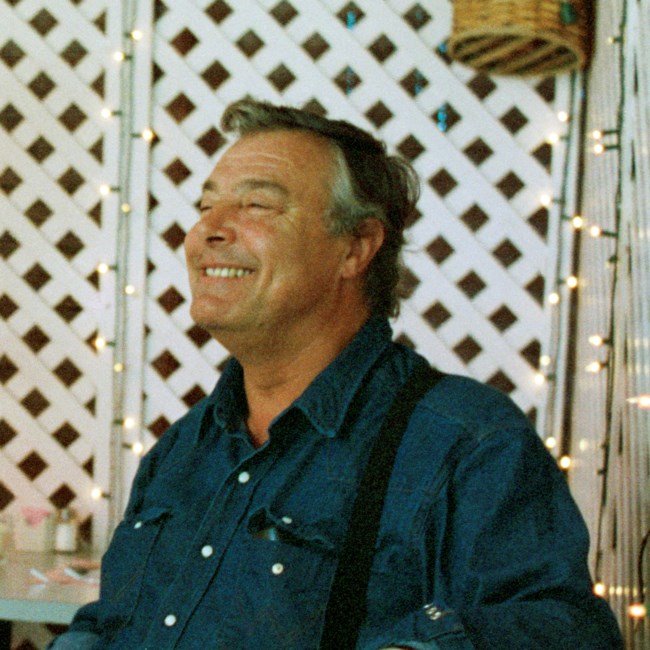
Professional Obituary There never was a more “natural”, “inspired” and “inspiring leader” than John Graysmark. While not as well known to his American peers, his British colleagues and international film crews around the world describe John Graysmark as a “pillar” of the Art Department and a veritable “ball of fire”. His commanding presence, indisputable talent, creativity and craftsmanship were coupled with a strong and serious work ethic honed over 47 years in the filmmaking business around the world.
John started his career in the Art Department on feature films from the “bottom up” as a trained draughtsman, starting out at MGM Borehamwood (aka MGM/UK) in 1956. His drawings were known to have a lot of “hand”, being loose and artsy, but he was also capable of producing drawings requiring complex geometry and exactitude (such as those he produced for 2001 A SPACE ODYSSEY on which he was a draughtsman for nearly two years).
As a young art director and draughtsman, he had the fortune of working with some of the industry’s most auspicious Production Designers/Art Directors, including John Box, John DeCuir, Don Ashton, Elliott Scott, Anthony (Tony) Masters, Geoffrey Drake, Ken Adam and Carmen Dillon. He esteemed John Box, working with him on seven feature films, including LAWRENCE OF ARABIA and INN OF THE SIXTH HAPPINESS. He was an ardent admirer of John DeCuir, whom he worked with on ISLAND IN THE SUN early in his career, extolling DeCuir’s large, full color sketches, exceptional versatility and prolific body of work. He revered the manifest talents of Carmen Dillon, one of the industry’s first female production designers.
As a production designer himself, he was decisive, fair minded, generous and hardworking. He could make a spontaneous and well-reasoned decision quickly, and stick to it without any dithering, ever. Easy going and quick witted, with an infectious sense of humor, he was tremendous fun to work with, sharing many amusing anecdotes from his vast store of experience. While instructive and eager to share his wealth of experience and knowledge of the craft, he was always willing to be taught himself. If you played fair with him, did your best work, tried hard and were committed to the task at hand, without a lot of self-aggrandizing, you were given his utmost respect and kindness. He never expected more of you than he expected of himself. He was a true team player, always giving credit where it was due and sharing the accolades for all that his team had accomplished. Generous to a fault, his crew would have to turn down his daily inclinations to buy their lunch where they would be privy to fabulous war stories from the movie making trenches.
John was a sunny and optimistic Everyman, passionate and without pretension or affectation, a true egalitarian but always the natural leader. As the leader, he was magnanimous with his team members and resolutely protective and courageous in their defense. Many colleagues witnessed John go to bat on behalf of one of his coworkers, taking tremendous personal risk upon himself in their defense, if he believed they were being wronged. Unable to tolerate pretension of any kind, he would willingly debunk all forms of it in his typical direct, honest and outspoken way. Family and colleagues alike remark: “He did not suffer fools gladly”. This unreserved truthfulness appeared heroic to those less willing to compromise their positions; they admired him as a valiant captain who was determined to shield his team against the inequities so prevalent in the industry and looked forward to working with him again and again. While “not frightened to tell
the Big Boys”, said David Tringham, who worked as First Assistant Director alongside John, “he was no ego-tripper”.
Anthony Pratt, Production Designer, remembers: “…(John’s) love of above all, painting and drawing and his boundless admiration for people who practiced these arts…His reverence also for people who possessed great technical ability, whether they be draughtsman or craftsmen. He revered practical skill above all…His loyalty, kindness and generosity to his Art Dept. crew…His wonderfully funny debunking of ‘sacred cows’ whether they be actors, producers, directors or politicians, whatever. Many an icon came crashing down to the dust. John’s rich use of language and ironic invective would have you in tears of laughter. He debunked any kind of pomposity or pretension…John had a large and brave attitude to life and was a huge presence both literally and metaphorically. He had a ‘largesse’ about everything in life, including set design…lunches for his Art Dept, generally with wine, and a huge enjoyment and zest for life and people. He would always be outspoken to the ‘powers that be’ and fiercely protective of his Art Dept, and became a legendary figure who was admired and liked throughout the industry.”
Terence Marsh, Production Designer, reminisced: “John and I started our careers in the 1950’s, he at MGM Studios at Elstree, and I at Pinewood. During our early years, we only met on occasions such as union meetings, where the permanent staffs of the various Studio Art Departments had the chance to mingle. John was never shy in expressing his views on the various matters that came up for discussion. His contributions were generally controversial and usually resulted in heated and contentious arguments among the members. This would delight John, who sat back with a wide grin, rubbing his hands with glee…”
Alan Tomkins, Supervising Art Director,notes: “(John) was large in his generosity to friends and family, and to young, emerging talent, and large in his own talent. That being the case, he never suffered fools easily, they could be directors or producers. John would put his views over, and all the time I knew him, his view always turned out to be right.”
Stuart Craig, Production Designer, observes “apart from all the fun and talk of great art and bad producers, I remember, and share particularly, the profound respect he had for the skills of our movie industry craftsmen-they are constantly undervalued and overlooked but they always had John’s fervent appreciation and support.”
If perceived injustice or inanity caused John to lose his temper, it would dissipate just as quickly as it arose, and it was not in his nature to sulk or stew. He could put it all behind him and instantly change his mood, generally with his characteristic whistle. He called it “getting on with it”, an ability which was truly inspiring to friends and colleagues as John was always able to look to the future, and not get mired in the past. Ever the optimist, he would rather spend his time looking forward, conceiving new possibilities and sweeping visions with his ever-fertile imagination and inquisitiveness.
Born on March 26, 1935, in London, England, John was the eldest of five children born to Cyril Richard Graysmark and Grace Marion Gurney Graysmark. At that time, his father was a supervising carpenter at Metro-Goldwyn-Mayer, Borehamwood (MGM/UK), the local studio near the family home.
Beginning in 1939, with the commencement of WWII, Cyril was absent from family life for six years having joined the army to defend Great Britain. John was just five years old when the Battle of Britain commenced, the sustained aerial bombardment of Great
Britain by the Nazi German Air Force. Within a few months, The Blitz began, the non-stop German bombing of many English towns and cities, including London for 76 consecutive nights, destroying over a million homes in London alone, and killing and injuring tens of thousands civilians. John remembered that at four or five years old, he was told that he was now “the man about the house” and “in charge” of his mother and baby sister by his departing father. He could recall the wailing of the air raid sirens and the terror of the nightly bombings of London, with nearby houses being blown up. He remembered how bonding that terror could be; how any single mother would become the mother of all when the air raid signal sounded, gathering up any children playing nearby into her home until the “all clear” signal sounded. In daytime, he and his sister Jill played among the bombsites, collecting bits of shrapnel as souvenirs, and collecting old lemonade bottles for which they could get a penny refund at the local shop, much as depicted in the film Hope and Glory. During bombardments, they would take cover in air raid shelters, where they would play chess and read to pass the time.
One day, during a German strafing of their primary school, he and his classmates were hiding in the schoolyard bomb shelter and John exited before the “all clear” signal sounded. The low-flying German aircraft circled back around and continued strafing as John ran for home. He was hit by flying shrapnel in the face, on his right eyelid, forehead and chin. He remembered being soundly slapped by his mother, for having run out of the shelter prematurely, when she saw his bleeding face. His damaged right eyelid was sewn shut, for lack of available surgeons during the war, and John wore a black eye patch during that time. In early days, his classmates thought him a hero with his eye patch; later, he was teased. After a year, surgery was performed that would allow his eyelid to close at night but only partially open during the day; it was either that or have the eye permanently open or closed. This characteristic drooping right eyelid became a defining facial feature and remained that way for the rest of his life.
When the Germans resumed the daily bombing of London and Southeast England in 1944, with the new V-1 (flying “Buzz Bomb”), John, his mother and siblings were evacuated to Wales, but only briefly. John’s mother was not happy with the appropriation of the family rations by her hosts. John’s sister recalls her mother saying she’d “rather face Hitler than live with the Welsh”, so they returned to their home in London and put up with the German missile attacks. John never forgot the sound of those buzz bombs as they descended nearby.
Upon his return from service, Cyril became the Chief Construction Manager for MGM- Borehamwood, responsible for all film sets built, often as many as five productions simultaneously. He regularly made trips to MGM-Culver City, to report directly to Louis B. Mayer. One quiet Sunday, he took John and his sister to the studio to see the film sets onstage. John was entranced and later recalled taking in the “Magic of it all”: the palpable creativity, particularly in the carpentry shop, the smell of newly milled wood and paint, the whole world that had been created on those stages. His father also took his son to the huge prop houses, filled with period furniture, scenic pieces and the costume stores. John knew he wanted to be a part of it, and his father, recognizing his son’s inherent drawing ability, directed him to take the exam for Willesden Technical College, which he passed, entering his architectural course of study at the age of 13. Willesden Technical College specialized in technical drawing, construction, engineering,
automotive and allied subjects, all of which provided John with a solid foundation in building.
Upon completion of his architectural course, his father insisted that he take up an apprenticeship in painting and decorating as a reliable fallback position to offset the unpredictability of a career in films. In Great Britain after WWII, it was typical for parents to urge their sons to “get a trade” saying: “with a trade behind you, you are never without work or a bob or two in your pocket”. This set of skills typically required a five-year apprenticeship, done at night school, usually three nights a week. John lived at home with his parents, working during the day for architectural firms in London, while attending night school and fulfilling his apprenticeship with John Keeble. It was a serious technical course, including a solid grounding in pigments and chemistry, at the end of which came a City and Guilds final examination.
After eight years of training and working, John was finally offered an opportunity to work on a film through his father, with the recommendation that his son be fired instantly if he didn’t measure up. His father gave John two pieces of professional advice: “never be late”, and “if you make a mistake, admit it right away”. His father told him that people always want to blame someone else if a mistake is made, and no one will know what to make of someone who takes responsibility. Following his father’s advice, John was often known to accept responsibility for other people’s mistakes, just to keep the process rolling; it invariably stopped the finger-pointing.
John’s first film job, as a draughtsman, was on Ingrid Bergman’s “comeback vehicle”: ANASTASIA, directed by Anatole Litvac. His first employers were Andrej Andrejew and Bill Andrews. Over the next four years, he had the good fortune of working with some of the best in the industry, including John DeCuir- ISLAND IN THE SUN; Don Ashton- INDISCREET; Anthony (Tony) Masters and John Blezard-THE FOUR JUST MEN; Ken Adam-WEB OF EVIDENCE, GIDEON OF SCOTLAND YARD; Carmen Dillon-MAKE MINE MINK; Elliott Scott-LUCKY JIM; Duncan Sutherland-THE BANDIT OF ZHOBE; and John Box-OUR MAN IN HAVANA; HIGH FLIGHT; TANK FORCE; HOW TO MURDER A RICH UNCLE; and INN OF THE SIXTH HAPPINESS. He later confided that he considered INN OF THE SIXTH HAPPINESS one his favorite projects and that he remained stunned that John Box could have entrusted such a young man-John being only 23 at the time-to oversee the building of an entire Chinese village at a location in North Wales. The complete set of drawings were done by John and his colleague, Reg Bream.
As described by Production Designer Anthony (Tony) Pratt: “Reg Bream was Great Britain’s ‘draughting genius’”, and Tony Rimmington, retired Mechanical and Engineering Draughtsman, agrees: “ Reg was a byword over here in the business (being) one of the two top draughtsman in the game, plus being…an Artist”. John’s father had advised John to aspire to be like Reg, who was known as one of the best draughtsman in the business and who’s drawings were “extraordinary” by all accounts. Reg became John’s inspiration, mentor, colleague and best friend. Over decades together, they traveled the world and muscled through drawing after drawing, often seven days a week for months on end. John recalled once feeling “quite tired”, asking Reg what day of the week it was, and wondering how long they had been “at it” without a day off. Reg looked at the calendar and answered “nine months!”
The sixties were an even busier decade for John, including plenty of work abroad, sometimes in primitive locations, both draughting and assisting. He collaborated with: Richard Macdonald-THE CONCRETE JUNGLE; Geoffrey Drake-THE GUNS OF NAVARONE, LORD JIM; Roger K. Furse-THE ROMAN SPRING OF MRS. STONE;
Elliott Scott-GORGO, THE 4 HORSEMEN OF THE APOCALYPSE, LISA, NINE HOURS TO RAMA, THE YELLOW ROLLS ROYCE (with Vincent Korda); Wilfred Shingleton-I COULD GO ON SINGING; Tom Morahan-SATAN NEVER SLEEPS;
John Box- LAWRENCE OF ARABIA, TWO WAY STRETCH; John Blezard-THE LIQUIDATOR; Timothy O’Brien-NIGHT MUST FALL; Syd Cain-SUMMER HOLIDAY, CALL ME BWANA; Ted Haworth-HALF A SIXPENCE; and Anthony (Tony) Masters-2001 A SPACE ODYSSEY, THE MOONSPINNERS; THE CRACKSMAN, FERRY CROSS THE MERSEY, THE HEROES OF TELEMARK, THE ADVENTURERS, and LIFE IS A CIRCUS.
John also emulated the stylish Don Ashton, Production Designer of, among many others, BRIDGE ON THE RIVER KWAI, collaborating assiduously with Don, while Ashton transitioned from feature film production designer to international hotel designer. Originally working as draughtsman on INDISCREET, John subsequently worked for Ashton as Art Director on THE DEVIL’S WIDOW (aka TAM LIN), as well as YOUNG WINSTON, for which they received an Academy Award nomination. While in Hong Kong, designing THE COUNTESS OF HONG KONG, Ashton was offered the design of the Mandarin Oriental Hotel in Hong Kong, (which later won many design awards and is still regarded as one of the most elegant hotels in the world.) Subsequently, he designed additional Mandarin and Sheraton hotels around the world. In the drawing office behind Ashton’s home, Apsley House, in Old Amersham, John and his team of feature film draughtsmen drew up the designs for the hotel interiors as well as the preliminary designs for YOUNG WINSTON and OH WHAT A LOVELY WAR! Alan Roderick Jones, Production Designer, recalls:“I first met (John Graysmark on) HALF A SIXPENCE with Ted Haworth as the Production Designer. Our paths would often cross whilst at Shepperton and Pinewood Studios. He was at Shepperton for a while when I worked on LORD JIM. Then again we were together on YOUNG WINSTON with Don Ashton…It was Don who then began to design the interiors for the Sheraton in Bangkok, Cairo and London (as well as) the Mandarin in Hong Kong. We would work in Don’s converted Garage attic in his beautiful Georgian home in Amersham, draughting the furniture, nightclubs, bars, entrance halls, bedrooms and hallways. John, Norman Reynolds, Les (and Alan) Tomkins, (Anthony Pratt), Peter Childs and myself…did (this) when we were not hired for a feature…”,“John was one of the best draughtsman in the industry”, a “big inspiration”.
George Foreman, International Hotel Interior Designer, remembers: “We first met (John Graysmark) working for Don Ashton-probably on the set of Young Winston or maybe in the studio at Apsley House, Amersham ...First impression was of a cheeky rascal, chattering and joking his way through the day, but, by the end of the day, he was the one with the most, and far and away the best, drawings. He was undoubtedly the finest film draughtsman of his generation. A serious and meticulous mind was expressed though banter, unpretentious and without pomposity…”
Apart from interludes designing hotels with Don Ashton, John had a drawing office in the attic of his own house at Barnet Lane, Elstree, where his team of film draughtsmen worked on the designs for BIBA, the iconic “swinging 60’s” London fashion store. Collaborating with founder Barbara Hulanicki, the Warsaw-born fashion designer, John and his team produced architectural drawings for the BIBA interiors that would become famous for their lavish décor inspired by a combination of Art Nouveau and Art Deco styling, reminiscent of the Golden Age of Hollywood, with Rock and Roll decadence. John’s draughting team included Stuart Craig, Norman Reynolds, Anthony Pratt, Alan Roderick Jones as well as Alan and Les Tomkins. BIBA originally opened in Kensington in 1964 and in the following decade had three more stores open, becoming famous as a major London tourist attraction and hangout for rock stars.
By the end of the sixties, John was Associate Art Director on the British television series, THE CHAMPIONS, for which he designed 26 episodes, as well as Art Director on the British television series DEPARTMENT S, for which he designed 6 episodes.
He returned to feature filmmaking as Art Director, and, in addition to his work with Don Ashton on YOUNG WINSTON (AAN) and BLACK WIDOW (aka TAM LIN), he collaborated with: Peter Murton-THE MAN WITH THE GOLDEN GUN, THE BLACK WINDMILL; John Howell-THE WALKING STICK; Gil Parrondo-MARCH OR DIE; Harry Pottle-THE BIG SLEEP; and was Supervising Art Director for Michael Stringer-ESCAPE TO ATHENA, and again Supervising Art Director for Danilo Donati-FLASH GORDON.
It was Dino De Laurentiis who first gave John the chance to become Production Designer, having seen the breadth of his knowledge and hard work on FLASH GORDON, which Dino De Laurentiis had produced. He offered John RAGTIME, to be directed by Milos Forman. John accepted, later receiving an Academy Award nomination for this, his first production design.
As a production designer, John was “old school”, i.e. determining how to achieve all shots, including visual effects shots, a job most often now relegated to the Visual Effects Supervisor. John was considered a technically proficient Art Director and Production Designer being well versed, as he was, with in-camera techniques such as front and rear projection, foreground and hanging miniatures, mattes, split mattes, forced perspective, scale models, etc., and was able to achieve highly technical visual effects shots long before CGI came into being. In addition, emulating his mentors, John would initially break down the script into required sets and then busy himself painting large color
sketches for each one as well as draughting scaleable plans and elevations for the Art Department to interpret. He first produced color sketches for RAGTIME. “DeLaurentiis
asked for the sketches a couple of days into the film. I was surprised and thrilled that he wanted more than my drafting skills. I went home that night, and remembering a drawing technique that Ted Haworth had used…I got to work”(Production Design in the Contemporary American Film by Beverly Heisner 1997).
His work as Production Designer continued over the next two decades including ROBIN HOOD PRINCE OF THIEVES, GORILLAS IN THE MIST, THE BOUNTY, WHITE HUNTER BLACK HEART, FIREFOX, LORDS OF DISCIPLINE, LIFEFORCE, COURAGE UNDER FIRE, BLOWN AWAY, WHITE SANDS, CLUB PARADISE, DOWN, DUET FOR ONE, HONORBOUND, SUPERMAN IV THE QUEST FOR PEACE, SO I MARRIED AN AXE MURDERER, DOMINION PREQUEL TO THE EXORCIST, THREEPENNY OPERA, among others, as well as WOMEN AND MEN:STORIES OF SEDUCTION for HBO, for which he received an ACE nomination.
With his towering presence, “huge personality”, basso profundo voice, and English accent, John was often mistaken for an actor. In fact, he did make his acting debut once, during the filming of THE BOUNTY, playing the Dutch Governor greeting Captain Cook (played by Sir Anthony Hopkins) on the set of the colonial village on the island of Moorea. David Tringham, First Assistant Director, remembers: “there was…the tightness of the breeches which he squeezed into, with some help from observant friends and hands, when he was preparing for his role as the Dutch Consul in one of the final scenes of THE BOUNTY, an exercise which he performed with typical aplomb (in spite of his costume’s restrictions), as if it were the most natural thing for him, as Production Designer of the film, to succeed to-completely convincingly, of course-(the part).”
Among the many directors with whom John collaborated was Clint Eastwood, who commented: “When I work with someone and I like the work they do, I’ll continue to work with them. And John delivers. Not only is he the premiere production designer out of England, but he’s not a prima donna. He’s a straight-shooter who takes initiative, has experience, and is easy to talk to.” (American Film, June 1990).
Other directors with whom John joined forces included: Don Siegel, John Ford, David Lean, and Franc Roddam, as well as Andrei Konchalovsky, Paul Shrader, Harold Ramis, Frederic Raphael, Milos Foreman, Roger Donaldson, Michael Apted, Kevin Reynolds, Stephen Hopkins, Ed Zwick, Richard Attenborough, Guy Hamilton, George Cosmatos, Michael Winner, Sidney J. Furie, Tobe Hooper, Tommy Schlamme, Jano Szwarc, Mike Hodges, Dick Richards, Eric Till, Roddy McDowell, Anthony Asquith, Anthony Mann, Richard Brooks, George Sidney, Lewis Gilbert, Jose Quintero, Vincente Minelli, Carol Reed, Robert Rossen Karel Reisz, James Neilson, Gordon Douglas, Peter Graham Scott, Peter Yates, Leo McCarey, Ronald Neame, Eugene Lourie, Robert Day, Val Guest, Josey Losey, John Gilling, Robert Asher, J. Terence Young, Stanley Donen, Nigel Patrick, Lee Thompson, Jack Cardiff, Mark Robson, Jeremy Summers, the Boulting Brothers, Anatole Litvac and, of course, Stanley Kubrick.
John admitted to having loved his work and career, never looking back with regrets. He said he was fortunate to have had his start in the “last dying days of Golden Hollywood”. His career in the Art Department afforded him the combined opportunity to create film “magic” while traveling the world and getting paid to do what he loved. His international
career took him to many studios, cities and countries on many continents, among them: Greece, Italy, Spain, Holland, Yugoslavia, Austria, France, Norway, and Denmark; India;
Indonesia, Cambodia, Thailand and Malaysia; Hong Kong and China; Moorea, Tahiti and French Polynesia; Africa including Kenya and Ruwanda,; Jordan, Morocco, Palestine, Israel and the Middle East; New Zealand and Australia; Cuba, Jamaica and the Caribbean; Greenland; England, Wales, Scotland and Ireland; Canada and the USA. In the United States, he worked in New York, NY; Boston, MA; Santa Fe and White Sands, NM; Charleston, SC; Austin and El Paso, TX; Miami, FL; Maui, HA; Connecticut and New Jersey; San Francisco and Los Angeles, CA.
John had a sharp and encyclopedic mind. One friend said he would have been her natural choice as a “Lifeline” (with regards to the television show WHO WANTS TO BE A MILLIONAIRE?) because he seemed to “know everything”. There was little you could tell him that he didn’t already know and, because he had an elephantine memory and a deeply retentive mind, he appeared to recall everything instantly. He was a voracious reader, taking in about 5 or 6 books a week on all subjects. A man of universal tastes, his thirst for storytelling and information appeared unquenchable. He admittedly was never bored in his life, as his enquiring mind was always engaged analyzing his immediate surroundings. He was an engaging conversationalist, never boring, always insightful, witty and informed, a true delight to be around.
Because of his own acquaintance with personal tragedy and loss, John was always able to keep things in perspective. Leonard Lucas, former coordinator for John in Los Angeles, remarked: “John always cut to the chase. I remember working with him…so much had gone on about the build, plans and deadlines, (and) I had become frustrated and…angry. We spoke on the phone, and he said, ‘Leonard, it’s just a bit of flickering light!’ He put the situation into perspective (which) completely resolved my frustration…”
Another confluence, in John’s partnership with Reg Bream, was their mutual love of painting and Art. Reg, who started his career as a Scenic Artist, was a very fine painter of canvases, which inspired John to take up oil and acrylics as well. John had always been enamored of anything to do with paint and painting. He also was known to love a “bit of kit”, and to frequent art stores searching for just “that thing” he might not have. On his days off, and in later years, he painted oils, acrylics and monoprints, often adventuring into the countryside to take in the vista. Peter Howitt, Set Decorator, tells of one such outing: “On White Hunter Black Heart, John was the production designer and got on very well with Clint. On my first day there, on Sunday, John asked me to go with him painting as we had the day off. He came along with loads of painting stuff, paints, tripods, and loads of other stuff. I sat on a log and John sat on a mound with all his painting gear…suddenly I see John jumping up and down screaming…he had sat on a termite ant hill. To make matters worse, we suddenly hear a lion roar, so we packed all the paints and stuff back into the car and dashed off, frightened to bits…our drawings were finished in the Art Department (office) because we were too scared to go back out.”
John was a total Art Enthusiast, a painter in his own right and an avid student who liked to watch other people paint, beguiled by the process, as if painting were magic. He regularly read about Art, art history and the lives of artists and he frequently attended museums and galleries, usually with colleagues from the Art Department. George Foreman, Int’l Hotel Interior Designer, recalls: “(John was) no respecter of persons or
rank, a man of strong-bloody minded!-principles, iconoclastic but always ready to acknowledge real talent and integrity in others-though often obliquely…as at a
retrospective exhibition at The Royal Academy, with gallery after gallery of Turner’s masterpieces. John’s expression of the awe we all felt: “lazy old sod, wasn’t he?”(was) spot on.”
The Art expeditions were typically accompanied by lunch and rousing conversation. Terence Marsh, Production Designer, remembers: “…I have fond memories of times we would meet for a Martini at the Meridian Hotel in Piccadilly, after which we would stroll around The Royal Academy, or the National Gallery, marveling at the wonderful collection of paintings at these establishments…Then, on to Rules, the old established gentleman’s restaurant in Covent Garden, specializing in traditional English food. After oysters, roast beef and claret, port and stilton cheese, John would hold forth on the state of the country, the state of the film industry, the pleasures of painting-and anything else that crossed his mind…All delivered in his stentorian tones laced with his favorite phrases, such as: “absolute magic, old boy” or ‘OUTRAGEOUS”…Happy Days.”
Tony Rimmington, now retired UK mechanical and engineering draughtsman (who first met John on LAWRENCE OF ARABIA and who John nicknamed “Rimmers”) recollects a longer Art expedition to Paris, including himself, John and Reg Bream: “…having visited Paris before, (I said) you couldn’t appreciate its wonderful architecture from the back of a taxi-plus the expense-so we walked all over Paris; and as the days passed, the moans (and) witty remarks increased, to the extent that whilst resting at the inevitable bistro for coffee and brandy, the subject of the Dutch School of painters came up (Vermeer, Van Dyke, etc as well as the Rijks Museum in Amsterdam)…(As) Reg (had) earlier replied to John’s enquiry about his feet, saying that he hadn’t felt any life in them for two days and had (to keep) looking down to make sure they were still on the end of his legs, John turned to me and said: ‘Amsterdam is a good idea. At least Rimmers won’t be able to walk us about there too much as it’s all seven f*?@ing canals!’...it was a great holiday (and John also introduced Oysters and how to enjoy them with lemon)…That’s what I call education”.
From an early age, John had a fondness for cars, owning many during his lifetime. His taste ran the gamut, from his original 1960’s iconic BMC Mini Cooper, and two-stroke Saab, to his later Jaguars, Porsche and Rolls Royce. John understood what was going on “under the bonnet”, (the mechanics of the combustion engine), and took pleasure in motoring. He was a follower of Formula One racing during the 50s, 60s, and early 70s, and on more than one occasion attended the 24 hours of LeMans, where he was able to drive the track before the race started. He also enjoyed sports car racing.
On a more physical level, John enjoyed bicycling. John’s love of cycling started as a boy, riding solo throughout England and time trialing in the early mornings along the highway with other cycling club members. As all roads belong to the Queen, closure was not allowed and outright racing not possible, so time trialing was done in the wee hours of dawn, dressed in black, one at a time, spaced well apart. John was rewarded with a time trialing medal for best time. During his life, he owned many bicycles and remained a cycling enthusiast, later becoming a fan of the Tour de France and other classic cycling events. As a lad, he was attracted to boxing, but his mother promptly put an end to it upon seeing his bloody mouth and missing tooth.
Another fascination was with boats. Over the years he owned five cruisers of varying size and later regretted not purchasing a narrow boat (English canal boat) for his retirement.
He loved boating and everything to do with the sea. Having designed the sweeping, seafaring classic THE BOUNTY, he knew all about tall ships, rigging, and everything
naval. He delighted in the W.W. Norton series by Patrick O’Brian, about the Royal Navy at the time of Nelson, featuring the nautical adventures of Jack Aubrey and Stephen Maturin. He read the entire series several times, as well as the series by C.S. Forester, about the seafaring tales of Horatio Hornblower. John’s taste in music was classical, with his particular favorite being Beethoven. He knew all of the Beethoven symphonies like the back of his hand. His instrument of choice
was the violin. He had refined tastes in clothes, watches, pens and jewelry, which later gave way to his adopted “rough, tough and bold” Western look. Additionally, because several of his Graysmark uncles made “brogueing” or perforated “uppers” for fine leather shoes, he owned many pairs of handmade shoes, with his “lasts” (wood foot forms) being readily available for future ordering. Stephen Walters, Historian for THE BOUNTY, said “I shall not forget his Churches New Buck Brogues…Like him, a well put together, long lasting, and dependable man of character”.
In later life, while living in the United States, John fell in love with the California landscape and landscape paintings, as well as the landscapes of the West. He took many drives and camping trips into these rugged and beautiful landscapes-National Parks, seashores, deserts and mountains-and loved them all. He was happiest being out in the open, exploring the unknown, on the move. He took along his cameras and photographed “motifs”, as he called them, so that he could bring them all home and paint, at his leisure, the landscapes he loved so well.
Anything and everything to do with painting helped pull John through the hard times he experienced, after being diagnosed with Stage IV cancer and living through all the various treatments for eight years. He suffered, as well, from very poor vision during the last decade of his life, due to the terrible diagnosis of wet macular degeneration in both eyes, in 2000, with the prospect of imminent blindness just around the corner. Even that did not stop him from pursuing painting. It frustrated him often, as did the pain from cancer, but in his typical way, he “got on with it”-no moaning or complaining-and continued trying. Some of his closest friends and colleagues did not even realize how truly ill he was. They did not know how much pain he was in because he never gave up the fight. He was a true inspiration to the very end. As such, his final ending appeared to be sudden to everyone who knew him.
John passed away at Saint John’s Hospital in Santa Monica, CA on 10 October 2010. Funeral arrangements for John were held at the Little Chapel of the Dawn in Santa Monica, CA on 26 October 2010, and a subsequent memorial service was held at St Mary’s Parish Church in Denham, Buckinghamshire, UK on 9 November, 2010. Tony Rimmington, retired Mechanical and Engineering Draughtsman, was there and recalled that” “John was a great bloke to work for and…didn’t suffer ‘ego trippers’…He was admired for his (guts which) put him on a higher plane than the rest of us pretty well, and accounted for the standing room only at his memorial service…I have never before seen so many people at a Service of Remembrance and believe me, at my age now, unfortunately I have been to too many. That turnout for John says it all…” Alan Tomkins, Supervising Art Director, also attended the service: “It was standing room only”.
Some parting words from industry colleagues across the years:
Terence Marsh, Production Designer: “…the phrase ‘larger than life’ is a little overused, but it truly applied to John. His appetites were large-for life, work, and fun. He was a big talent and a kind and generous man. He will be missed”.
George Foreman, Int’l Hotel Interior Designer: “Happiest memories are inevitably of the private JG. Unfailingly loyal friend, liveliest, wittiest and warmest of companions with whom dull moments were non-existent. His reactions were in the ‘outrageous’ to ‘delighted’ range (he did a very good ‘outrageous’) rather than his native UK tepid. He
could prick pomposity or restore confidence with humour and without (usually) offence. An irreplaceable joy has gone, ‘we shall not see his like again’ is probably regarded now as commonplace cliché, but seems to us to be appropriate.”
Peter Howitt, Set Decorator: “I could go on and on forever, but…you have an idea of the good, fun times John and I had together (on 18 films), not that we didn’t work hard, but he was a wonderful boss. For us, work, pleasure and companionship were entwined into one and our days were filled with all three elements! We enjoyed, respected and trusted each other…and this we shared with John Box, Terry Marsh, Elliott Scott, Peter Murton, John Gillingham, Tony Masters, and so many others. The friendship we shared helped us work together and share memories that made our life wonderful!”
John Lanzer, Production Buyer: “John (was) a marvelous friend, during the times I was honoured to be asked to work on films on which he (was) Production Designer. I was employed by John on several productions…we always managed to keep in contact, and on several visits he made to the UK, (we would) meet in London and spend time at a Gallery or Art exhibition…He always gave his support to us lucky ones who had the privilege to know him”.
David Tringham, First Assistant Director: “…Anybody who knew John would be well aware of his breadth of character, and also his stoicism, never complaining about his physical condition and the pain he suffered, always ready to see the humour in the situation, and already ready to offer a compassionate reaction to those who had their own problems-and also, always ready to recognize, debunk, and deflate exaggerated claims of talent-free zones with which the film business is rife…The long phone conversations we had are sorely missed; discussions about color combinations and when he would be able to use the magnificent ratcheted studio easel he had acquired, even though his failing eyesight meant that that event would probably remain a dream, but one which kept him motivated in those final dreadful months-but his enthusiasm never wavered, even in the moments of darkness he must have had, when hope did seem at a standstill….now no more.”
Anthony Pratt, Production Designer: “In the last years of his illness, his zest for life and spirit were undiminished due to his great courage. When, by luck, I happened to be in Los Angeles, I was able to see him a few weeks before he died. He instantly made me forget how ill he was and became the John Graysmark I had known for so many years. We spent an afternoon which I will always remember with affection…I first met him in 1960, when I was working as a Junior Draughtsman on my first film, THE WORLD OF SUZIE WONG, in the same room as the great Reg Bream, a person whom John held in
absolute veneration. I shall never forget John’s quizzical look as he saw that my ‘drawing’ hand and arm were encased in plaster due to an accident playing rugby. I am sure he made some very humourous remark, but I cannot remember it, but I do remember
the look…He was a huge influence on my life and many others, with his strong work ethic, very definite social principles, and that ribald sense of humour. He is simply irreplaceable and I miss him dearly.” Bernie Williams, Executive Producer: “John Graysmark (was) one of the best, as a man and filmmaker. I miss some of his points of view which sometimes, or often, were painful to receive, but they always came from his passion and heart.”
Alan Tomkins, Supervising Art Director: “I knew John and his family more than most, as I lived next door to them for 7 years, in semi-detached bungalows. It was whilst working with John at MGM (that) he told me the bungalow next door was being put on the market. I went over the same evening and secured the deal, (and) a few weeks later, I moved in. For seven years, we cemented a wonderful friendship and had many shared drives to Shepperton (1.5 hours) and Pinewood (1 hour)-there were no motorways then to shorten the journey time! To be a good friend and a great boss needs wearing two hats, so to speak, but John always handled that skill with great aplomb. It’s been said he was a ‘larger than life’ character, but in his case, that label could have been invented for him! I have many fond memories of John from our stint on LAWRENCE OF ARABIA in 1961 up to ROBIN HOOD PRINCE OF THIEVES in 1990, prior to his leaving for Los Angeles. I missed him then, and I miss his mischievous charm now. It was this that adhered him to all who met him.”
And finally, from Stuart Craig, Production Designer: “Those of us that were his contemporaries will never forget the funny, passionate, lion-hearted man that he was-proudly self educated and a leader if ever there was one. Those too young to remember him will never see his like. They might have other heroes, but none will be as remarkable.”
John is survived by his wife, Joyce Todd Graysmark, whom he met at MGM Borehamwood/UK and married in 1958; daughters Julie Pitt and Joanna Graysmark Moles; son Jed Graysmark; and grandchildren Phil and Dan Pitt, and Edie and Flynn Moles.
If imitation is the sincerest form of flattery, then daughters, son, and sons-in-law have given him the nod. They are all part of the film and television industry.
John Graysmark was a member of the Academy of Motion Picture Arts & Sciences, Art Directors Branch, and the Art Directors Guild, Local 800. In the UK, he was a member of the Association of Cinematograph Technicians (aka A.C.T.) and was President of the British Film Designers Guild (aka B.F.D.G.)
A fond goodbye…
OBITURY TO JOHN GRAYSMARK FROM ALAN TOMKINS
I knew John and his family more than most, as I lived
next door to them for 7 years, in semi detached
bungalows, in the early part of our careers in the film
industry. It was whilst working with John at MGM Studios,
he told me the bungalow next door was being put on
the market. I went over the same evening and secured
the deal, a few weeks later I moved in. For seven years
we cemented a wonderful friendship and had many
shared drives to Shepperton (1.5 hours) and Pinewood
(1 hour) – there were no motorways then to shorten the journey time!
To be a good friend and a great boss needs wearing two hats so speak,
but John always handled that skill with great aplomb. It’s been
said he was a ‘larger than life’ character, but in his case that
label could have been invented for him! He was large in his
generosity to friends and family and, to young emerging
talent, and large in his own talent. That being the case, but
he never suffered fools easily, they could be directors or
producers. John would put his views over and all the time I
knew him, his views always turned out to be right.
I have many fond memories of John from our stint on
‘Lawrence of Arabia’ in 1961 up to ‘Robin Hood Prince of
Thieves’ in 1990, prior to his leaving for Los Angeles. I missed
him then, and I miss his mischievous charm now, it was this
that adhered him to all who met him.
A.T.
Show your support
Add a Memory
Share Obituary
Get Reminders
Services
SHARE OBITUARYSHARE
- GET REMINDERS
v.1.18.0