OBITUARY
H. Aleck Lafferty
December 26, 1925 – May 10, 2010
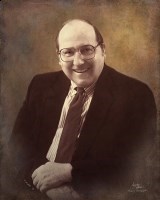
26 December 1925 - 10 May 2010
Aleck was born December 26, 1925 in Seattle, Washington, where he lived most of his life. The only son of Martha Washington Denny Lafferty and Hugh Sutherland Lafferty, Aleck had one sister, Mary Elizabeth Lafferty, who was five years older.
During his childhood Aleck's family lived in the home of his maternal grandparents, Mary Rumsy McCorkle Denny and John W. Denny, early Seattle pioneers. This home, built by his grandfather, was in the north end of Seattle, practically across the street from what is now called Northgate Mall. In 1925 it was a haven of deeply wooded beauty, and Aleck's playground.
Aleck became an avid fisherman at a young age and never lost interest in the sport. The Pacific Northwest, with its streams, rivers, lakes, Puget Sound, and the Pacific Ocean formed a perfect environment for him, and he fished their waters his entire life.
Aleck attended the University of Idaho in Moscow, earning a Bachelor of Science in geology with a minor in chemistry. He was a member of Delta Chi fraternity and a member of Sigma Gamma Epsilon, a club to further interest in earth sciences.
After graduating in 1951 he applied his knowledge of geology and chemistry in the oil and uranium industry in Texas, working for companies such as Laan-Tex, National Geophysical Company, and American Electronics Development Corporation. During this time he developed several techniques to improve the efficiency of obtaining oil, and obtained at least one patent.
It is rather ironic that his job title at NGC was instrumental in his move to Boeing Computer Services in 1962. His title was Geophysical Computer. His job was to perform calculations by entering (typing) geophysical data into a calculating machine, or perhaps even an early mainframe computer. These early data entry people were referred to as computers. So when Aleck submitted his resume to Boeing, hoping to find work that would bring him back to Seattle, just having the word Computer on it was enough to set him apart from most other applicants. Once he made it to the interview, there was no holding him back.
One of the more significant projects Aleck worked on at Boeing was the integration of the Computer Aided Design (CAD) and Computer Aided Manufacture (CAM) disciplines. These two computer disciplines developed independently and with little or no ability to pass information back and forth. As Boeing grew and their projects became massive the time, energy, and money required to design and build a plane rose logarithmically. If things continued at that rate airplanes would soon be too difficult and too expensive to build. Aleck was part of a task force formed to streamline this process through the integration of the computerized design and manufacturing processes. It was a long hard job, but they were successful and the advances made at Boeing revolutionized the CAD/CAM industries.
Alec retired from Boeing in 1999, after 35 years. If you are quick at math you probably noticed there are 37 years between 1962 and 1999. He was laid off for two years (along with two-thirds of the rest of the Boeing employees) during that time when a billboard along Pacific Highway South (near Sea-Tac as I recall) displayed the request "Will the last Person Leaving SEATTLE - Turn out the lights."
Here is a short story that illustrates Aleck's independence and sense of humor. While working at Boeing he had to wear a name tag. There was a company regulation that you had to put your full legal name on the tag. Aleck's full name was Hugh Alexander Lafferty, but he had been known as Aleck for most of his life. Rather than give in he went to court and had his name legally changed to H. Aleck Lafferty. And that is what appeared on his name tag.
Aleck had an almost infinite curiosity about the world around him and a passion for helping others. He was willing to do an enormous amount of research on any topic that interested him. His background in chemistry helped him understand the technical side of nutrition and the positive and negative impact that chemicals could have on the human body and brain. He was one of the founders of the Schizophrenia Association of Seattle in 1970. This was later renamed to the Well Mind Association. The WMA set up a low-cost clinic in an older Victorian home. The clinic was part charity work, part street advice, and part "orthomolecular medicine"--that strange "medical" practice based on the revolutionary psychiatric thinking of Abram Hoffer, Carl Pfeiffer, MD's as well as nutritionists Carlton Fredericks, Linus Pauling, and Adele Davis. WMA provided information about nutritional approaches to psychiatric disturbances. As a group, the physicians and workers and parents of the Well Mind Association succeeded in implementing orthomolecular medicine in a psychiatric practice.
Aleck approached every encounter with a medical doctor as an opportunity to learn and to teach. Wise doctors welcomed both. His personal physician and friend, Dr. Taagen said that Aleck made him rethink how to look at his patients and how to really listen to them. Because he was so knowledgeable and interesting, Aleck made him think outside the box. Dr. Taggen always blocked out an extra 15 minutes for an appointment with Alecks because he enjoyed his time with him so much.
After fishing, Aleck's main passions were golf and bridge. He devoted himself to both with the same concentration he applied to his work and relationships, and excelled at both.
His children remember him as an active participant in their lives, with family outings almost every weekend. Ocean fishing was the family passion, but other activities included digging for clams and goeducks, jigging for squid, hiking, camping and panning for gold in the Cascades, and hunting rabbit, pheasant, and deer. If they weren't having an outdoor adventure they were off on a long road trip to visit Grand Mom and Aunt Mary in Spokane, or to learn about new places.
Kelly's private joke with her dad was that he was "Way smarter than a fifth grader." She remembers that he found humor in being called Smart Aleck. He was a cheerful giver and positive thinker (always finding the bright side of things). He changed the lives of many people for the better. He was a wonderful father to his children. He had unconditional love for all of us. Whenever we came to him with our concerns or a problem he would always guide us in the right direction, but he would let us make our own decisions. He fostered many children through the years, treating all as part of the family.
Brian Kuehn, one of Aleck's best friends, sent the following note:
"I am writing this to help celebrate the life of a best friend of mine for 46 years. As I write this I think of the many years that Aleck and I enjoyed salmon fishing, bridge games, golfing, working and playing together. Aleck taught me how to catch salmon and how to play bridge. He always caught more salmon than me and always beat me at bridge. Those were our good times.
But you know what really gets me emotional on this day? It is what he did for me during some very difficult and tough times in my life. He stood by me and supported me and got me out of depression. During my dark times, he was always there to do fun things and get me back on track. I will never forget this quiet and unassuming man who helped me negotiate my life. We should always remember his laugh. I do. Thanks Aleck and goodbye. Your friend forever."
Dennis Marks, one of Aleck's foster children, sent these comments:
He was always there for us when we needed him.
He was very smart and informative. If ever I had any questions he would take time to sit down and answer them for me.
He was always more concerned about everyone else than he was about himself.
He was a great person and father and grandfather and he will be missed.
Aleck was preceded in death by his sister Mary Elizabeth. He is survived by his wife of 55 years, Elva Lafferty; his sons Scott Shannon (United Kingdom) and Denny Alexander (Seattle); his daughter Kelly Jean (Seattle); and a foster son Dennis Marks (Bremerton).
Show your support
Add a Memory
Share Obituary
Get Reminders
Services
SHARE OBITUARYSHARE
- GET REMINDERS
v.1.18.0