OBITUARY
Leroy Kenneth Lehner
October 23, 1934 – October 20, 2026
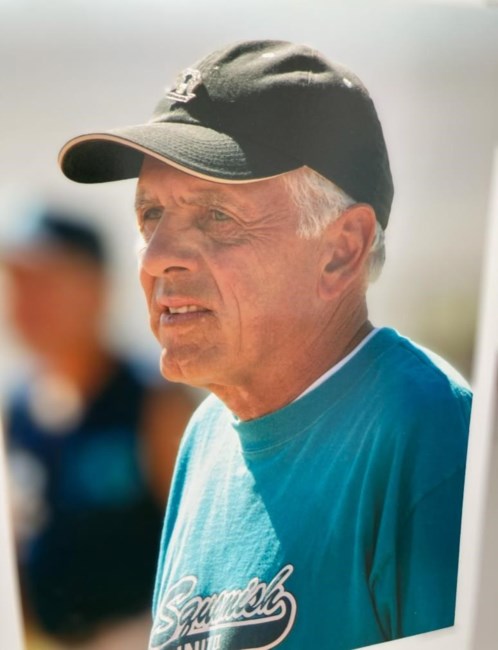
Leroy Kenneth Lehner, known to family and friends and colleagues as Roy, passed away in Seattle, Washington, on October 20, 2026, three days before his 92nd birthday. His life brought together a deep appreciation for the outdoors, a career devoted to landscape architecture and park planning, a love of sports and competition, and, above all, devotion to his family, friends, and faith.
Early Years in Michigan
Roy was born in Bay City, Michigan, to Joseph and Anna Lehner and grew up in the nearby village of Unionville. He was surrounded by grandparents, aunts, uncles, cousins, and neighborhood friends. He shared his childhood with his younger brother, Walt, who passed away in 2019.
His grandparents and uncles worked farms in the surrounding community, and Roy spent time helping them with farm work. His boyhood was active and adventurous. He would accompany his grandfather into town for errands riding along on his horse and wagon. Roy and his friends played basketball, built models, camped, fished, and hunted in the nearby woods. One memorable pastime was spearing fish in the farm ditches.
Roy attended St. Paul's Lutheran Church school through eighth grade and then Unionville High School. He was baptized and confirmed at St. Paul's. During his school years, he delivered newspapers, worked at the local gas station, and helped farmers harvest sugar beets and corn. The community also experienced a polio outbreak and lost a classmate. In the late 1940s, when his father was out of work, the family spent a winter in Arizona, where his father, Joe, helped with the orange harvest. After high school, Roy worked at Saginaw Steering Gear for approximately a year and a half before entering the United States Army.
Military Service and Education
Roy and a few high school friends enlisted in the Army in the aftermath and uncertainty following the Korean War. Roy served from 1954 to 1956 and was stationed at Fort Bliss, Texas. He trained troops on 75 mm anti-aircraft guns. Hearing protection was limited to cotton in the ears, a detail he remembered. During his service, a fellow soldier from Yakima, Washington, told Roy about the outstanding hunting and fishing in Central Washington. The suggestion stayed with him and helped shape his later connection to the region.
Following his military service, Roy used the GI Bill to pursue his education. He earned a Bachelor of Science degree in Landscape Architecture from Michigan State University in 1960. While there, he received a national award for a country-club design. He worked summers to help support himself, including one memorable job cleaning septic tanks for $2 an hour.
From 1961 to 1963, Roy attended the University of Michigan, where he earned a master's degree in landscape architecture. His studies included engineering and the practical design of roads, streets, and urban spaces. During summers, he worked for the Huron-Clinton Metropolitan Authority in the Detroit area. Towards the end of his graduate school experience, he had saved enough to buy a yellow Corvair.
After completing his education, Roy traveled to the East Coast during winter in search of work. The job market was relatively robust and the US was in a period of infrastructure growth. Roy received several offers including one from the National Park Service. Ultimately, he chose to head out to California and try his luck there. Roy and a friend travelled west in the Corvair and stayed briefly with relatives. He found a job during his first week after arriving in 1963. There, he began building his career in landscape architecture and park planning, with projects that included work on the UCLA campus, modifications to Griffith Park, and the entrance to Los Angeles International Airport.
In 1964, Roy met Berit at an alumni dance. Berit was born and raised in Stockholm, Sweden. She moved to LA in 1960. Her sister Gun and a couple friends soon followed. Roy and Berit began a life together, enjoying LA and their community. While living in Los Angeles, Roy made the most of California's spectacular outdoors. On summer weekends, he would take his MG and drive to the Sierra Nevada, where he went backpacking and enjoyed the mountains, wilderness, and dramatic landscapes. Berit accompanied him on many of these adventures. These trips offered a welcome escape from urban Los Angeles and reflected the lifelong love of outdoor adventure that remained part of him. In 1966, Roy travelled to Europe for a few weeks to see as many famous architectural sights as he could. He also squeezed in a visit to his would-be parents in law in Sweden.
Roy and Berit married in 1967 and lived in Burbank for a short time. They took a road-trip honeymoon up the California coast to Seattle. They moved there in December 1967. They chose Seattle for its balance of natural beauty and professional opportunities. Its setting reminded Berit of Stockholm, while the city offered room for Roy's career to grow. Seattle became their home for the rest of Roy's life.
A Career in Landscape Architecture and Park Planning
In Seattle, Roy worked with David Jensen Associates before establishing his own firm, Roy Lehner Associates. His career reflected both his professional training and his personal belief in the value of parks, public spaces, and access to the outdoors.
Among his Seattle work, Roy was responsible for the final design of Bhy Kracke Park, the Queen Anne hillside park known for its panoramic views of Seattle. Roy Lehner Associates prepared the 1975 master plan for Dr. José Rizal Park, and he was involved in planning work for Powell Barnett Park. His broader work with Seattle parks included projects in Sand Point, Beacon Hill, Volunteer, Lincoln, Green Lake, and Freeway Parks, among others. He was also instrumental in the planning and early development of the Burke Gilman Trail.
In 1977, Roy began a 29-year career with the City of Redmond, Washington, where he became the city's first park planner. He served as a landscape architect and park planner until his retirement in 2007. Over nearly three decades, he helped shape the city's growing park system through park planning, land acquisition, design, and development.
Among his major Redmond projects were Grass Lawn, Hartman, Perrigo, and Farrel-McWhirter parks, as well as the Redmond Watershed Preserve. His work on the Watershed Preserve included serving as project manager for its master plan, addressing the preservation of natural areas, wetlands, wildlife habitat, trails, and public recreation. He also worked on the Bear Creek and Evans Creek trails, including connections to the East Lake Sammamish Trail. The Sammamish Trail connected the to the Burke-Gilman Trail - a multi use paved path that extended the east side of Lake Washington to the west side and Seattle.
His professional work gave him the opportunity to help shape parks and public spaces that others would enjoy for generations. It was a natural fit for someone who had loved the outdoors since childhood.
Family, the Outdoors, and Recreation
Roy and Berit raised two sons, Christian, born in 1969, and Mark, born in 1972. Roy was a devoted husband and a good father. He took pride in his family and later enjoyed being a grandfather to Leif, Griffin, and Max. He is also survived by his sister-in-law, Gun Karlsson, who lives in Seattle and has remained a close member of the family.
Outside of work, Roy remained an avid outdoorsman. He especially enjoyed waterfowl hunting around Moses Lake and Othello in Central Washington, as well as fishing, hiking, and spending time on the water in his boat. The family cabin near Conway, Washington, on the South Fork of the Skagit River, held a special place in his life. It provided a place to enjoy the landscape and spend time with family, friends, and neighbors. In his earlier years, he and his boys (and friends) went on numerous backpacking trips in the North Cascades. In 1983, he took the boys on a week’s long summer road trip to Yellowstone and Glacier National Parks.
Roy was a lifelong sports fan, particularly enthusiastic about college football and basketball. He loved the atmosphere of major college games—the marching bands, military traditions, pageantry, crowds, and sense of occasion. Of course, Roy also loved playing sports. Roy didn't start playing softball until he was in his late 30’s/early 40’s. He enjoyed playing on a local team (Over the Hill Gang) with many friends. Softball become a lifelong passion that he would continue until this last spring. He participated in senior softball for many years, playing on numerous teams, including the Emerald 80s, Joeseppi's, Tukwila and Nearly Extinct. He competed in the Huntsman World Senior Games in Utah for 15 years, as recently as 2023. Softball provided the competition he enjoyed and, just as importantly, lasting friendships and a community of teammates.
Post-retirement, Roy traveled extensively in his RV to play in softball tournaments around the West. On those trips he enjoyed sightseeing, and touring national parks, visiting relatives and friends, including his son and family regularly in Bend, OR. At times, Berit would accompany him on these trips.
Faith, Friendship, and Community
Trinity Lutheran Church in Seattle was an important part of Roy and Berit's lives for more than 50 years. Roy served as a deacon for many years and built enduring friendships through the congregation. His faith and his connections to the church community remained important throughout his life.
Roy will be remembered as a dedicated husband, a good father, a proud grandfather, and a loyal friend. He brought enthusiasm to the things he loved, commitment to his work, a competitive spirit to the softball field, and a lifelong appreciation for the outdoors. The places he helped create, the friendships he maintained, and the family he loved are all part of the legacy he leaves behind.
He will be deeply missed by Berit, Christian, Mark and Lillah, his grandsons Leif, Griffin, and Max, his extended family, and all who had the good fortune to know him.
A memorial service celebrating Roy's life will be held on November 14, 2026, at 1:00 p.m. at Trinity Lutheran Church, 1200 10th Avenue East, Seattle, Washington 98102. Parking is very limited at the church. Parking is available on nearby streets and also at two lots on 10th and Garfield.
In lieu of flowers, donations may be made to Lutheran World Relief or Ducks Unlimited.
Show your support
Add a Memory
Share Obituary
Get Reminders
Services
Memorial Service
Share
Service
SHARE OBITUARYSHARE
- GET REMINDERS
v.1.18.1