
OBITUARY
Mary Ann Conley
October 14, 1932 – July 31, 2026
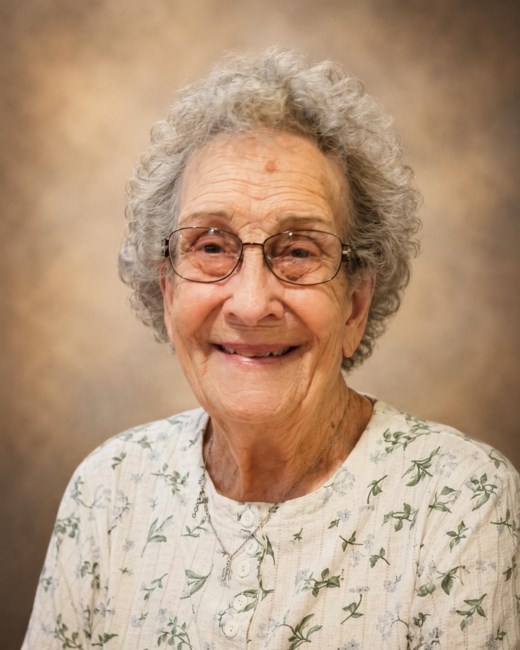
Mary Conley was an extraordinary woman. She had a gentle presence that carried love, faith, humor, and just enough stubbornness to keep life interesting. She did not need to be the loudest person in a room to be remembered. Her kindness was not reserved for special occasions. Mary sent handwritten cards because she wanted people to have something they could hold that reminded them they had been thought of. She would often get cards in return, and she kept them all because she, too, loved being thought special enough that someone took the time to send her a card. She made time to talk to her friends Wanda Gardner and Alice nearly every day. She stayed connected with friends from her years working for the FBI and remained devoted to the people who had shared different chapters of her life.
Mary was completely trustworthy. In her time with the FBI, she met President Truman and President Eisenhower and worked for then-FBI Director J. Edgar Hoover in his secretarial pool. Oh, the stories she could tell, but she worked for the FBI, and she had taken an oath to protect those secrets. Her sister Wanda tried for years to persuade her to reveal something interesting from her time with the FBI, but Mary never gave up a secret. Whatever she knew stayed safely with her. She could keep confidence, remain loyal through the years, and make people feel safe enough to share their hearts with her.
Mary loved her dear friend Ruby like a sister. When Mary lived in Matthews, she and Ruby spent much of their time together. They were so close, in fact, that Ruby and Dan waited until they knew Mary was moving to Holts Summit before making the move to Jackson. Ruby and Mary faithfully cleaned their church together. It was not glamorous work, and Mary would never have expected recognition for doing it. She saw something that needed to be done and quietly helped. Mary’s faith was the foundation beneath everything she did. Her Christianity was seen not only in her words, but in the way she treated people—with compassion, patience, acceptance, loyalty, trustworthiness, gratitude, forgiveness, resilience, and hope. She did not simply talk about loving others. She practiced it in grocery-store aisles, café booths, telephone conversations, handwritten cards, church cleaning, family dinners, and all the ordinary moments when someone needed kindness.
Mary was not only a Christian in name. She lived as an example of Jesus' love on Earth. Her belief in God was her superpower. It gave her the strength to remain hopeful without pretending life was always easy and helped her continue to find something to be thankful for in every season. We often said, “She’s got a direct line straight to God.”
Mary loved many people deeply, but Clyde was the one great love of her life. They built a home, raised their son, worked beside one another, and shared the ordinary days that eventually became the stories Mary told for years. She remembered roofing their house together when she was 50. The work they accomplished as a team, the laughter they shared, and even the moments
when they did not always agree, especially when Clyde believed David needed discipline. Mary remained certain her boy could not have done anything quite as terrible as it sounded.
Their life together was not built from grand gestures. It was built from showing up, working hard, raising David, solving problems, and choosing one another through the changing seasons of life. Mary loved Clyde with the same loyalty, tenderness, patience, and wholehearted devotion she gave to everyone else, only deeper, because he was hers and she was his. Clyde died in 2000. Clyde was her one and only, and the years after his death never changed the place he held within her.
Mary continued telling stories about him because love like theirs does not disappear when one person dies. It becomes woven into the life of the one who remains; in the home they built, the son they raised, the memories repeated around the table, and the small details that keep a person close even after many years apart. Clyde remained part of Mary’s life because he remained part of Mary. She spent twenty-six years missing him, loving him, and carrying their life together forward. Those who loved Mary find comfort in believing that after all those years, she and Clyde are together again.
Mary loved her brothers deeply and carried each of them in her heart after they were gone. Family mattered to her in a way that shaped how she lived, and her sister Wanda held an especially tender place in her life. Mary watched over Wanda, cared for her, laughed with her, and loved her with the protectiveness of an older sister who never stopped looking out for the younger one. Their lifetime memories even included Elvis somehow becoming part of Wanda’s wedding day. And much like her unwavering belief in David, Mary refused to believe Wanda could ever do anything truly wrong. Wanda has said she always wanted to be like Mary, perhaps one of the greatest compliments one sister can give another.
That love extended throughout Wanda’s family. Terry, Ilinda, Darla, Johnny, their spouses and children treated Mary with tremendous tenderness and made sure Mary, David, and Stacy always knew they belonged. Although they were not part of the immediate household, there was never a dividing line. There was always another chair, another plate, and a place for them at Thanksgiving. Darla, who passed away unexpectedly, remained deeply loved and part of the family stories Mary carried with her. Near the end of Mary’s life, Wanda was able to speak to her and say goodbye. Mary died only a couple of minutes later. It seemed fitting that before Mary left, the sister she had spent a lifetime caring for and loving was included one final time.
Mary adored her son, David, and no one ever had to wonder how proud she was of him. She told stories of how the Doctors said: “he would be slow, and David showed them: he walked before he was one; and look how smart he is.” She often bragged about him, believed in him completely, and viewed his childhood confessions with considerable suspicion. David could admit he had stolen watermelons, but Mary would insist he had not. Her son would never do such a thing, regardless of what David himself claimed.
David loved his mother with the devotion of a true son. He checked on her, took her shopping, visited her nearly every day, protected her, worried about her, included her, and made sure she was cared for. Mary had spent her lifetime loving, encouraging, defending, and believing in him. David spent hers making sure she knew she was never alone, never a bother, and loved beyond measure.
Mary did not leave the world without leaving herself behind. So much of her is still walking around in her son. David carries her quiet gift for noticing people—the ones others might overlook, the waitress bringing coffee, the grocery clerk ringing up an order, or the stranger who needs someone to listen. Like Mary, he remembers names, asks about families, listens to stories, and makes people feel worthy of knowing. She never had to sit him down and teach him how to love people that way. She lived it in front of him, and somewhere along the way, he became it. Perhaps that was why Mary was so proud of David. When she looked at her son, she saw not only the man he had become, but the love she had placed in him continuing into the world.
Mary welcomed Stacy (David’s wife) into the family with the same unconditional love she offered so freely to others. She said she knew when they first met at David’s 50th birthday that she was the one for him. Mary was thankful that David had found someone who would love and care for him as she had, and she proudly called Stacy her “favorite daughter-in-law.” Whenever someone complimented the purple-flowered jacket Stacy brought her from Oregon, Mary never simply said thank you. She made sure they knew, “My favorite daughter-in-law gave it to me.” The jacket gave Mary another reason to brag about someone she loved, and she wrapped herself in Stacy’s love each time she wore it.
Some of the most meaningful moments between Mary and Stacy were wonderfully ordinary: shopping, having lunch, or spending the day together. One day recently, Mary helped can peaches. She sometimes forgot how to cut them or squeezed too many pieces into one jar. Really, it didn’t matter what the peaches looked like. They were going to eat them anyway. What mattered was that Mary was there, helping, included, and loved just as she was. Sharing time was one of the greatest gifts she gave Stacy, that and, of course, her son David.
Mary also treated and loved David’s best friend, Rob, as a son. Rob would walk into the house with David, just like brothers would after a round of golf, and she would greet them with all her genuine love and, most importantly for teen boys, food. That was simply who she was. She did not require biology before offering someone a place in her heart. She recognized people who needed warmth, acceptance, or reassurance and quietly made room for them. Her love did not ask anyone to prove they deserved it first.
Nearly everyone who spent time with Mary came away loving her. The servers at Summit Café knew her. The women at Moser’s grocery store knew her. Kishon and others who cared for her during her brief rehab stays became attached to her. Payton, one of Stacy’s great-nieces whom Mary loved like a grandchild, was part of that circle, too. People who began as servers,
caregivers, family friends, or casual acquaintances often became something more because Mary had a way of making them feel noticed, welcomed, and remembered.
Mary was gentle, but no one should mistake her gentleness for weakness. She could be fiercely stubborn. When life challenged her, she met it with faith, determination, positivity, and the quiet belief that other people did not get the final word about what she could do. She was the tell-me-I-can’t, I’ll-show-you-I-will kind of soul. She was resilient without making a show of it, strong without needing to announce it, and an absolute funny little lady through it all.
Mary did not live an extravagant life, but she lived an extraordinary one. She loved her husband, cherished her son, loved her sister, remembered her brothers, remained faithful to her friends, served her church, welcomed people into her family, and treated strangers as though they were worth her time. She made people feel seen because she looked for what was good and lovable in them. Somehow, when Mary looked at you that way, you began to believe you were lovable.
Mary spent her life making sure other people knew they mattered.
She mattered, too—more than she may ever have understood.
And for the record, no matter what David says, Mary would still insist that he did not steal those watermelons.
Mary Conley, after 93 years of sharing her love, passed away suddenly and unexpectedly on July 31, 2026. Ninety-three years may sound like a long life, but to those who loved Mary, there was never going to be enough time. She was still talking, laughing, loving people, and being completely herself the day she passed. She left behind a life that cannot be measured by titles, possessions, or years alone. Mary’s life was measured in people. The people she remembered, encouraged, included, and loved. Those fortunate enough to know her walked away feeling like they mattered.
Visitation will be held at Nunnelee Funeral Home on Friday, August 7th, 2026, from 3 pm to 5 pm. Per Mary’s request, there will be no funeral or graveside service. In lieu of flowers, the family suggests memorial contributions be made to the following: www.moregraceministries.com or www.stark.edu/about/give and look for the Jack Bourland Legacy Scholarship.
Fond memories and expressions of grief may be shared at www.nunneleefuneralchapel.com for the Conley family.
Show your support
Send Flowers
Add a Memory
Share Obituary
Get Reminders
Services
- SEND FLOWERSSEND
FLOWERS SHARE OBITUARYSHARE
- GET REMINDERS
v.1.18.1