
OBITUARY
Elaine Tiller
May 28, 1941 – October 10, 2026
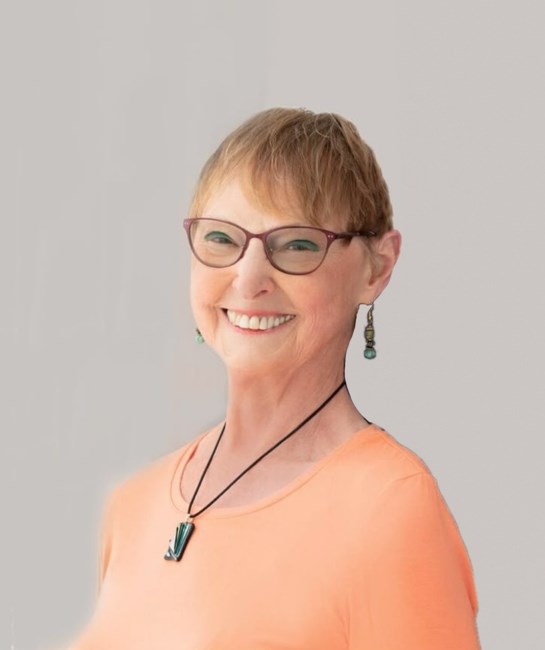
Elaine Tiller, an innovator in bereavement counseling with two DC-area hospices, died on October 10, 2026, at the age of 85. She was a resident of Riderwood, a retirement community in Silver Spring, MD.
Elaine was a loving wife, mother, grandmother and friend. She was passionate about helping others, building strong communities and advancing social justice, which she did through both professional and volunteer pursuits.
Dora Elaine Tiller was born in Georgetown, Ohio, on May 28, 1941, to Walter and Beatrice Cremer, the middle child between two brothers. Elaine was always quick to mention that she was born at home, not in a hospital. Her father worked at a Chevrolet assembly plant, and her mother was a beautician. As a child Elaine enjoyed helping with chores in the beauty shop, and she later supported her mother in owning several shops in nearby towns. In high school she was president of her class, president of the local Teen Town, a band member and a majorette. In one memorable event she, a white girl, danced with a Black classmate, a major taboo in the 1950s. The adult sponsors promptly ousted her as Teen Town president, only to reinstate her later.
She went to Transylvania College in Lexington, Kentucky, where she majored in religion, and in 1963 she became the first in her large extended family to earn a college degree. She went on to graduate studies at Yale Divinity School in New Haven, Connecticut.
In September 1964 Elaine married Bob Tiller, whom she met at Yale, and they enjoyed 62 years of (as she liked to say) snuggling and struggling together. A few months after their wedding they watched news reports about the Bloody Sunday beatings in Selma, Alabama, to which they responded by traveling to Selma to join the daily protests there.
Following their wedding, Elaine and Bob were informed that Yale Divinity School’s policies prohibited giving financial aid to both members of a married couple, so hers was automatically revoked because she was the wife. Her explosion was probably heard on the other side of the globe. A few years later that policy was changed, too late to help Elaine. She and Bob pieced together some jobs and a budget that enabled them both to continue as full-time students.
Elaine earned her divinity degree from Yale but did not actively seek ordination, because she did not want either a church education position (a traditional role for ordained Protestant women at that time) or a pastoral position (where the door was barely open for women). Rather she wanted to be a counselor, for which ordination was not a requirement.
Hospice was unknown in this country at that time. One of her YDS professors went to England to learn about the movement there, hoping to introduce the concept and ethos here. His goal was to help launch a hospice in Connecticut, but a delightful side effect was that he put the idea of hospice into Elaine’s head.
After finishing their Yale studies in 1967, Bob and Elaine moved to New York City, where he was pastor of a small church on the Lower East Side of Manhattan. Elaine took her thirst for learning and serving to Bellevue Hospital, both in the chaplaincy training program and in recreational therapy. She did not aspire to become a chaplain in the strict sense of that word, but she wanted chaplaincy training to inform and shape her approach to counseling.
Elaine entered that training at a time when those programs were almost exclusively male. As a young adult she was breaking glass ceilings, sometimes as the only woman in a professional group, but she never felt that such breakthroughs were at the core of her calling. Instead she saw herself as a person seeking opportunities to use her counseling skills and gifts.
Their son Nathan was born in 1969, and Elaine was a stay-at-home mom for a few years. Her desire to work as a professional was never far from the surface, and in 1972 she accepted a position as a counselor at the Brooklyn Educational Opportunity Center.
A joint project of the City University of New York and the State University of New York, the center provided job-training for lower-income people, especially those without a high school diploma. The counselors helped students with fundamental skills needed for finding and holding a job, such as how to dress for an interview and how to relate to a supervisor. One of her proud accomplishments at the BEOC was writing a grant proposal that was funded, enabling the center to hire more staff and provide additional services for the students.
Bob left his pastoral job to begin working in Brooklyn, not far from the BEOC, so they bought a modest row house in the Crown Heights section of that borough. Elaine loved that house and strove to make it both beautiful and welcoming. In 1974 their son Caleb joined the family, and Elaine received 18 months of unpaid leave from her job, with a guarantee of return, an unheard-of benefit at the time. She was happy to be at home with the baby and happy to get back to the job when the leave ended.
Following a move to the Washington DC area for Bob’s work in the early 1980s, Elaine found the opportunity she was looking for: director of bereavement care at Hospice of Northern Virginia, which had been founded a few years earlier. While she had enjoyed her BEOC work, she was elated to work in a hospice. Embarking on the role before some hospice practices were well established, she patiently built a comprehensive program that offered a wide variety of bereavement resources for family members following a death, and she helped the entire staff to understand the value of bereavement care. She pioneered a grief support group model, which became widely used and copied, enabling thousands of people to work through the grieving process. Convinced that rituals are crucial ingredients of personal growth and wholeness, she incorporated various secular rituals into the groups she led. Elaine was part of the leadership team at Hospice of Northern Virginia when it was a key site for the federal government study and then the insurance industry study that led to hospice care becoming an approved benefit for Medicare, Medicaid and most private insurance plans. She was invited to codify her approach to grief groups by writing a chapter for a book on hospice care.
After several years of bereavement work Elaine tried another path: director of Community Ministries with Baptist Senior Adult Ministries of DC, doing training and programming with senior adults in church congregations around the region. She organized conferences, wrote articles, built partnerships, led workshops and spoke at meetings – all on the subject of aging.
When that job ended, she became the director of bereavement care at Montgomery Hospice in Maryland, leading a department that became widely known for excellent and creative support for grieving families, and where she insisted that the services be available to the entire community, including people who had not had a family member in hospice. Over the years she gradually became an “unofficial chaplain” to many of the nurses and social workers on the hospice staff. In her last two years before retirement she shifted into community education and outreach for Montgomery Hospice, with a special focus on helping medical practitioners appreciate the value of hospice care.
Elaine viewed her work with grieving individuals as an opportunity to evoke and strengthen hope and peacefulness amid sorrow. When a new acquaintance would say to her that hospice work must be very difficult, she would reply that it isn’t for everyone, but that she loved it.
In addition to her successful professional career, Elaine also had an immense impact on her family, friends and community, not to mention the larger world. From the start of their relationship she and Bob strove to create a marriage partnership in which they treated each other as equals, avoiding a casual embrace of the traditional gender roles that were deeply rooted in our culture. For example, Elaine was the primary repairer of plumbing, while Bob was the primary grocery shopper. For several years Elaine was a stalwart participant in a women’s consciousness-raising group.
Elaine was a nurturer by instinct and commitment. She always felt that it was a joy and a privilege to be a parent and grandparent. She took special delight in time with her grandchildren, especially travels. She highly valued friendships and was intentional about creating time and space for friends.
They raised their sons to be independent thinkers, but also endeavored to instill in them a deep commitment to justice for marginalized people, including women, people of color, and LGBTQ persons. Elaine wrote to elected officials, helped with political campaigns, authored an op-ed for the Washington Post, and frequently demonstrated for goals and causes she believed in, from civil rights to reproductive choice to ending militarism.
Elaine held several leadership positions in the local churches to which she and Bob belonged, notably Twinbrook Baptist Church and Christ Congregational Church, chairing various boards and committees, while also accepting ad hoc roles as needed.
Among Elaine’s many talents was creating beautiful works of art in different media. Over the years she produced watercolors, drawings, small sculptures and hand-built pottery. Her favorite artistic endeavor was working with clay on a pottery wheel; she loved both the gritty feel of the rapidly spinning clay she was shaping and the opportunity to experiment with glazes. She made numerous exquisite pieces, several of which she gave to family and friends.
Elaine was also a gifted gardener who was adept at nurturing many types of plants, both indoors and outdoors. She made the flower garden at her Silver Spring home gorgeous. She especially loved her orchids, including some she had for ten or fifteen years.
Elaine and Bob traveled extensively in the U.S. and across five continents, always prizing interactions with local people and opportunities to gain fresh understandings of other cultures.
Elaine loved earrings. Flashy or demure. Big and dangly, or modest and delicate – she loved them all. Whenever she traveled, she came home with a new pair. She seemed to live by the motto that you can never have too many earrings.
Elaine and Bob moved to the Riderwood retirement community in 2017 and never regretted it. She dove enthusiastically into her new community, joining the Arts Council, leading a course on writing an ethical will, and helping her neighbors to understand and access hospice. Elaine and Bob founded Gun Violence Prevention of Riderwood, which grew to over 100 members, and she co-designed the group’s tee-shirt. She twice chaired the committee to plan a community program on gun violence prevention in conjunction with the nationwide Wear Orange Weekend. Until a stroke curtailed her activities she frequently joined the monthly protest vigil at the NRA office building in Virginia. In recent years, despite declining health, she organized carpools to join No Kings rallies.
Since her passing her friends have used these words – all unsolicited – to describe Elaine: courageous, strong-willed, determined, kind, loving, purpose-filled, admired, beloved, vibrant, upbeat, amazing, curious, brave, caring, fearless and exceptional.
Elaine is survived by her husband Bob; sons Nathan Tiller and Caleb Tiller; daughter-in-law Carrie Tiller; grandchildren Zoey Tiller, Abby Tiller, Travis Tiller and Campbell Tiller; brother Leon Cremer; and six nieces and nephews. Her brother Carl Cremer and her nephew David Cremer predeceased her.
A memorial service will be held at a later date. In lieu of flowers, please consider making a donation to Equal Justice Initiative, 122 Commerce Street, Montgomery AL 36104, www.eji.org.
Show your support
Add a Memory
Share Obituary
Get Reminders
DONATIONS
Equal Justice Initiative122 Commerce Street, Montgomery, AL 36104
Services
SHARE OBITUARYSHARE
- GET REMINDERS
v.1.18.1