OBITUARY
Judith L. Rapoport
July 12, 1933 – March 7, 2026
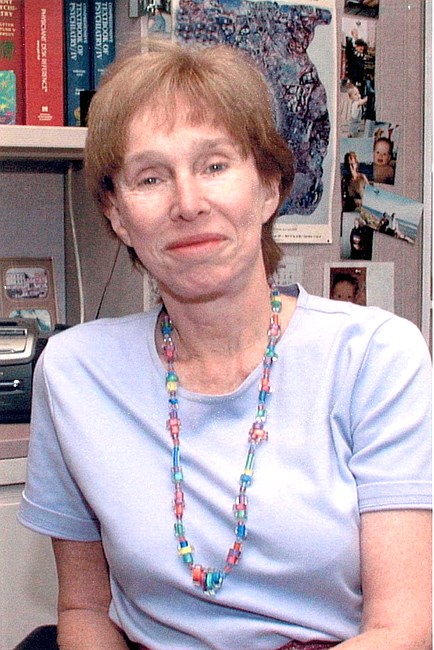
Judy Rapoport, a Fellow of the Institute of Medicine and of the American Academy of Arts and Science, passed away on March 7, 2026 in Washington, DC. As a physician who spent most of her career doing research at the National Institutes of Health (NIH) in Bethesda Maryland, Judy contributed profoundly to the identification, understanding and treatment of neuropsychiatric disorders in children and adolescents, and to the establishment of ‘biological psychiatry’ research methods in the United States.
She leaves her husband Stanley Rapoport, a physician whom she met when they were students at Harvard Medical School and who also worked at the NIH, two sons Erik and Stuart Rapoport who live in San Francisco and France respectively, and grandsons Ty, Lukas, Maxime and Adrien.
Judy grew up on the West Side of Manhattan. Her mother Minna Livant was a public-school teacher who loved the theater, her father Lewis Livant a businessman. Her older sister Leda was a grade-school teacher and later painted.
Her grandparents arrived in the United States in the 1880’s from Vienna and from near Moscow. Her maternal grandfather, Joel Enteen, attended John Jay College in New York and became a Yiddish scholar who translated Ibsen’s “Ghosts” and other classics into Yiddish. He also was the literary critic at the “Jewish Daily Forward” and later Editor of the Labor Zionist Daily, “Die Zeit.” A cousin, Isador Rabi, won a Nobel Prize in Physics.
Judy attended the Walden School in a class of 20. She savored the intense cultural life and freedom of the city as she grew up. She named her collie “Jolly.” As a teen, she spent summers in Shaker Village Work Camp in New Lebanon New York, and at the family’s country place in Stonybrook Connecticut. She played the guitar, had a beautiful voice and when singing Handel’s Messiah in a choir, joked that “All we like sheep have gone astray” meant “We like sheep.” She did like animals.
At Swarthmore College, Judy was an Honors major in Experimental Psychology. She was admitted to Harvard Medical School in 1955 as only one of five women in the class. After graduating, she interned at Mt. Sinai Hospital in New York then started her psychiatry training at the Massachusetts Mental Health Center at Harvard followed, after her marriage in 1961, at St. Elizabeth Hospital in Washington.
She and Stanley each obtained fellowships to study in Sweden in 1962-4. She spent her first year in Sweden at the University of Uppsala, the second at the Department of Psychiatry of the Karolinska Institute in Stockholm, where she interviewed pregnant American women seeking an abortion because they had been prescribed fetus-damaging thalidomide for sleep. She became fluent in Swedish.
The Karolinska introduced Judy to ‘biological psychiatry,’ which uses objective quantitative methods to understand the structure and function of the nervous system, in contrast to the psychoanalytical non-biological approach of American Psychiatry at the time.
After training at Children’s Hospital upon returning to Washington, she joined the Faculty of Pediatrics at Georgetown University and ran its P-Street Children’s Psychiatric Clinic. She also graduated from the Washington Psychoanalytic Institute.
Following a stint as a Fellow at the National Institute of Child Health and Development, she was recruited to initiate a research program on Child Psychiatry at the National Institute of Mental Health (NIMH), NIH, where she had the opportunity to provide advice to Rosalynn Carter for President Carter’s National Children’s Mental Health Initiative.
In 1984, she was appointed Chief of a new Child Psychiatry Branch at the NIMH, which she grew and directed until retiring as Emeritus in 2017. She established a world-class clinical research and training program on how genetic and environmental factors determine brain development during childhood and adolescence, with particular focus on hyperactive children, obsessive compulsive disorder (OCD), childhood onset schizophrenia, and neuropsychopharmacology. Many of the Fellows that she mentored now direct major academic departments throughout the world.
In a placebo-controlled clinical trial, Judy was the first to demonstrate that the tricyclic antidepressant clomipramine was an effective symptomatic treatment of child and adolescent OCD, leading to its FDA approval. Of her more than 300 publications, the one that she enjoyed most in writing was a popular New York Time’s best seller, “The Boy who Couldn’t Stop Washing.” This book chronicled experiences of numerous sufferers of OCD, how it impels rational people to behave irrationally in some way, discussing the symptoms, effects, and new treatments for this debilitating disease. Her book tour brought her to the television stages of Oprah, Donahue, Larry King, Charley Rose, 60 Minutes and Bernard Pivot in Paris.
Judy’s research team later used Magnetic Resonance Imaging (MRI) to show that the human brain continues to grow throughout adolescence, and that many childhood and adolescent neuropsychiatric disorders are likely associated with specific abnormalities in the brain’s growth trajectory. When studying disturbed children that they had recruited from different centers in the United States, they described one group as having “Childhood Onset Schizophrenia,” which was poorly understood or even questioned at the time. These children showed accelerated loss of brain cortical grey matter during adolescence compared with healthy controls, and many of them responded to clomipramine. Their pluripotent cells are being used now to decipher the genetics of schizophrenia.
In addition to being a Fellow of the Institute of Medicine (1991) and of the American Academy of Arts and Sciences (2000), Judy served as President of the Society for Research on Child and Adolescent Psychopathology, the American Psychopathological Association, the American College for Neuropsychopharmacology, and the National Alliance for Schizophrenia and Depression. She received multiple awards for her work and was invited to lecture throughout the world.
Judy was an avid reader, hosted the DC Swarthmore Book Club at her home in Washington, and was active in her community. She maintained warm relationships with friends, colleagues and former mentees. They all loved her. She and Stanley were lifelong hikers, members of the Appalachian Trail Club and avid opera and theater goers in Washington. She often relaxed on weekends by tending her garden or by preparing a “Babette’s Feast” for her dinner guests; her kitchen shelf held many food-stained cooking books. She particularly enjoyed, in later life, spending time with her family.
Show your support
Send Flowers
Add a Memory
Share Obituary
Get Reminders
Past Services
Funeral Service
- SEND FLOWERSSEND
FLOWERS SHARE OBITUARYSHARE
- GET REMINDERS
v.1.18.1