OBITUARY
Richard Mordechai Yellin
November 24, 1942 – August 26, 2026
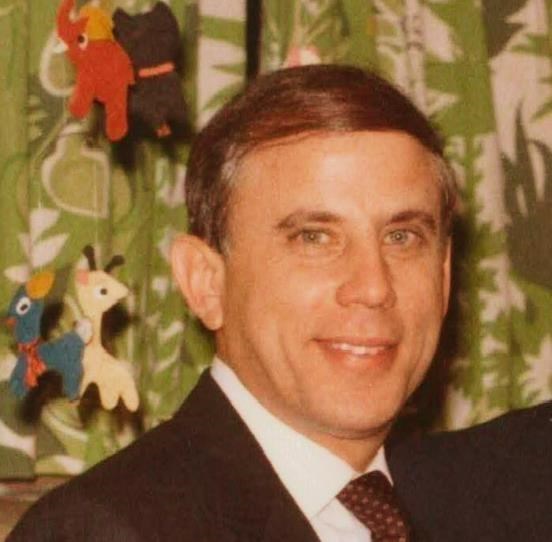
Rabbi Richard M. Yellin, Z”L Rabbi Richard (Yitzhak) M. Yellin, a beloved rabbi, teacher, writer, chaplain, civil rights activist, and lifelong advocate for the Jewish people, died peacefully on Wednesday, August 26, 2026, 13 Elul 5786, in Rockville, Maryland, surrounded by family. He was 83. Richard, lovingly known as “Richie” by his family and closest friends, was born in Philadelphia on November 24, 1942, to Carl and Sue (Axelman) Yellin. From an early age, Jewish life, learning, and service were central to him, experiences he embraced through USY and Camp Ramah. He carried those commitments into a remarkable rabbinic career that spanned nearly six decades and took him across the United States, Israel, Europe and Asia. Richard was a man of extraordinary intellect, deep conviction and considerable humor. He laughed and saw deeply. He loved interacting with people and was a natural kibbitzer. He loved people. He loved ideas. And he loved Judaism and Israel with a passion. He graduated from the Jewish Theological Seminary in 1969, where he studied during the turbulent civil rights era and was influenced by the Jewish
thinkers and activists of the 1960s at JTS and Columbia University. Civil rights became not simply an intellectual commitment but a lifelong expression of his Jewish values. He believed that the obligations of Judaism demanded engagement with the world and a willingness to stand alongside others in the struggle for justice. He began his rabbinic career in the U.S. Army Chaplain Corps, serving at Fort Knox and then as the Jewish chaplain in Korea in 1970–71. As the only Jewish chaplain in Korea, he served a small but widely dispersed Jewish community and was recognized for his service by both the U.S. military and the Korean Chaplains’ Corps. His service in Korea was a highlight of his career. After his military service, Richard became associate rabbi of Adas Israel Congregation in Washington, D.C., where he served for five years. He started a Chavurah study group and taught others to lay-lead it; the group continues actively today. He then moved to Massachusetts in 1976 and became rabbi and spiritual leader of Congregation Mishkan Tefila, one of New England’s historic Conservative congregations. During his 16 years there, he became deeply involved not only in the life of his congregation but in the broader Jewish, civic, and interfaith community. Richard was a rabbi who believed that Judaism called him to walk-“bust!”- through doors rather than remain behind them. That conviction shaped some of the most remarkable chapters of his life. He was deeply involved in Jewish-Christian dialogue and traveled extensively in Europe. In 1984, during a congregation trip to Rome, he met Pope John Paul II and recited the traditional Jewish priestly blessing. The Pope joined him in the blessing in Hebrew. The following year, Richard traveled through Poland, East Germany, Vienna, and Czechoslovakia, visiting concentration camp sites and meeting with religious leaders. In Leipzig, he was invited to address approximately 600 Lutheran worshippers at St. Thomas Church. His appearance was believed to be the first time a rabbi had spoken at a church service in East Germany. He spoke about the importance of Jewish-Christian understanding and the necessity of confronting the history that had divided and devastated Europe.
He also developed a particular interest in the Jewish community of Zimbabwe and traveled there in the 1980s, advocating for the community’s need for rabbinic leadership. He described the opportunity as a “mission of mitzvah.” Some of Richard’s most meaningful work happened around a table. He was famous in his family and community for leading extraordinary Passover Seders: lively, learned, funny and deeply participatory. For Richard, the Seder was not simply a retelling of the Exodus; it was an invitation to ask questions, wrestle with difficult truths and recognize the unfinished work of freedom. His commitment to civil rights and Black-Jewish partnership found expression in Boston’s Black-Jewish Seder tradition, which brought the two communities together around their shared histories and continuing struggles for freedom and justice. He was proud to help build those relationships through Jewish communal and interfaith work. At Mishkan Tefila, Richard also led one of the most significant expressions of solidarity with Soviet Jewry in Boston: a mass Jewish wedding for 60 Soviet Jewish couples, many of whom had been denied the freedom to openly celebrate and practice their Jewish identity in the Soviet Union. The 1982 Congressional Record specifically recognized Rabbi Yellin for his leadership of the event. Israel was another constant thread throughout Richard’s life. He was a passionate supporter of the State of Israel and served for many years in leadership with Israel Bonds, including as chairman of the International Rabbinic Cabinet. He led numerous missions to Israel and ultimately made aliyah, became an Israeli citizen and became known by his Hebrew name, Yitzhak. During his years in Israel, he served as an adviser to the mayors of Netanya and Beersheva. He maintained deep connections to Israel and to the American Jewish community throughout his life. Richard was also a prolific writer and teacher. More than 125 of his articles appeared in newspapers and other publications, addressing Jewish life, Israel, religion, and the questions of contemporary society. He wrote with conviction and was never afraid to engage difficult subjects. His scholarship and teaching were not confined to the synagogue; he believed Jewish wisdom belonged in conversation with the larger world.
Yet for all of his public accomplishments, some of Richard’s most sacred work happened every year during Elul and the High Holy Days. He loved Elul as a time to turn inward and deepen his connection with God. Each year, as the Days of Awe approached, he became intensely focused on the spiritual work of teshuvah: return, reflection, and renewal. His High Holy Day sermons were among his most passionate and memorable. He spoke with urgency about the possibility of change, the responsibilities we owe one another, and the fragile opportunity each year offers to begin again. And he loved the drama of Yom Kippur’s final moments: the congregation gathered, the long day drawing to its close, and the gates about to shut. He would lead those final moments with all the passion he possessed, reminding people that the closing of the gates was not merely an ending but an invitation to recognize what mattered most. After his years in Boston and Israel, Richard returned to the United States to care for his parents, a value he taught his children and lived. He served for several years as the spiritual leader of Temple Emeth in Delray Beach, where he continued to teach, counsel, lead, and build community. He also served as Jewish chaplain for the Palm Beach County Sheriff’s Office and remained active in civic life. In retirement, Richard discovered another way to do what he had always loved: travel, teach, pray, and meet people from around the world. He became a cruise ship rabbi, leading Jewish holiday services and teaching Torah to passengers across the globe. Retirement did not mean stepping away from the rabbinate. Instead, it gave him a new pulpit—one that moved from port to port and allowed him to bring Jewish learning and celebration to people wherever he found them. One of the enduring themes of Richard’s life was service: service to God, to the Jewish people, to Israel, to his congregants, to people of other faiths and to the communities in which he lived. He believed that being a rabbi meant being present in celebration and in sorrow, in the synagogue and in the wider world, at a Seder table and on a military base, in Israel and in East Germany, in a congregation and on a cruise ship.
He was a man of strong opinions and deep convictions, a voracious reader and lifelong learner, and someone who believed that a rabbi’s responsibility extended far beyond the synagogue walls. He could be intellectually formidable, passionately committed, endlessly curious and very funny. For those who knew him as a rabbi, he was a teacher. For those who knew him through his civil rights, Israel and interfaith work, he was an advocate and bridge-builder. For those who sat at his Seders, he was a master storyteller and guide. For those who heard his High Holy Day sermons, he was someone who could make the ancient words feel urgent and alive. For his daughters, he was simply Abba—a singular presence whose voice, stories, convictions, humor, love of Judaism and unmistakable sparkle in his blue eyes will remain part of the family’s story. And every Shabbat, his hands on his daughters’ heads as he blessed them were a tangible expression of his love. That blessing will be felt forever. Richard is survived by his beloved daughters, Aliza (Jon) Lerner, Ariel (Coby) Derringer, Devora Yellin and Rachel Yellin; his seven grandchildren, Eli, Lena, Shevi, Rafi, Micah, Shoshi and Laila; his sister and brother-in-law, Cheryl and Rabbi Harvey Meirovich; and extended family, as well as generations of congregants, students, colleagues and friends whose lives he touched. He spent his life opening doors: to Judaism, to Israel, to other faiths, to difficult conversations, to questions of justice and, ultimately, to a deeper relationship with God. May his memory be a blessing. Donations in Rabbi Richard Yellin's memory can be made to the Limmud/Learning Fund (In memory of Rabbi Richard Yellin) of the National Ramah Commission.
A Funeral Service will be held at Judean Memorial Gardens / Cemetery, 16225 Batchellors Forest Rd, Olney, MD 20832, US, on August 28, 2026, from 10:00 am to 11:00 am, followed by a Committal Service at the same location on August 28, 2026, from 11:00 am to 11:30 am.
Show your support
Send Flowers
Add a Memory
Share Obituary
Get Reminders
Past Services
Funeral Service
Committal Service
- SEND FLOWERSSEND
FLOWERS SHARE OBITUARYSHARE
- GET REMINDERS
v.1.18.0