
OBITUARY
Robert Woodson
April 8, 1937 – May 19, 2026
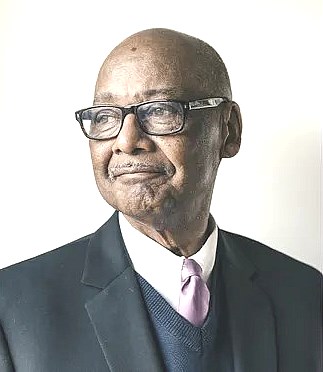
(April 8, 1937 – May 19, 2026) was an American conservative and civil rights activist, community development leader and author. He was founder and president of the Woodson Center, a non-profit research and demonstration organization that supports neighborhood-based initiatives to revitalize low-income communities.
Robert was noted for his belief in self-reliance over governmental intervention to address racism and poverty and to lower crime rates. He served as an advisor to Presidents Ronald Reagan and George H. W. Bush and as a counselor for US Secretary of Housing and Urban Development Jack Kemp and US Speaker of the House Paul Ryan.
Robert Leon Woodson was born in Philadelphia, Pennsylvania, on April 8, 1937. In 1954 he dropped out of high school to join the Air Force. While in the Air Force, he passed the GED tests.
After leaving the Air Force, he attended Cheyney University, graduating in 1962 with a Bachelor of Science in mathematics. He subsequently earned his Master of Social Work in 1965 from the University of Pennsylvania.
Robert was involved in civil rights and community development beginning in 1962. While completing his graduate work, Robert became active in the civil rights movement, directing and coordinating community development programs for a number of local and national organizations, including the NAACP. After resigning from the NAACP, Robert moved to Boston, where he spent three years as a social worker with the Unitarian Services Committee.
As a director of the National Urban League, Robert began developing a strategy to reduce crime by strengthening community institutions closest to high-crime areas. Robert continued developing the idea of neighborhood empowerment during his time as director of the American Enterprise Institute's Neighborhood Revitalization Project in Washington, D.C. He later became an adjunct fellow at the institute, providing technical support and advice to community groups.
In February 2020, Robert launched the center's 1776 Unites campaign to counter The 1619 Project. He believed that the 1619 Project by The New York Times "disparages the American Revolution".
Robert's strategy of neighborhood empowerment was to seek solutions to the problems of low-income communities among what he called the social entrepreneurs that are indigenous to these communities. Rather than a poverty program directed by a government agency, Robert's program seeks out families in these disinvested neighborhoods that have prospered and persevered to learn from their success.
In 1973 Vernon Jordan, head of the Urban League, and Representative John Conyers, chair of the U.S. House subcommittee on crime in the Judiciary Committee, supported Robert's opposition to vesting more power to Justice agencies as a solution to crime, and a better solution was focusing on neighborhood empowerment.
In 1981 Robert founded the CNE (now the Woodson Center) to promote "self-help" solutions in low income neighborhoods by promoting and supporting indigenous leaders in those neighborhoods. The CNE created the Violence-Free Zones program to reduce the level of violence in schools and help at-risk youth escape the life of violence and crime.
By the 1980s, Robert became part of "Washington's inner circle" and served as an advisor to several Republican politicians, including presidents. He worked closely with President Ronald Reagan and was considered for a government position in the United States Department of Housing and Urban Development during the George H. W. Bush administration. He opted to serve as an advisor to HUD Secretary Jack Kemp.
On November 15, 2016, the CNE was rebranded as the Woodson Center as a tribute to Robert. That same year, Robert was considered as a possible candidate for Secretary of Housing and Urban Development in the first cabinet of President Donald Trump. Earlier, he had served as a counselor for US Speaker Paul Ryan's housing agenda.
Robert received multiple awards and honorary degrees over the years, including:
1990 MacArthur Fellows Program MacArthur "Genius" award
2008 Bradley Prize
2008 Presidential Citizens Medal
2008 Social Entrepreneurship Award from the Manhattan Institute
2024 William L. Armstrong Award from Colorado Christian
University
University of Cincinnati, Cincinnati, Ohio:
Honorary Doctorate, 2012 (Doctor of Humane Letters)
Colorado Christian University, Denver, Colorado:
Honorary Doctorate, 2010 (Doctorate of Humanities)
Robert is survived by his wife, Ellen Woodson; his son, Jamal Woodson; his daughter, Tanya Woodson-Monestel,; and his son, Ralph Woodson, and was preceded in death by his son, Robert L. Woodson Jr.
Information from wikipedia.org
Show your support
Add a Memory
Share Obituary
Get Reminders
FAMILY
Ellen WoodsonWife
Jamal WoodsonSon
Tanya Woodson-Monestel,Daughter
Ralph WoodsonSon
Robert L. Woodson Jr.Son (deceased)
Services
SHARE OBITUARYSHARE
- GET REMINDERS
v.1.18.0