
OBITUARY
James Smith
September 14, 1925 – July 9, 2008
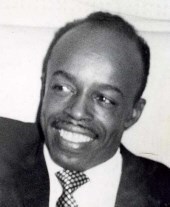
The Power of Persistence The Story of James Smith: Artist, Carpenter and Inventor James Smith was born on September 14, 1925. The fifth child of Walter B. and Viola Sutton Smith, his attention to detail was evidenced early. As a child, his drawings were accurate and life-like. It is this ability that would eventually make him a well respected artist, craftsman and inventor. Here's his story in his words: I attended Iles School in Springfield, Illinois. I had a very difficult time in the classroom and was very embarrassed and ashamed to not know how to express myself in the classroom. Somewhat alone, many times I understood more than my teachers realized but didn't understand how to express my feelings. I was a very slow learner; today, my learning disability would be labeled dyslexia. One day Mrs. Wilkerson, the art teacher, took my art class outside to draw the school building. She was very surprised when I demonstrated a talent for sketching. My drawings were very detailed and intricate. She later used one of my drawings to demonstrate to the class how to keep things in perspective and how to make your drawings more life-like. When I had the time, I continued to pursue my interest in art. At the age of 18, I was drafted into the Navy. When I had time for personal interests, I would work on my hobbies: sketching and drawing pictures. One of my shipmates, while looking over my shoulder, said you are a carpenter not an artist. I knew I had carpentry skills but did not agree with being a carpenter instead of an artist. I started oil painting while in the navy and when I was discharged I continued. I went on to paint commissioned murals for several businesses in Springfield. After the War, my brother and I pursued a career at Allis Chalmers as tool grinders. This was a very high scale position in the factory for anyone but particularly a black man. After proving myself as an expert tool grinder for several years, I was promoted to grinding carbide tools. Carbide is a very hard substance to work with; a diamond wheel must be used, which cost the company a substantial cash outlay. While grinding all day and determining how many diamond wheels the different shifts must go through on a daily basis, I wondered if there might not be a better way. I decided to try to develop an attachment for the machine to cut down on the loss of diamond on the wheel. I pursued the invention on my own time and eventually perfected the attachment and started using it at my station. My foreman noticed how small the loss of diamond on the wheel was in comparison to the amount of production. He was very impressed and wanted me to quit working for Allis Chalmers, to patent the product, and then approach other facilities to use my attachment. I decided not to pursue the patent but approached management at Allis Chalmers with my invention. The company was not receptive about using my invention (I always assumed because I was an uneducated worker), so I put it in my toolbox and stopped using it. I continued to work at Allis Chalmers but focused my free time on painting and fine art. I had developed my own personal style and everyone thought I had a special talent. Several of my friends encouraged me to enter a painting at the Illinois State Fair. I hesitated since I was very sensitive about the rejection I had encountered all my life because of my learning disability. Additionally, the rejection from Allis Chalmers was still very fresh and I did not want to deal with another disappointment. However, after some coaxing and careful consideration, I decided to give it a whirl and enter a painting. I was on pins and needles waiting for the judges' decision. I just knew my painting would be rejected. I should have known better I won first prize in the Fine Art category. Allis Chalmers ran a feature story on my talents in the company newsletter. During this time, after the War, I also had returned to another passion of mine: sound. I have always been a music lover, especially jazz, and was constantly tinkering around with my car stereo. In 1952, I had an old Plymouth. I wanted the music to sound better, live. I tinkered around with it until I had succeeded in improving the bass. It was high fidelity sound. In 1960, my brother, who lived in New York, persuaded me to move there and pursue my career as an artist. I couldn't believe the difference between the East Coast and the Midwest. I decided that if I could not make it as a painter here I would give up trying to be a professional artist. I secured an appointment with a museum curator. The curator was very impressed with my style and ability to capture a subject; he felt that I had the talent to make it as an artist and wanted to have a showing of my work. However, when he learned that I only had approximately 20 paintings he refused a showing because they required at least 100 paintings for a show. I was disappointed but learned an important lesson: I did not have the time or the financial resources to pursue a career as an oil painter, nor was I a fast enough painter to secure an exhibition of my work. I went to work for a general contractor painting homes. The contractor did not do quality work and would cut corners wherever possible; I took pride in any work I did and did not like his lack of professionalism. I had grown up with a paintbrush in my hand and had noticed that New York did not have any black general contractors. I decided to launch my own painting business and pursue my love of fine art in my spare time. I am a perfectionist; every job was completed with attention to detail and dedication to quality. My clients admired my work and soon came to value my suggestions on decorating and sound systems. Word soon spread about my work as a painter, decorator and sound man. I started working for the elite of New York and the surrounding areas and developed very good relationships with Count Bassie, Bess Myerson, Rogers & Hammerstein, Jassis T, Stanley Turtine, John Coltrane, Lock Jan Davis, Rear Admiral, Eddy Rickenbacher, Tony Bennett, Frank Foster I could go on and on. I was very much in demand, especially for my ability to incorporate sound systems into chic decorating designs. At the time, speakers had poor tone quality. I wanted to develop a way to improve tone and sound, and to incorporate sound systems into lamps- to put quality sound at ear level. In 1974, I received a patent for my light and sound lamps. I did not have any experience with speakers and decided to take a job in a custom sound shop. This enabled me to improve upon my invention. The owner of the shop was interested in my invention and I gave him a license to manufacture my patent. This was a drastic mistake on my part, although I did not realize it at the time. I worked on several items to be manufactured and sold to department stores, including a magazine rack that J.C. Penny's carried in their stores. I wanted to expand upon and perfect my inventions but the owner of the shop did not. Eventually, the store went bankrupt and I was free to pursue further my inventions. I continued to improve upon and expand my light and sound products. I set up my apartment for demonstrations. Many stores were interested in carrying my products; however, I was unable to secure a way to mass produce the products. The stores wanted thousands; I was making them myself and just couldn't keep up with demand. In 1991, my mother passed away. My sister suggested that I move back home to Springfield. I moved into my mother's home and started making contacts with prospective investors and businesses in the Springfield area. Things started to happen for me. Home theater systems were new and my surround sound invention was ahead of the game. I started selling and installing my system in homes, businesses and churches. In 1993, I finally launched my own business, Luma Sound, Inc. My dream of combining artistry with carpentry and invention had been realized. My talents were recognized in several Springfield newspaper articles. James transitioned from this life on July 9 after complications from surgery. He was surrounded by his son, nieces, nephews, friends and pastor. His persistence and ingenuity lives on in each of us.
Show your support
Add a Memory
Share Obituary
Get Reminders
Services
SHARE OBITUARYSHARE
- GET REMINDERS
v.1.18.0