
OBITUARY
Kun Xu
December 25, 1925 – July 22, 2026
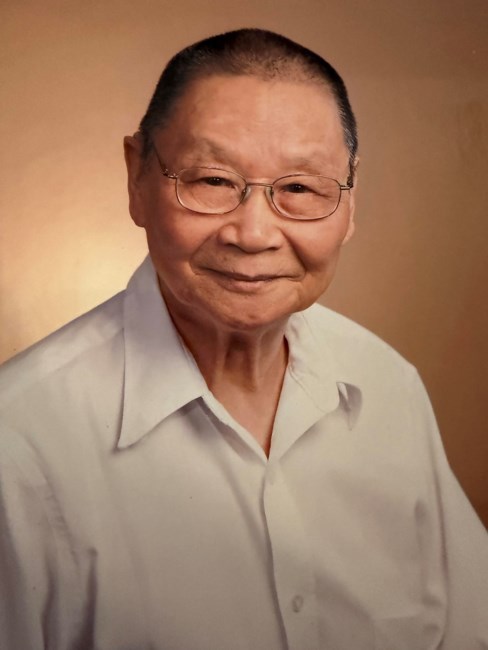
Kun was born on December 25, 1925, in Hangzhou, China. His father Shengzai Xu worked as a railroad accountant, while his mother Yanqiu Yang cared for the family at home. His childhood and youth were shaped by war and hardship. In 1937, as conflict spread across China, the family fled to Jiangxi. Kun later remembered the displacement, scarcity, and hunger that accompanied those years.
In October 1945, Kun’s father died, leaving his mother and grandmother dependent upon him. Although he was still six months away from completing high school, Kun took over his father’s railroad position through a work-study arrangement and became the family’s primary source of income. After graduating from high school in 1946, he continued working for the railroad as an accountant.
It was through this work that Kun met Yaqin Fu, the woman who would become his wife. She was also an accountant. Kun admired her personality, and they shared a love of singing, performing, and other common interests. They began dating around 1949 and married in 1951.
At the same time, Kun had aspirations of attending university. He initially hoped to study mechanical engineering, but two friends encouraged him to enter the field of pharmaceuticals. In 1950, he entered the Department of Pharmacy at Beijing Medical College, now known as the Peking University School of Pharmaceutical Sciences.
After graduating, Kun moved to Shanghai and began working at the Shanghai First Pharmaceutical Factory. In 1957, he joined the Shanghai Institute of Pharmaceutical Industry, where he spent most of his professional life researching techniques and equipment used in pharmaceutical manufacturing. His expertise and dedication earned him the professional title of senior engineer. Kun retired from his primary research position in 1987. He was later invited back to work in the institute’s editorial department, where he helped prepare the index for its scientific journal.
In the early 1990s, Kun and Yaqin came to the United States. Together, they helped care for and raise their grandsons, Simon and Silas. Kun was also the proud grandfather of Xu Jianqian, the daughter of his older son.
Even as he approached 80 years of age, Kun remained active and eager to contribute. He sought and found work at a local Dierbergs grocery store. With conscientiousness as the hallmark of his work style, customers repeatedly voted him Employee of the Month. His lifelong love of music drove him to participate in a local Chinese choir that performed at many festivals, holiday gatherings, and community celebrations.
After Yaqin’s death in 2007, Kun moved to a senior living community at Crown Center on Delmar. There, he continued to serve the community by serving as a translator between the Chinese-speaking residents and staff members and the apartment management team.
Kun’s memory will be cherished by his sons Siqun Xu and Sinian Xu; his grandchildren, Xu Jianqian, Shannon, and Silas; and the friends, colleagues, neighbors, and community members whose lives he touched.
Show your support
Send Flowers
Add a Memory
Share Obituary
Get Reminders
Services
- SEND FLOWERSSEND
FLOWERS SHARE OBITUARYSHARE
- GET REMINDERS
v.1.18.0