
OBITUARY
George H. Way
May 18, 1950 – June 4, 2019
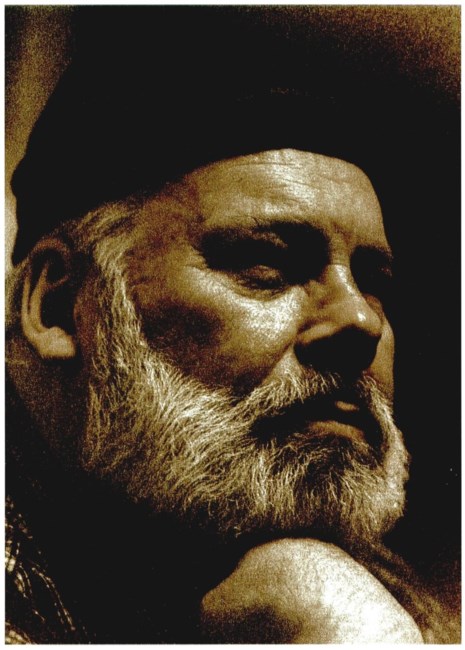
By Claire M. Regan | For the Staten Island Advance
He wasn’t your typical art and antiques collector. No mansion, flashy cars or seat on the stock exchange.
George Way, who died Tuesday in Richmond University Medical Center at age 69, defied many stereotypes of the high-end art world in which he traveled. He lived in a modest apartment in Silver Lake, worked for many years in the deli departments of Staten Island’s Pathmarks and rode the Staten Island ferry.
And without any of the customary credentials (a bachelor’s degree, a master’s degree, a doctorate), Way turned himself into a highly respected authority on English and Dutch art and furniture from the 16th and 17th centuries.
He was a self-made Renaissance man.
Much of his collection of daybeds and armchairs from the 1600s, carved with thistles, cupids and winged dragons, was arranged with elegance in his one-bedroom apartment on Victory Boulevard. Portraits and landscapes of the same era covered the walls and doors with signatures of artists as prominent as Jan Steen and Adriaen Brouwer. Ornate sterling spoons filled out the collection.
“It was like entering a Dutch jewel box,” marveled Elizabeth Skrabonja, curator of the Orangetown Historical Museum and Archives in Rockland County, which exhibited Way’s pieces twice in the last five years. She recalled sipping iced tea from a 17th century goblet while sitting on a 17th-century armchair during one curatorial visit to his home.
CURTIS GRADUATE
Born on May 18, 1950 in Astoria, Queens, George Way moved to Staten Island with his family when he was 9. He graduated from Curtis High School in 1969 and was proud to be inducted into its Hall of Fame five years ago.
His passion for collecting began as a teenager. Volunteering at Christ Episcopal Church in New Brighton one autumn day, he was directed to the basement to fetch some tools.
He recounted the defining moment that followed in a 2013 story in the Advance.
“Descending into this cold, dark, gloomy dungeon of a room, I switched on the light only to be stopped in my tracks by an ornately carved armchair covered in what appeared to be many years’ worth of cobwebs, what was left of its faded material hanging off the frame.”
He continued: “With its claw feet and carved lions on the armrests, it was unlike anything I’d ever seen. I was sure I’d just discovered the oldest chair in the world!”
The budding collector convinced the church rector to sell him “the chair that would forever change my life” for $50. It turned out to be a copy, but Way was hooked on collecting nonetheless.
EAGER TO SHARE NEWS
Most of his items were purchased at shops and flea markets for a fraction of what they were worth, and he was always eager to share news of his finds as a contributing editor for Art & Antiques and Dutch magazines and as the longtime antiques columnist for the Advance.
“The stories attached to each ‘find’ will always remain with me,” he told Advance readers. “Living with the treasures all around me brings a joy and contentment that has yet to subside.”
In a 1994 Advance column, Way explained how he purchased a small wooden table in Pawling, N.Y., for just $49, suspecting it might be a diamond in the rough. Sure enough, after many consultations and a wood analysis, he learned the piece was made in England in 1700.
“I tell you that because my table will be auctioned off in June at Sotheby's -- with a pre-sale estimate of $1,000 to $1,500. A heck of a bargain for $49, wouldn't you agree!” Way exclaimed.
“At galleries, flea markets and antiques shops, he regularly spotted rare objects that had been mis-identified or ignored,” confirmed Michael Fressola, former Advance arts editor. “Often, he was on foot, carrying his precious purchases home to Silver Lake on the Staten Island ferry. Not surprisingly, he became a recognized expert in the field, on a first-name basis with other collectors, scholars, dealers and curators.”
And yet he was down to earth, unaffected by the affectations of the art world, said those who were close to him.
“He had no sense of noblesse oblige and wasn’t imperious with people,” shared longtime friend Jonathan Z. Friedman. “He was comfortable with everybody and could communicate with anybody,” from passersby on the street to the Rembrandt expert at the Metropolitan Museum of Art.
“His idea of a relaxing evening was to light the room with candles and study the portraits in his collection. He was constantly learning,” Friedman added.
UNREALIZED DREAM
Way longed to establish a permanent home for his collection -- “to find someone who believes in me enough to have a grand museum in Snug Harbor, named after me, for the entire world to view,” he said candidly in a 2018 Advance interview.
“I would love to have a permanent place to house this important collection before I leave this world,” he continued. “I feel bad that Staten Island will lose out. I collect here and it should remain here.”
Aileen Fuchs, president and CEO of the Snug Harbor Cultural Center and Botanical Garden, said that after a visit to Way’s home last December, plans were under way for a spring 2021 exhibit of his Dutch portrait collection. She hopes the plan will move forward in spite of his death.
The Newhouse Gallery at Snug Harbor last exhibited Way’s pieces in 1996 and 2003.
Others are echoing Way’s call for a more permanent display of the collection in acknowledgment of his contributions to Staten Island.
“George was my good friend for so many years, and I learned so much from him,” said Alice Diamond, wife of former Advance Publisher Richard E. Diamond. “My greatest disappointment was that we were never able to find a way to give his collection a home.”
“It was collected on Staten Island, and it belongs on Staten Island,” she added emphatically. “I’m still hoping we can make that happen.”
“George had deep knowledge of history and a keen eye for antiques,” said her daughter and current Advance Publisher Caroline Harrison. "Those, combined with his magical ability to discover treasure in the oddest places, made for a truly grand collection. The Advance and our readers were fortunate that he shared his expertise and passion for antiques with us in his regular column for many years.
“George was one of a kind and he will be missed,” she said.
Retired Advance Home editor Sandra Zummo was also Way’s editor.
"What I loved about George was that he never lost that sense of wonder at how he could find things of value that so many others had missed,” Zummo said. “He never tired of the hunt, of looking for that one piece that went unnoticed by everyone else. It might be something small, a spoon perhaps, pulled out of a basket of supposed bric-a-brac at a flea market. Or, it could be a painting gathering dust in the corner of some musty antiques shop. If it was there, he’d find it … and he’d call me the next day to gush about what he’d discovered, how much he paid for it and how clueless the owner was about what he’d had!
‘What was truly special about George, though, was the immense pleasure he not only took in sharing his knowledge through the column, but in opening his tiny apartment to those who expressed a desire to view the collection he’d so lovingly amassed," she said. "He truly was ‘The Lord of the Manor,’ as many christened him, and he will be missed.’
SURVIVORS AND ARRANGEMENTS
In addition to longtime friend Jonathan Friedman of Mount Kisco, N.Y., Way is survived by a sister and a half-brother in California.
The funeral will be Saturday at 9:30 a.m. in St. Mary’s Episcopal Church, West Brighton, with a service concelebrated by the Rev. H. Dagnall Free, St. Mary’s rector, and the Rev. Frederick Schraplau, vicar of St. Paul’s Episcopal Church, Stapleton.
A wake will be held Thursday from 7 to 9 p.m. and Friday from 2 to 4 and 7 to 9 p.m. at Harmon Funeral Home, West Brighton. Burial will take place in Moravian Cemetery, New Dorp.
Show your support
Add a Memory
Share Obituary
Get Reminders
Services
SHARE OBITUARYSHARE
- GET REMINDERS
v.1.18.0