
OBITUARY
Benjamin H. Colmery II
March 10, 1921 – December 2, 2015
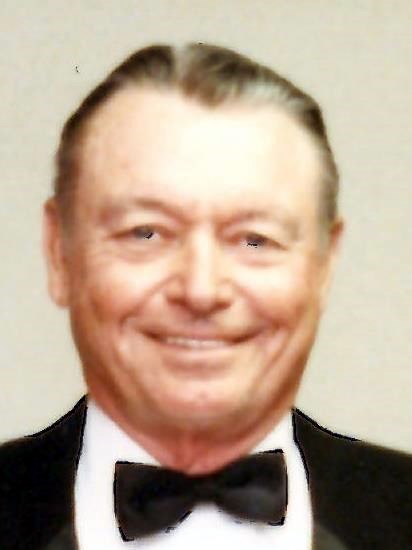
Benjamin Herring, “Ben” Colmery, II, 94, died on December 2, 2015, in Westminster Oaks Retirement Community, Tallahassee, FL. Memorial services will be held at the Frances Chapel, Westminster Oaks at 2 pm on Dec. 7, 2015. He will be inurned at the Columbarium, U.S. Naval Academy, Annapolis, MD. In lieu of flowers, please send donations to the Presbyterian Church, Broadway St., Edwards, MS 39066, or the Westminster Oaks Foundation Benevolent Fund, 4449 Meandering Way, Tallahassee, FL 32308.
Born in Mobile, AL, Ben was raised in Vicksburg, MS.His parents were Benjamin H. “Hap” Colmery, former President of the First National Bank and a community civic leader, and Bess White Colmery, a loving mother whose antique collectionhas been displayed at the Old Court House, Vicksburg.
An Eagle Scout, Ben was Salutatorian of his 1938 Carr Central High class, played inits band, ran on its track team, won a Kiwanis award, won a competitive Rotary Club college scholarship, and won a national short–story-writing contest. At Mississippi State for two years, he joined the Kappa Alpha Order fraternity, ran on the cross-country team, served on the college newspaper, and received academic, journalism, and ROTC honors. At the Naval Academy, Annapolis, he was a Midshipman Company Commander,and lettered on intramural champion football and boxing teams. He was a starteronNavy’s 1943 national intercollegiate champion lacrosse team.He graduated “with distinction,” Class of 1944, in June 1943.
For his M.S. (co-majors: Nuclear Physics and Physiology), Ohio State, he did the computations and animal experiments needed to permit using radioactive gold seedsin human cancer therapy. After an M.E., (Engineering Management), UCLA, his PhD (Management) dissertation at the Wharton School, Univ. of Penn., addressedtechniques to use when applying general systems theoryto the logistics support of a complex system operating in the field. He also attended the Federal Executive Institute, Charlottesville.
He served as Asst. Gunnery Officer, CIC Officer, and Navigator of USS Lewis Hancock, a destroyer in Task Forces 57 and 37,earning seven battle stars for 1944Central Pacific fleet engagements from the Marshall Island Invasion to the Philippines. Returning to flight training, he became a carrier pilot. He served one post-war tour in dive-bombers on the USS Shangrila, as a pilot and Sqd. Engineering Officer; and another on the USS Coral Sea as an attack-aircraft pilot andSqd. executive officer. Both squadrons won the Navy “E.” In the latter, he trained the first US Navy squadron deployed to the Mediterranean ready to deliver nuclear weapons using the low-level half-Cuban-eight (“Idiot loop”) technique. Other duty assignments included radiological safety and project engineer on seven nuclear weapon test shots, Yucca Flat proving ground, and nuclear weapons selection officer, Staff, U.S. Naval Forces, Eastern Atlantic and Mediterranean (including Middle East). He receivedthree Navy letters of commendation forinnovations.
At North American Aviation’s Atomics International Division, he was proposal coordinator for the sale of research and power nuclear reactors. He tested the main pumps, valves, and heat exchangers for a liquid-metal-cooled, 920-degree F, nuclear power plantinstalled and operated inHallam,Neb. He managed the design, manufacturing,, and installationof a prototype organic-moderated-and-cooled nuclear power plant and its installation at ARCO, Idaho -- on schedule within budget.
At Bendix Systems Division, Ann Arbor, he managed its Nuclear and Space Power Dept.Thatdepartmentdemonstrated radiation-resistant electronics for the nuclear-propelled-aircraft. It also furnished auxiliary power supplies for a meteorological rocket and for a suborbital rocket to communicate "Abort mission!" to SAC bombers. Ithad severalAdvanced Research Project Agency projects onexo-atmospheric nuclear weapon effects and on AICBM defense.Shortly after he left Bendix,his departmentdelivered to NASA the scientific package astronauts placedon the moon. He held two patentsthere.
At Industrial Nucleonics he was the Technical Director for the development of thickness measurement instruments for manufacturing-plant milling lines.He held two patents there. At NASA Lewis Research Center, he managed the non-nuclear testing of a full-scale nuclear rocket engine that was to have transported astronauts to Mars. He demonstrated that the “bootstrap” start-up of that engine, afterits assembly in space,was practicable. At the Equipment Systems Group, Teledyne’s Brown Engineering, Huntsville, he was Marketing Director. Among other contracts, he landed the first passenger loading facilities for wide-bodied jets, the six-story-tall, mobile work stands for the C5A transport, and the aluminum super-structures for the Viet Nam Riverine boats.
As a Branch. Manager, Naval Air Systems Command, Washington, DC, he managed the logistic support management of 35 type-model-series naval aircraft. Hecreated andmanagedthe first military fixed-price-plus-incentive contract for full logistics support for the first five years of fleet operation of a new-acquisition aircraftThe Navy furnished squadron-level support and maintenance space for second level maintenance and parts storage; the contractor, everything else --all ina single contract. The result was a record 0%/year "downtime due to logistics support" at a much reduced costand with reduced in-flight failures. The previous best was 15%/year. As Director, Plans and Appraisal, and then Senior Civilian, Naval Aviation Maintenance Engineering, he introduced a logistics system based on General Systems Theory that “cost-avoided” $1+ billion/year while increasing both operational readiness and safety. He introduced DOD to reliability-based maintenance which also saved money and increased safety. He was a member of the national Board of the Society of Logistics Engineers (then with about 85,000 members), and one of twelve national District Directors.
After retirement from civil service he worked full-time as a consultant to Booz-Allen Hamilton, helpingincorporatenew logistics and maintenance concepts in the Trident Submarine Program.
Moving to Tallahassee, he taught in the FSU Business School, was President of the Pebble Creek Homeowners Assoc., and was a board member of the Tallahassee Council of Neighborhood Associations, secretary of the Killearn Men’s Golf Association, and active in civic issues. He participated in "The Tallahassee Democrat"Council on Racial Affairs andled a year-long follow-up team. He was aDistinguished Kiwanian, a Distinguished Past President of the Killearn KiwanisClub, a Distinguished Past Trustee of theFlorida Kiwanis Foundation, and a was awarded its Legion of Honor for 25 years perfect attendance. He founded the Kiwanis-sponsored aKtion Club -- a community-service club --for developmentally-challenged adults, ran it forfive years, and assisted at the club until his death.Moving to the Westminster Oaks Continuing Care Retirement Community, he was secretary of its Residents Council and Chairman of two of the council’s committees. He also was President of the local chapter of the Florida Life Care Residents Association, a FLiCRA Regional Director, a member of its State Board of Directors, and its State Treasurer and State Vice President.
An enthusiastic golfer, Ben parred two courses, won a number of inconsequential tournaments, and shot his age at 83. He enjoyed skiing in Washington, Michigan, Pennsylvania, and the Alps..
He shared 18 happy years with Anne Brainard Colmery of Battle Creek, MI, mother of his children, and then twenty-three years with Frances Barber Sullivan Colmery, a childhood sweetheart. Then with his special friend, Charlotte Romanak, Ben enjoyed eleven wonderful years. All three pre-deceased him. He is survived by two sons, Benjamin H. Colmery, III, DVM, (and Charlie) of Ann Arbor, MI, and Wesley B. Colmery, CPA, (and Nancy) of Novi, MI; a daughter, Aimee P. Colmery, MA, of Little Rock, AR; 4 grandchildren; and 2 great grandchildren—all of whom he loved very much.
Show your support
Add a Memory
Share Obituary
Get Reminders
Services
SHARE OBITUARYSHARE
- GET REMINDERS
v.1.18.0