
OBITUARY
Dr. Kurt Gabriel Hofer
March 2, 1939 – September 20, 2015
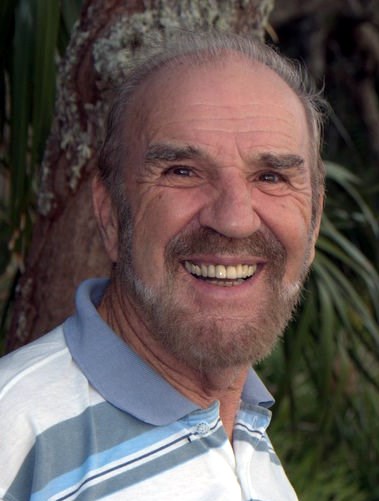
After earning a Ph.D. from the University of Vienna in 1965, Kurt and his wife, Maria, moved to Boston in 1966, where he worked as a postdoctoral researcher at Tufts University Medical School. He later accepted a position as a radiation biologist at Ohio State University. In 1971, Kurt accepted a faculty position in the Department of Biological Science at Florida State University, where he remained for more than 30 years until his retirement in 2003.
During his three-decade tenure at FSU, Kurt made his mark both as a popular educator and a renowned scientist. He estimated that he taught more than 15,000 students in everything from large, introductory-level classes to small, graduate-level classes in radiation and cancer research. The excellence of his teaching was recognized by the university when it awarded Kurt the President’s Teaching Award in 1980, the University Distinguished Teaching Award in 1990, and asked him to serve as chair of the President’s Council on Excellence in Teaching.
Simultaneously, as a prolific researcher and scholar, Kurt was highly regarded by peers as “one of the founders of modern radiobiology.” A pioneer in the study of radiation therapies for the treatment of cancers, he conducted basic and applied research that showed how raising the temperature of cancer cells and infusing them with oxidizing agents made the cells much more sensitive to the effects of radiation. Kurt’s research led to FSU being granted numerous patents, both in the United States and abroad, and had important medical applications that saved untold lives.
For his many accomplishments at FSU, Kurt was named a Robert O. Lawton Distinguished Professor — the highest honor that the FSU faculty can bestow on a colleague — in 1994. His citation stated that “the university salutes you for the magnitude of your accomplishment . . . thanks you for the distinction you bring to all of us, and points to you as a model of dedicated scholarship.”
Maria Hofer, meanwhile, played no small role in her husband’s success. For much of his academic career, the two worked side-by-side in his laboratory.
“My wife ran my lab,” Kurt said in a 2014 interview for the FSU College of Arts and Sciences’ Across the Spectrum magazine. “For all those decades, she was a lab mother. She was superb at tissue culture and working with animals. She ran the lab, ordered all the lab supplies, did many experiments directly with me, and trained all of my incoming graduate students.”
Despite being recognized worldwide for his contributions to science, Kurt said his most lasting impact was made in the classroom.
“I cannot complain about my success in research,” he said in the same 2014 interview. “I was very fortunate, making at least three major discoveries in my career, which is more luck than many. But regardless of how successful I was as a scientist, if you add it all up, teaching was probably more important. If you think about it, collectively the many thousands of students I taught will accomplish so much more than I could hope to accomplish as an individual. So I have always considered teaching to be perhaps the greatest contribution that I made in life.”
Kurt was born in the town of Feldkirchen, Carinthia in Austria on March 2, 1939. He was the second son of Katharina and Stefan Hofer. A self-described “farm boy,” he had a minor claim to fame prior to establishing his long and successful career in academia, having appeared as an extra in one of the most successful movie musicals of all time. “I come from the Austrian Alps, where they made ‘The Sound of Music,’” Kurt said. “At the time the movie was made (1964), I was a university student. The production needed young men to play German Wehrmacht soldiers to occupy Austria. I needed money, so for five days in enrolled in the Wehrmacht and occupied Austria. “I obviously had no idea that ‘The Sound of Music’ would become such a classic. With all the research I did during my decades as a scientist, many of the students in my classes continue to regard my five days of ‘movie stardom’ as the highlight of my life.”
Among Kurt’s interests in retirement were swimming, gardening, reading and observing nature. He and Maria also enjoyed the Gulf coast, having owned and developed several properties on Cape San Blas in the Florida Panhandle.
Kurt is preceded in death by his sister, Stefanie Rebernig. He is survived by his wife, Maria “Ridy” Hofer; two daughters, Marlise and Andrea Hofer; and nine brothers, Oskar, Gerhard, Andreas, Herbert, Stefan, Otto, Gunther, Ernst, and Walter Hofer.
For friends who wish, the family suggests memorial donations to the American Cancer Society, P.O. Box 22718 Oklahoma City, OK 73123-1718 (https://donate.cancer.org/), or a charity of choice.
Show your support
Add a Memory
Share Obituary
Get Reminders
Services
SHARE OBITUARYSHARE
- GET REMINDERS
v.1.18.0