OBITUARY
Carlos Arturo Plaza
November 28, 1944 – September 3, 2026
Carlos was born at 8:00 in the morning on November 28, 1944, in the Municipality of López, Cauca, Republic of Colombia, to Francisco Antonio Plaza and Hercilia Rodríguez. His paternal grandparents were Arcelio Plaza and Sofía Ardila, and his maternal grandparents were Benjamín Rodríguez and Julia Orozco.
He grew up between Cali and Buenaventura, Colombia, places and a culture that remained deeply rooted in him throughout his entire life. No matter where life took him, Colombia was always a part of who he was—in his music, his food, his fútbol, his stories, his dancing, his expressions, and the way he loved his family.
Carlos was one of several siblings and shared his life and history with Omar, Nuri, Henry, and Doris.
Throughout his working life, Carlos built more than swimming pools. As a pool architect and pool construction professional, he created things with his own hands. His family can still remember him coming home from work with the unmistakable smell of wet concrete—a scent that became part of the memories of their childhood. At work, he could often be found wearing his Army-fatigue bucket hat with the little red pen pinned to it, ready for another day.
But Carlos was so much more than the work he did.
He was a man who loved being alive.
He was funny, generous, strong, social, loving, stubborn, and full of personality. He had a strong character and, according to Carlos, there was usually only one correct opinion—his. If you disagreed, you were probably wrong, and he would make sure you knew it. That stubbornness was part of his charm and part of what made Papi unmistakably Papi.
And then there was his smile.
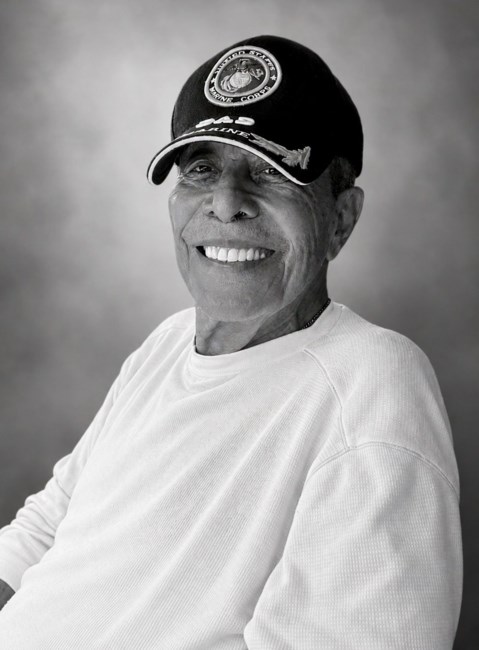
Carlos carried a beautiful smile with him throughout his life. Regardless of what kind of day he was having, there was a happiness about him that people could feel. He enjoyed people. He enjoyed conversation. He enjoyed laughing. Most of all, he enjoyed being surrounded by family, music, food, and life.
Music was part of Carlos’s soul.
Especially salsa.
He collected vinyl records from the musicians he grew up listening to and could tell you stories about the singers, the songs, and the memories attached to them. Over the years, the vinyl records became cassettes, and eventually CDs played through whatever new stereo system he had proudly purchased. Whenever Carlos got a new stereo, everyone was going to know about it. He could not wait to show it off, turn up the music, and find a reason to have another house party.
And Carlos loved a party.
A house full of people, salsa playing, food being served, people laughing, and Carlos dancing was exactly where he wanted to be. He danced every chance he got, especially when Spanish music came on. His love for music and bringing people together did not end with him—it became part of his children, and that tradition continues through the family today.
Carlos also loved fútbol. His heart belonged to Deportivo Cali, and fútbol remained one of the things that connected him to home. When he was younger, one of the players he loved was Leona, and later came El Pibe—names that became part of the stories and memories his family heard throughout the years.
When he wasn’t listening to music or watching fútbol, you could find him watching his old karate movies on VHS tapes or getting completely wrapped up in a Spanish telenovela.
Carlos had style, too.
In his younger years, there was no such thing as “just running to the store.” He could dress as though he were going somewhere special even when he wasn’t. He loved his Castellano shoes, dress pants—including his Christian Dior pants—colorful button-down shirts, chains, rings, and watches. In later years, he traded much of that for joggers and T-shirts, but some things never changed. His military hat and jacket and his beloved red Seminole jacket became pieces of Papi that his family will always remember.
In his younger days, family and friends may also remember him with a Heineken in one hand and a cigarette in the other, usually a Kent or Marlboro Red. They were little snapshots of a particular time in his life—images that immediately bring back the man they knew.
Some of the greatest memories of Carlos were found around the table.
When his children were little, they would sit on their father’s lap and eat directly from his plate. As the years passed, that same tradition continued with his grandchildren and then his great-grandchildren. Papi would sit them on his lap, take his spoon, and feed them bites of whatever he was eating.
It was such a simple thing.
But it became one of those family traditions that says everything without needing words.
What began with his own children eventually became a memory shared by three generations.
Carlos loved his Colombian food, and he loved his coffee. A morning was not quite a morning without his café con leche. Food was never simply something to eat; it was part of his culture, his home, and the way he connected with the people he loved.
He also had expressions that his family will forever hear in his voice:
“Es que pues, hombre, pues…”
“Commooooooo…”
“Viejo es la célula.”
And one of his unforgettable sayings:
“Se comió el cementerio y vuelve por las cruces.”
They were expressions that belonged to him, delivered in the particular voice and manner that his children and grandchildren will never forget.
Carlos was also a giver.
If someone needed help and he had the ability to give it, he gave. He helped people financially without expecting anything in return. His generosity was not about recognition. It was simply part of his nature. The people he loved knew that when they needed him, Papi would try to find a way.
His faith was equally woven into the man he was.
Carlos was raised Catholic and loved God throughout his life. His children remember him teaching them El Padre Nuestro when they were little. He would make the sign of the cross over them—from their forehead, to their chest, from one shoulder to the other—and then kiss his thumb and index finger held together in the shape of a cross.
For his children, those small gestures became much bigger than a childhood memory.
They became a piece of their father.
A piece of his faith.
And something they can now carry forward.
Carlos was the father of Juan Carlos Plaza, Edward Fontánez, Cindy Fontánez, Janet Plaza, and Sofía Love. He also held a special place in his heart for Janet’s husband, Walter Abadie, whom he came to love and acknowledge as a son.
He also loved and shared his family with his stepchildren, Claudia Mosquera, Irene Stout, and Lino Ferrer.
His legacy continued through his grandchildren: Louracelis, Carlos, Walter, Lyric, Harmony, Jazzlyn, Rayne, Chyanna, Zanya, Luna, Estrella, Esteban, and Lazaro, and through his great-grandchildren: Aurora, Asaiah, Alice, Andre’s, and Irina.
Perhaps Carlos’s greatest legacy cannot be measured simply by names or numbers.
It lives in the people who knew him.
It lives in his children’s love of music.
It lives in the salsa records that still play.
It lives in a cup of café con leche in the morning.
It lives in Colombian food placed on the table.
It lives when family gathers for a party.
It lives when someone gets up to dance.
It lives when one of his children recognizes one of his habits in themselves.
And it lives in every grandchild and great-grandchild who had the blessing of sitting beside him, laughing with him, eating from his plate, listening to his stories, being fed from his spoon, or simply knowing the warmth of being loved by Papi.
Carlos experienced life fully. He carried his Colombian culture proudly. He carried his faith. He carried his music. He carried his stories. He carried his strength. And above all, he carried his family.
The lessons, traditions, mannerisms, stories, music, expressions, faith, and pieces of Carlos that were passed down to his children will now be passed to their children, and then to the generations that follow.
That is how his legacy continues.
Carlos Arturo Plaza may no longer be physically present, but Papi is still here.
He is in the music.
He is in the stories.
He is in the laughter.
He is in the traditions.
He is in the faith he taught his children.
He is in every generation that came from him.
And whenever his family gathers, turns up the salsa, shares food, dances, laughs, argues about who is right, or sits a child on their lap and gives them a bite from their plate, a little piece of Papi will be right there with them.
His life did not end with his passing. His life continues through all of us.
Rest peacefully, Papi. Your music will continue to play, your stories will continue to be told, your traditions will continue to live, and your love will continue to be passed from generation to generation.
A Celebration of Life will be held at 11:00 am on October 3, 2026, in the Main Chapel at Bailey Memorial, 6701 West Commercial Blvd, Tamarac, FL 33319, US.
Inurnment will take place at 1:30 pm on October 3, 2026, at Our Lady Queen of Heaven Cemetery, 1500 South State Road 7, North Lauderdale, Florida 33068.
Show your support
Send Flowers
Add a Memory
Share Obituary
Get Reminders
Services
Celebration of Life
Inurnment
- SEND FLOWERSSEND
FLOWERS SHARE OBITUARYSHARE
- GET REMINDERS
v.1.18.0