
OBITUARY
Alexander Erhard Finke
October 13, 1924 – July 21, 2019
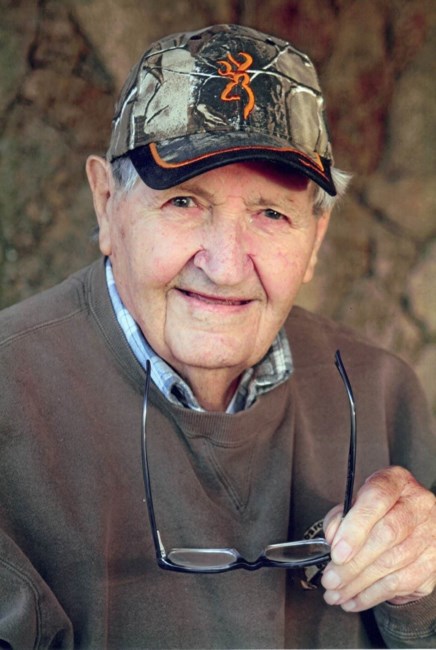
Heinrich Herwardt Alexander Erhard Finke entered the world by C-Section on Friday, October 13, 1924 in Wurzen, Saxony, Germany. He was the first child of Erich and Hildegard (Thieme) Finke. Over the next fifteen years he was followed by two brothers and two sisters. His timing was enviable, his early life was one of privilege as the only grandchild of two wealthy industrialist families during the “Weimar Republic’s Golden Years”, a time of great prosperity and cultural growth. His family was well positioned in a small town with a long history as an economic hub. His paternal Great Grandfather was H. August Schmidt, an engineer who is credited with designing the conveyor belt for use in the mining industry. He was an industrial magnate and later in life was appointed Director of Commerce during Saxony’s rule of Friedrich
August III. He was the very first to own a car – Mercedes Benz and his manufacturing company still exists there today. His Grandparents on his mother’s side came from Magdeburg where they were educated, well-respected members of high society. Alex grew up in a grand three story villa situated on an estate at the banks of the River Mulde.
His early childhood may have been privileged but he found it to be limiting. He was expected to project an image in line with his family’s position and as such had to endure being dressed in sailor suits to match his younger brother or be put on display at his parents’ many social engagements. At one point he was forbidden to remain friends with the son of their groundskeeper who lived in the cottage at the back of their estate, it wasn’t considered appropriate to be friends with a child of the working class. He longed to be free and recounted his favorite activity was to hunt for Reebock or Rot Hirsch with his Father and Onkel Rolf on the privately owned Thuringen Jagdgebiet (hunting range). As was the Third Reich’s mandate, he was eventually required to participate in the Hitler Youth with millions of other boys and girls. He recalled that experience valuable because it involved a lot of outdoor survival skill training and summer camps. His most memorable having been on the banks of Bavaria’s scenic Koenig See in Berchtesgaden - at the base The Eagle’s Nest.
His family’s position also meant that his education follow the academic rather than trade school track which meant high level studies involving mathematics and Latin. He wasn’t driven to excel at school and referred to himself as a poor student, a disappointment to his mother. In the spring of 1941, with the week-long series of written and oral tests approaching, Alex took his fate into his own hands and made other plans. Without his Mother’s approval, he registered himself as a volunteer and was admitted to the military two months before finals week.
As he marched north to the marshy woods of Finland where he would be stationed at the Russian front near Karolia, he considered himself lucky to be free of the rigorous and demanding expectations of school and society. His timing was good, history would prove that his 18 months there saw relatively little warfare, the troops that preceded and followed him endured battles and suffered greater casualties.
He often spoke fondly of his time in the military. It was a simple time, out in nature, deep in the snow, where they hunted wild game and he was surrounded by camaraderie of the many young men his own age. He proved himself to be a leader among his peers and was selected to become a Geburgsjaeger (Mountaineer) in Northern Italy; an officer training academy. There they learned military tactics and patrolled on horseback through the rugged alpine region at the border between Italy, Austria and Switzerland, seeking out Italian Militia and Partisan Fighters after Italy joined the Allied Forces. He never got to finish his training, Germany surrendered and he was transported to Southern Italy where German Prisoners of War would be held for years. He had the good luck to be detained in an American Camp. Food was limited but though they were treated reasonably well, Alex again made different plans, taking his fate into his own hands. After just ten months, on March 6, 1946, he escaped from P.O.W. camp. Outrunning or dodging the shots fired after him in the light of the moon one night while on garbage detail. From there he somehow journeyed his way home, staying alive through dangerous territory traveling for many months without papers, the distance from the heel of Italy’s boot, some 1100 miles home to Wurzen.
Life in Germany after the war was very difficult at best. The war had left his home town ravaged, Germany impoverished and in shambles. Death and despair had replaced his idyllic childhood home town and lifestyle. Upon his return, thin and worn, he found his mother and siblings too, had been suffering, their home having been occupied by the allied forces and Russian troops actually physically occupying the old villa. Alex put his well-honed survival and commandeering leadership style into play, recruiting friends and family to help procure food, trading ration cards and dealing on the black market. His daring was bold in that the punishment for engaging in free-enterprise of things like coffee, silk stockings, cigarettes, meat or potatoes, was punishable by death if discovered by the Russian government. Death, or worse yet, a labor camp in Russian occupied Poland, but for Alex, apparently worth the risk.
He and Lotte made a good team as co-conspirators in the game of survival. They married in April of 1949, and thereafter relocated to West Germany where Alex, then 25 years old returned to school, this time; Textile & Weaving School. Lotte supported him as a telephone operator with the Deutsche Post. By 1952 he decided economic opportunities were far greater in the United States but was not admitted due to immigration laws. He considered South America and even Australia but eventually chose to immigrate to Canada, where many European War Refugees were being accepted. Lotte followed some months later. In Ontario he worked in the textile industry as a fabric designer of woven patterns and Lotte got a job in the bookkeeping department of the same little company. Eventually they were accepted into the United States and made their way to the West Coast, settling in Portland.
The many years that followed were busy as Alex trained via correspondence course to learn the home building trade and went on to build homes, probably as many as 300 over the course of his years as Alex Finke, Builder and then Alexander Construction, Inc. Later turning their efforts to apartment building, Alex and Lotte worked hard all the time, keeping their focus on growth. After all the tremendous losses, his desire to rebuild over-powered the many roadblocks and setback that came his way. Together, they consistently worked toward a common goal to put the devastating past behind them.
When Alex wasn’t working he was reading or hunting. He read a lot, mostly US News and World Report, The Wall Street Journal and very often the encyclopedia – the Google of his time. He didn’t care for fiction books, he appreciated history, and was deeply interested in economics and business.
Alex loved hunting, and once settled in Oregon took his father, brother and immediate family deer or elk hunting with him each year. It was wonderful family time and he loved the outdoors. He was an adventurer or sorts, an explorer of new places. When he chose Portland somewhat randomly on the map he’d never been there before, nor did he know a single soul. In the early 1960’s he climbed Mt. Hood with his younger brother Hubert and a 3rd German friend. A few years later he decided Mexico was worth exploring, loaded up his family and drove all the way to Acapulco, some 3,000 miles away. Deciding that was indeed a long, long distance, the next 4 trips by car were to Mazatlán because that was just 2,200 miles. It was an idyllic place to disappear to and pulling both kids out of school for a couple of weeks was worth it.
Alex was a creative thinker but not a big planner, he was influenced more by inspiration. He once built a wooden boat in his basement and upon completion realized it didn’t fit out the door. His solution involved knocking out a wall and replacing it with a bigger door. He often had multiple projects going at one time, many never saw completion. He had lots of good ideas and would often redirect his energy to the newest, most exciting one.
He liked being unconventional and didn’t follow many rules. The rules he chose to dismiss were those in line with what society or others expected. He made his decisions based on his own perspective and his own needs. He was known for his charm and his deeply engaging manner. If you ever met Alex, you didn’t forget him and that’s exactly how he liked it. He wanted to leave an impression and have an influence on everyone around him.
Alex’s health held out for a long, long time but in his late sixties he was diagnosed with colon cancer that was caught early and readily treated. It was not until his seventies that type 2 diabetes started to slow him down. Back in 1975 he bought himself a ranch in Eastern Oregon, complete with cattle, some tired horses and a 100 year old house. The start of a new adventure not just for himself but the whole family. And nearly 40 years later, that’s where he was when he had the accident that crushed his leg, leaving him in tough shape at 89 years old. He withstood all nine surgeries and the tremendous loss of his independence when he found himself limited to life in assisted living.
In Alex’s ever optimistic way he even made the very best of his last four years, becoming a popular resident among the many kind and committed caregivers at The Springs. He made himself known, loved and memorable. And that’s how he’d want to be remembered. Not so much for his success or anything he did or built but rather just for being him, for his charming, loving warm and endearing self. He will be missed but his indelible mark carries on in the hearts of all whom he touched.
Show your support
Add a Memory
Share Obituary
Get Reminders
Services
SHARE OBITUARYSHARE
- GET REMINDERS
v.1.18.0