OBITUARY
Norman Ray Franzen
July 1, 1938 – July 24, 2026
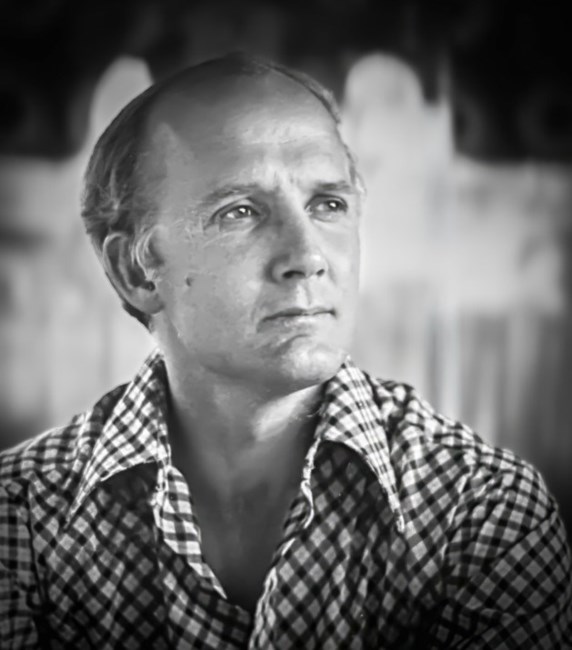
Norman R. Franzen, the son of an Oregon sheep farmer who had his feet planted in the mud and a mind that reached for the stars, died on July 24, 2026, at 88, following a lifelong quest to understand both the nature of the universe and the nature of God.
A mathematician by training who also delved deeply into physics, biology, chemistry, cosmology, and quantum mechanics, and in later years, autobiographical writing, Norman's life was consumed by a single ancient spiritual question that arose from the death of his 12-year-old sister: “What is man that Thou art mindful of him?”
He wrote about this in his 2019 book, "The Pilgrim/Skeptic Dialogue," his account of his pointed but friendly debate with a close friend over the existence of God. He wrote other life stories as well, including "Surprises Along the Way," that detailed his experiences as a mathematician and engineer during Tektronix's turbulent heyday in the ‘70s and ‘80s where his math insights helped the company win a cathode ray tube patent critical to a highly successful oscilloscope series ($1.5 billion in sales.)
He documented his family, work and spiritual journeys over a nearly 15-year battle with multiple sclerosis that eventually limited the onetime mountaineer and marathon runner to the use of just one hand. (Norman didn’t believe in miracles of the religious kind, but often exclaimed that his ability to negotiate physical challenges was nothing short of miraculous, thanks to applied physics, disciplined exercise and placing needed objects in precise positions that no one was allowed to mess with.)
Norman, who in the mid-‘60s and early ‘70s taught graduate-level mathematics at Oregon State University, attributed his academic success not to personal brilliance but to having a mind that was open to inspiration from God.
He was awed by the Earth in all its beautiful and abundant diversity, and complexity, and gifted his children many books, DVDs and papers explaining why it was singular in its divine creation through the Big Bang. Online science lectures kept his mind and correspondence active well into his final years. Cells and atoms were part of his everyday conversations.
Over many decades, he cultivated a prized collection of math and science books (catalogued in his “Trail of Books”), and yet when confined by MS, spent years having new literary worlds opened to him as he and his wife, Jan, devoured a vast number of novels, historical fiction, and other genres that he'd never considered before. Jan was his devoted reader. His math mind even ended up shaping a character in a friend's Pacific Northwest novel.
He maintained a long list of friendships, largely by phone, and liked to talk loudly and endlessly about his passions.
Classical music was another great love (Brahms Violin Concerto in D Major!), and so he felt blessed to have not only a pianist wife but a professional classical guitarist as his son. As David has noted, Dad was his No. 1 fan, and in turn, David became his Dad's caregiver alongside Mom.
Norman Ray Franzen was born on July 1, 1938, in Baker, Oregon, to John R. and Louise Franzen, the second eldest of five siblings of proud Swedish/Belgian/Scottish heritage. When he was 5 years old, the family moved from Portland to farmland in the tiny town of Turner, Oregon, where they lived under the stars for a period while they built the Franzen family homestead — a rustic midcentury farmhouse with a stunning view of Mt. Jefferson from the porch. (He would later regale his family with the story of being pinned down on the flanks of Jefferson during a lightning storm.)
After his retirement from engineering, he wrote fondly of his childhood in his story, "Growing Up on the Farm," where, among many adventures, he recounted building elaborate rock forts with his brother, battling bees and rats in their shared rough-hewn bedroom, stripping old truck parts to build a working telegraph set (along with many other mad-science experiments), and accidentally burning up the local cemetery by absent-mindedly tossing used matches on his walk back from school.
He never let go of the instruction manual for his first chemistry set, which was gifted to him by a beloved aunt in 6th grade and became a lifelong source of inspiration. His father, John, a tailor, farmer and follower of Jesus, was his hero.
After graduating from Turner’s Cascade Union High School, the farm boy earned a full scholarship to OSU, where he studied electrical engineering before switching to math. He then went on to earn a doctorate in mathematics from the University of Colorado, where he first heard the call of the mountains.
At Tektronix, Norman’s main fields of work were high-frequency measurement systems, quadruple electron optics used in the 2445 oscilloscopes, and video compression schemes used in digital television.
Norman, who lived in Tigard, is survived by his wife, Jan, his three children, Kari, Robin and David, and his granddaughter, XiuLian. He was preceded in death by his grandson, Eric, who he lost earlier this year. He was active for many years at St. James Episcopal Church, where he previously served on the vestry and participated joyfully in the Cursillo movement.
Norman said illness brought him much closer to God, who he saw as the source of all goodness. He lamented the current U.S. administration and ICE, and the cruelty unleashed by them on innocents around the world.
Norman often probed guests, including his son-in-law, Andy, about whether younger generations cared about the questions intersecting science and faith that had dominated his life. In the end, he died at peace, persuaded by YouTube videos and his relentless online research that younger seekers would indeed carry on the quest.
A public memorial will be held at 2 p.m. Saturday, Sept. 19 at St. James Episcopal Church, 11511 S.W. Bull Mountain Road, Tigard. In lieu of flowers, the family suggests donations to Central City Concern in Norman's name.
Show your support
Send Flowers
Add a Memory
Share Obituary
Get Reminders
Services
- SEND FLOWERSSEND
FLOWERS SHARE OBITUARYSHARE
- GET REMINDERS
v.1.18.0