OBITUARY
Tomohiro Walter Moriyama
February 15, 1923 – November 11, 2021
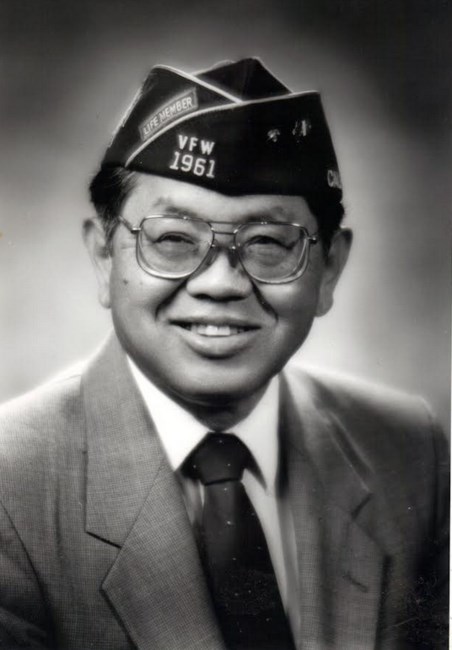
Tomohiro Walter Moriyama ("Walter") was born in Honolulu, Hawaii to Choshin Moriyama and Shizuko Uezu. Walter was the second child born and oldest son. His siblings were Grace, Alyce, David, Nancy and Ellen.
Several circumstances and events had significant impact on Walter and the person he would become. First, he was born of immigrant parents. His parents left their homeland of Japan and moved to Hawaii speaking little English. His parents were hardworking, but lacked any real professional skills. In addition, he was born into what would become a large family consisting of six children. Money would be tight.
The second circumstance or event happened when he was six years old. It was 1929 and the Great Depression started. Walter recalled his parents struggling (like many others of the time), to get work of any kind. For a short while his father owned a soda shop. (This is probably when Walter developed his life-long love of ice cream). His father eventually worked as a waiter at a high end hotel (the Halekulani) in Honolulu. His mother took in odd and end jobs to supplement his father's limited income. It was still not enough in those desperate times. Walter's older sister, Grace, had to drop out of school to work. As for himself, Walter was able to continue school, but took on three jobs…two newspaper routes (one in the early morning and another in the afternoon). His third job was on a week night and Saturdays at "The Rendezvous Dance Hall" where sailors would hang out. His job was to bus all the glasses that were left so that they could be washed. He recalled making 50 cents an hour. At one point, his combined earnings from his three jobs exceeded that of his father's. Like Grace, Walter gave his pay check to his parents to help support the family. His parents gave him money back for clothing. He also got money back for his three bikes- a Tribune and a Columbia for delivering newspapers and a French Alcyon – a light-weight race bike on which he practiced on Saturdays.
The Great Depression continued all through Walter's formative years including up to and beyond his high school years. Walter remembers his parents bringing home an orange or similar fruit and having to divide it six ways (with his siblings) so they would all get a taste.
Despite multiple jobs and tough economic circumstances, there was still time for fun and friends. It was in the 6th grade that Walter met his best friend, Arthur Nishimoto. (They remained friends until Arthur's passing a few years ago). After their meeting, Dad and Arthur were constantly together. They would dress alike, buy similar bikes and later joined the school band together (in the 7th grade). That is when Walter took up the French horn and developed a love for music. Though he did not continue with the French horn, his love of music of all kinds did. He particularly enjoyed listening to classical, Hawaiian and Big Band music- all of which he continued to listen to on his custom-built "HiFi" stereo system that he would order years later in his life.
While still a youth, Walter became interested in breeding homing/racing pigeons. That was the start of a life-long love of birds. Walter also recalled many days at the beach…swimming, riding the waves, spear fishing, night torch fishing and crabbing. He was always outdoors and active. He would became so dark in complexion that some of his friends called him "Blackie."
In high school (McKinley High) Walter and Arthur Nishimoto started going to dances. They enjoyed meeting girls and dancing the night away. Dad remembers that it was in his sophomore year, Arthur suggested that they go to a local church dance. They went and continued to go to other church dances regularly. By their junior year both Arthur and Dad started attending the services of the church that sponsored those dances. They learned earlier that the name of the church was The Church of Jesus Christ of Latter-Day Saints (or the "Mormon church" as it was frequently called back then).
The third life-altering event for Walter was when both Arthur and Dad were baptized together during that junior year. For both of them, baptism was the start of lives dedicated to their religious beliefs; a deep love for God and a commitment to the church and service.
Both Walter and Arthur graduated in 1941. Few months after graduation, in December, the fourth circumstance/event that would change Walter's life (and the lives of millions) occurred. Walter recalled the morning of December 7th clearly. Everyone in his hometown of Honolulu awoke to dark clouds of smoke rising from the direction of the harbor…Pearl Harbor. He along with others wondered whether this was another sugar cane burning or something more. Walter remembered going toward the harbor to investigate and hearing whistling overhead and the sound of explosions in the distance. These were bombs raining down on the harbor…not the usual burning of sugar cane fields. Walter remembered the shocking news over the radio. "This is war! Take cover! This is war! Take cover!"
All Americans of Japanese descent were suddenly under suspicion. Here in the mainland, they were rounded up and put behind barb wire and guarded with machine guns. All Japanese-Americans were anxious to prove their loyalty to America…especially those in Hawaii because they were the ones who were bombed. Walter gave away all of his pigeons which numbered about one hundred and some of his bicycles to avoid suspicion of disloyalty. Because of prejudice against Japanese-Americans, they were not allowed to enlist in the US armed forces…at least not until 1943. Until that date, Walter continued to work. One notable job was at the American Can Company. Walter remained active in the church as he served as a scoutmaster of a church-sponsored troop. He also served as a full-time missionary to the island of Molokai.
Eventually, in 1943 Japanese-Americans were permitted to enlist. Arthur Nishimoto and Walter went to enlist together. Arthur was accepted into the now famous 442, but Walter was rejected as 4F because of his poor vision and thick glasses. Walter was very disappointed as his buddy, Arthur, was shipped out.
Two years and two atomic bombs later brought the fighting to an abrupt end in 1945. The fighting had ceased, but the US government was seeking new recruits for the occupation of Japan (because by then many of the soldiers were now returning home). Walter enlisted on October 5th, 1946 the last day a person could enlist and qualify as a World War II vet. His poor eye-sight did not prevent him from being accepted into the occupation forces.
Walter completed basic training near Schofield Barracks and was eventually shipped out to Fukuoka, Japan (the fifth event that would shape his life). In Fukuoka, Walter took up photography as a past time. He met a cute "round-faced" girl named "Takako" at the photo shop where he would take his film. He was instantly smitten. He started taking lots of pictures and became a regular at that photo shop. Although Takako was clearly from a family of education and means (whereas Walter was not), a relationship quickly "developed." (This was early 1947).
An announcement was made at Camp Hakata that any soldier who was a member of The Church of Jesus Christ of Latter-day Saints ("LDS") could go to Tokyo to attend an upcoming LDS conference there. Walter told Takako about the conference and mentioned that he wanted to meet Takako's father, Professor Ryozo Kanehira, (who lived in Tokyo) while he was at the conference. Takako gave Walter her father's address. In April 1947, Walter attended the conference and met Takako's father. Walter and Ryozo learned much about each other.
In May 1947 Walter and other soldiers were sent to Kagoshima to oversee the first democratic elections in Japan. When he returned to Fukuoka, Takako was no longer at photo shop. She had quit. Walter panicked. Where does Takako live?! The young lad who worked at the photo shop didn't know, but knew the general direction and said that he knew she lived in a distinctive western-style home with a red tile roof.
Walter searched and searched the neighborhood and amazingly found the home. Walter and Takako continued to see each other throughout the year. Some memorable meetings occurred in the summer when Takako and Walter would spend evenings on a stone bench at the top of some 500 steps on the Hirao Reservoir hill. Takako would bring candles and together they would read Ryozo's letters that contained complimentary impressions about Walter.
On New Year's Day of 1948, Walter and Takako had a memorable visit to Walter's aunt in Takamatsu. (A photo of them together at the Ritsurin Garden is attached). After that visit to Takamatsu, Takako moved to the family summer home in Gannosu. Gannosu was much farther away and Walter recalls taking extraordinary measures (including folding up his cot and sneaking out of the barracks) to see Takako. As he described it, he would take public transportation as far as he could; then run the distance between so many telephone poles, walk and run again. Anytime he would see a cloud of dust coming his way, he would duck behind an embankment or bush until the vehicle passed (in case it was MP vehicle on patrol). He would continue this running/walking and ducking until he eventually arrived at the Kanehira Gannosu home. However, on one occasion, Walter recalls being approached by two MPs with flashlights who mistook him for a Japanese national. (Without authorization Walter was out of uniform in an off-limits area near Brady Air Field). One of the MPs asked "Hey Gook! Have you seen any GIs around here?!" Walter responded in the worst Japanese accent he could muster, "Me no speekee Ingurish." Luckily, the MPs let Walter go.
Eventually, Walter was transferred to Yokohama (south of Tokyo) to continue his Army dental training at the Camp Coe in Yokohama where the 338th Dental Detachment and Dental Laboratory and the school were located. He regularly visited Takako's father, Ryozo, (who continued to work in Tokyo) and developed a relationship with Yoichi (Takako's older brother) and his wife, Aiko. Unexpectedly, Ryozo's health took a down turn. Takako moved from Gannosu to Tokyo to help care for him. Takako and Walter were again somewhat close together and resumed their courtship.
Walter would save up sugar from his breakfasts a few scoops at a time (since he did not drink coffee). It should be noted that only saccharine (no sugar) was available to the average Japanese at the time. Walter would sell his rations of cigarettes and buy meat and vegetables so that he could (along with the sugar) treat the Kanehira family (those who lived in the Tokyo area) to "sukiyaki" dinners that they would enjoy together with him at Yoichi's Ogikubo home. Eventually, Takako and Walter communicated their desire to get married to ailing Ryozo at his bedside. He gave them his blessing.
While caring for her father in Tokyo, Takako received word that now her mother back in Gannosu was gravely ill. She was close to death. Takako got on the train to see her. In those days, it took days for such a trip. Her dying mother kept enquiring whether Takako had arrived home. Takako finally arrived. Upon Takako's arrival, her mother, Chiyoko, asked whether Takako still wanted to marry Walter. "Yes"was her answer. Chiyoko gave her blessing and died later that night.
Three months later, Takako's ailing father died. The year 1948 was a difficult year for the family. At the beginning of the year, all in the family were well. By the end, both of Takako's parents had died. Takako was just 23 years old and parentless.
In the spring of 1949, Takako moved to the city of Tsurumi to be closer to Walter and friend Junko Shimada (Fukuda). Although Walter and Takako wanted to marry, GIs were prohibited from doing so by law. They waited years until that law was repealed. They finally married on Dec. 15, 1950 at the American Consulate. They had a follow-up church wedding…a double wedding with friends, Kikuo Fukuda and Junko Shimada, in January 1951. Walter and Takako spent their honeymoon skiing with the Fukudas. Eventually months and years passed and children, Lisa and Grant, were born (in Tokyo and Osaka respectively).
Walter's enlistment by now had ended. He was now working in civil service in the field now known as Environmental Health and Safety (in Kobe). The family eventually moved to Yokohama. Walter would be sent by the US Army to Korea. The family was separated for weeks at a time as Walter fulfilled his assignment in Korea over several years.
Eventually, the family moved stateside to Barstow, CA in 1960. (Walter was assigned a position at Fort/Camp Irwin). Takako, Lisa and Grant spoke little or no English. It was because of the welcoming and loving people of Barstow Ward (Wisemans, Rowans and so many others) that the rest of family (Takako, Lisa and Grant) were baptized into the church. Eventually, the family was sealed on 24 February 1962 in the Los Angeles, California Temple.
(It should be noted that Walter remained an active church member throughout his life. He accepted various callings that included being High Councilor in the North Torrance, California Stake, Senior President of the Stake Seventy Quorum before it was abolished. He also served in the bishoprics of the Gardena 2nd and Torrance 2nd Wards).
In 1964 Walter took an assignment at Norton Air Force Base in San Bernardino. However, Walter had to commute from Barstow to San Bernardino because the family home would not sell. Walter made the 120 miles round trip on a daily basis for a year. Exercising faith in God, he prayed for help to sell the home. Walter and Takako were prompted to commit to donating the equity from their home toward the construction of a new building that the church was planning to build at that time. Walter recalled selling their home the very next day after committing to donate their equity. Walter considered this nothing short of a miracle.
The family moved to Redlands (near San Bernardino). It was then that Walter's interest in real estate investment started. Grant has many memories of working countless hours next to his father maintaining his apartments. Renee (Mika) was born while the family resided in Redlands.
In 1967 the family moved to Torrance when Walter took a transfer to what is now the Air Force base in El Segundo. Three years later in 1970, Walter retired from civil service and joined Hughes Aircraft Company- working at Radar and Missile Systems Groups. (He retired from Hughes in 1989).
In the 1970's Walter and Takako invested in the coin laundromat businesses. As with Walter's real estate investments, Grant has many memories of working next to his father at those businesses. Because of his early circumstances and upbringing, Walter had a strong work ethic. He was determined to instill the same into all his children.
Walter and Takako purchased their second home ("Atkinson") in Torrance in 1976. (This would be their final home in which both Takako and Walter would eventually pass away). A few years after moving into this home, they added a large family room. Over the decades, Walter and Takako enjoyed filling their home with furnishings and collectibles. They meticulously maintained their flower-filled landscaping. They grew fruit trees of various types and were particularly fond of raising cymbidium orchids. In the mid-1990's, Walter built an outdoor aviary in which Walter and Takako raised love birds, cockatiels, parakeets, finch and quail.
Atkinson was a beautiful refuge where Walter and Takako regularly enjoyed hosting their friends with Takako's delectable home-cooked meals. They also delighted in having the extended family over for visits which occurred almost weekly. Grandchildren Kristin, Candice and Kara remember watching "South Pacific" or "The King and I" with Walter and Takako while being fed snacks of chocolate candy, shrimp chips, ice cream and alike. A particularly memorable event was in 2013 when the house was overflowing with beloved friends and family to celebrate Walter's 90th birthday.
One noteworthy event for Walter, Takako and family occurred earlier during the summer of 1991. The family was caravanning to Ogden, Utah for Tiana's (granddaughter's) baby blessing. Unfortunately, in route to Utah, one of the two cars overheated in the desert temperatures of Nevada. Nine people piled into Walter's and Takako's Cadillac to complete the trip. Riders remember impromptu bubble gum blowing contests and singing songs until all arrived safely at their destination…albeit a little stiff from being crammed into one car.
Other key events in Walter's and Takako's lives include their 50th wedding anniversary trip back to Japan in the year 2000. This was Walter's first trip back to Japan in 40 years. During that trip, Walter and Takako re-visited many of the places where they had courted. One planned stop was the stone bench at the top of some 500 steps on the old Hirao Reservoir hill (where they used to read Ryozo's letters by candlelight). They were pleased to find the steps and stone bench, but they were completely taken by surprise when they found that the new LDS Fukuoka temple was under construction immediately adjacent to the steps. Walter and Takako also went to look for Takako's childhood home with the red tile roof. Unfortunately, it had been demolished. The remaining parcel was now part of a large parking lot. But again to their astonishment, they saw the steeple of a LDS church nearby.
In the year 2003, Walter and Takako went to Taiwan where Takako's professor father, Ryozo Kanehira, had done extensive botanical research and was being honored. Walter was also able to go to Korea and Europe with other veterans in 2005.
Subsequent to the aforementioned trips, Walter purchased an electric tricycle. (He had lost his driver's license years earlier due to poor eyesight). Neighbors, people at the grocery store and church members will recall Walter cruising down the streets of North Torrance at frightening high speeds. This electric tricycle became a replacement for his automobile, and it gave Walter a renewed sense of independence and freedom.
In 2011, Takako suddenly became bed-ridden. Son, Grant, visited daily and lifted Takako out of her hospital bed and placed her in a wheelchair. Walter would push Takako around the neighborhood with dog, Tom, in tow so that Takako could get fresh air and sunshine. On weekends, grandchildren and great grandchildren accompanied them on many of these walks. Despite being bed-ridden and on hospice, Takako was able to take regular outings with Walter in and about the city.
Perhaps the final life changing event for Walter was the passing of Takako in 2013. Although not unexpected because Takako had been on hospice for over two years, Walter was devastated. He was sad and lonely like no other time in his life. Family rallied around him, but there was to be no filling of the massive void left by Takako's passing.
A year after her death, Walter took his last and final trip back to his birthplace (Hawaii) with granddaughter, Shaylea.
After several mishaps, Walter entered assisted living in 2016. A difficult time for him and the family was during the many months in 2020 that he could not have contact with family or friends because of the Covid pandemic. Family members could only greet him through the closed dining room window at his care facility. Because of his poor hearing, few words were ever exchanged. Thankfully, restrictions were eventually relaxed and he could be visited and he could venture out.
Walter suddenly became bed-ridden in October 2020. He was visited every day and continued to make amazing memories (daily walks in his wheelchair, regular visits to his house, church, ice cream/hamburger "runs", and much more. Walter passed peacefully in his home surrounded by the family on Nov. 11, 2021, Veteran's Day. Walter was interred at Green Hills Memorial Park on November 23, 2021 with full military honors. A memorial service was subsequently held that evening at The Church of Jesus Christ of Latter-day Saints- Torrance North Stake Chapel.
Along with his service and dedication to church, Walter will be remembered for his 33 year association with the VFW Post 1961. He had many friends in that organization. He served as commander and subsequently as chaplain for the post. He was a proud American and always flew a flag outside his home. Like many Japanese-Americans of his generation, he felt he needed to show a devotion to country… along with his love of God, family and dedication to principles. These four things were ultimately his legacy and life story…the true tale of how a common boy from a poor uneducated immigrant family scratched and struggled his way through life to ultimately find faith, honor, love and fulfillment.
The family is consoled knowing that Walter is now reunited with his beloved Takako.
Preceded in death:
Takako Kanehira, wife
Parents: Choshin Moriyama and Shizuko Uezu
Siblings: Grace Arakawa, Alyce Yogi, David Moriyama, Ellen Harvey
Survived by:
Nancy Tome, sister
Children: Lisa (Stanley), Grant (Julie), Renee (Darwin)
Grandchildren: Kristin Millett (Zachary), Mitsu Salmon (Milad, fiancé), Candice Moulton (Kellen), Kara Moriyama, Tiana Scofield (Zachary), Shaylea Corless (David), Jayden Anderson (McKayla), Caprice Goring (Hunter)
Great grandchildren: Porter, Benson and John Millett, Bennett, Everett and Charlotte Moulton, Drew and Summer Corless, and Boston Scofield.
Show your support
Add a Memory
Share Obituary
Get Reminders
Services
SHARE OBITUARYSHARE
- GET REMINDERS
v.1.18.0