OBITUARY
Géza Benko
July 7, 1934 – August 20, 2020
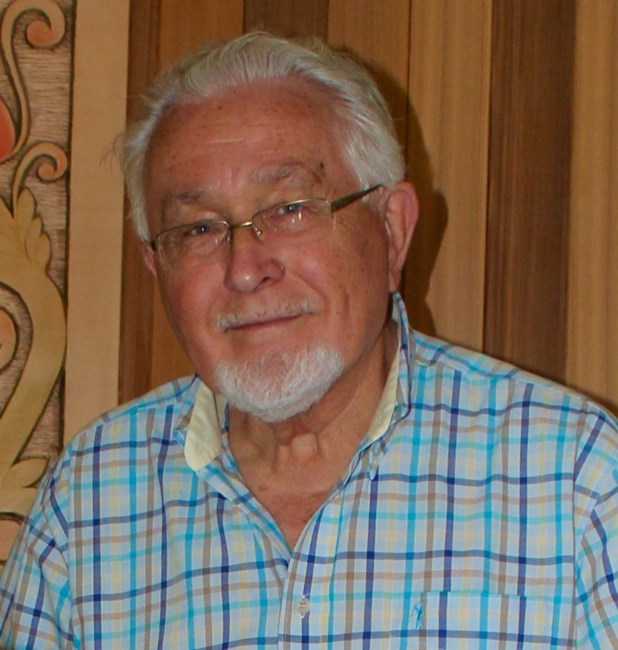
Géza Benkő, 86, passed away at Victoria General Hospital on August 20, 2020. He is survived by his loving wife Mária (Szőllősi) Benkő and his children from a previous marriage and their spouses, Zoltán and Marguerite Benkő, Klára (Benkő) Aitken and Greg, his grandchildren, Tim Aitken, Emily (Aitken) McGloin and her husband Joseph, Kamilla (Benkő) Ficnar and her husband Andrej, Gabriella Benkő and Mátyás Benkő. He was predeceased by his first wife Veronika (Stenzinger) Kassay.
Géza was born in Budapest to the late János and Ilona (Hajducsek) Benkő on July 7, 1934. His baptismal certificate bears the signature of József Mindszenty, the activist priest who later was appointed Cardinal and Primate of Hungary. The family had moved to Pest a few years earlier from Őrkény, a small rural village just to the south of the capital city. Géza and his parents shared a three-room apartment with his maternal grandparents and his uncle. The front room served as a small shop, where his mother ran a knitting business. His grandfather kept bees and sold honey. Géza always maintained that he developed his life-long love of sweets at this time, as he would secretly sample the wares stored under the bed.
Growing up in Pest during the Second World War and its aftermath, Géza was street-smart and fearless, as well as resourceful. He stuffed rags in the tires of his old bicycle, as inflatable inner tubes were impossible to obtain. His parents divorced when he was still quite young, but his mother later remarried. Géza was very fond of his stepfather Antal Hirka, who taught him how to use tools and let him tinker in his workshop. He and his uncle László, who was just a few years older, belonged to the neighborhood Boy Scout troop. He took part in the funeral procession of Chief Scout Count Pál Teleki as a young boy, but his most vivid memory was of the highly emotional troop flag retirement ceremony, after the Communists took over the country and banned the organization. The anguished young scouts could barely hold back their tears as they slowly lowered the colours and folded them up for the last time. This and other tragic events from that period instilled in Géza a profound and abiding hatred of Communism. The injustices he witnessed and experienced affected him deeply and set him on the path to activism, a calling he pursued his entire life.
Upon completion of his elementary education, Géza was sent to Valkó for a forestry apprenticeship and then to a vocational high school in Sátoraljaújhely. He then enrolled at the University of Sopron to study forestry. He enjoyed his time there and was captivated by the rich history and student traditions of this venerable academic institution. Géza was an accomplished accordion player and soon formed a band with classmates that, from all accounts, was quite popular in the small picturesque city. He developed a strong loyalty to the school and his colleagues which lasted his whole life. Géza also married at this time, but all plans for the future were soon thrown into disarray with the onset of the Hungarian Revolution. This cataclysmic event was first met with exhilaration and hope by the students, many of whom participated in anti-communist activities. Géza was no exception, throwing himself fearlessly into a frenzy of effort. At one point, he famously disarmed city officials by pretending to have a gun in his pocket. Tragically, the revolution was soon quelled by the arrival of tanks in Budapest from the Soviet Union. Recognizing the potential consequences of remaining in Hungary after the uprising, about half the student body, and several professors and staff fled the country en masse and gathered in refugee camps in Austria. The foresters in the group, about 220 students and professors, eventually settled in British Columbia, as the Canadian government and people warmly welcomed them.
The University of British Columbia took in these academic refugees and established a parallel Sopron Division in its Faculty of Forestry, where the young immigrant students were able to complete their studies with their professors in Hungarian. Life in a new country is never easy, but after learning the language and customs, many of the newly minted foresters spread out across the province and established themselves in their profession. They brought a fresh new perspective to the forest industry and several had very distinguished careers.
Géza began his work life in a plywood mill as a labouror but was eventually hired by the British Columbia Forest Service in Victoria. His son was born shortly after graduation and his daughter a few years later. He spent many summers doing fieldwork in the wilderness. He loved being outside, office work was tolerable but much too confining for him. Sometimes he and his crew would be sent to remote areas that could only be accessed from the sea by boat. They would be dropped off for days at a time in places where the trees were so large and the underbrush so thick that you couldn’t get anywhere without cork boots, footwear with spikes on the soles designed to keep from slipping on wet moss-covered logs.
Driven by the memory of his experiences growing up under an authoritarian regime and the tragic conclusion of the Hungarian Revolution, Géza became an anti-communist activist, giving radio interviews, writing letters and even disrupting meetings of leftist groups. He organized a very moving public commemoration on the 10th anniversary of the Hungarian Revolution, which included a laying of a wreath at the War Memorial to the Unknown Soldier in front of the provincial parliament buildings in Victoria. Shortly thereafter, he founded the Hungarian Society of Victoria with a small group of colleagues and friends.
After his divorce from his first wife, he returned to Hungary in the early 1970s. This turned out to be a great personal disappointment, as the societal changes there after the revolution, in his view, were only cosmetic. He resolved to return to Canada, but the still very much communist government obstructed his attempts. In the meantime, he had remarried, and so it was that he and his wife Marika were apprehended trying to cross the border illegally into Austria. He was imprisoned for several months at the notorious facility on Andrássy Street in Budapest, once operated by the Hungarian Security Authority (ÁVH), now a museum called the House of Terror.
Géza and Marika were eventually allowed to leave, and with the help of friends, they (re)settled in Victoria. After a few years of managing apartments and working in construction and forestry consulting, Géza was hired by the British Columbia Highways Department where he worked on highway construction as an engineering aide. He reestablished himself in the Hungarian community where he took an active role in organizing events and projects. Perhaps his most provocative and theatrical scheme was the 20th anniversary commemoration of the Hungarian Revolution where he built scale model of a Soviet T-54 tank and paraded it on a float through the streets of Victoria. He also became a regular visitor at local high schools where he would go with large poster board maps and give presentations about the revolution. His most enduring legacy, however, is the monument to the freedom fighters of the Hungarian Revolution that he conceived, lobbied for, and had erected at Saanich Municipal Hall for the 30th anniversary of the event in the name of the Canadian-Hungarian Society of South Vancouver Island. A poignant reminder of the sacrifices made, the monument also serves as a warning to future generations of the dangers of dictatorship and a grateful acknowledgement of the new home Canada provided, without reservation, to its naturalized citizens. Géza was also instrumental in having a plaque with a similar inscription installed at Queen Elizabeth Park in Vancouver at the behest of the Hungarian Community of Greater Vancouver. The effort was initially denied, but he was able to convince city officials of its importance and relevance to Canadian society.
Later in his career, Géza moved to the Ministry of Finance and then to the Ministry of Education from where he eventually retired. While there, however, he obliged the ministry to reevaluate its procedures for marking provincial high school exams, which at the time gathered teachers from all over the province for an all-expenses paid junket in Victoria. He felt this was wasteful of taxpayer money and should be stopped.
In retirement, he continued his advocacy for all things Hungarian, especially issues concerning the foresters from Sopron. Immediately after the revolution, the University of Sopron pretended that the exodus of nearly half of their membership never happened. Over the decades this slowly changed, as the old regime eventually collapsed, and more and more people made visits back to the homeland. There was never, however, an official recognition of the events and Géza felt that this was not right. Dean Kálmán Roller had written a book chronicling the history of the group some years earlier and so Géza decided that having it translated and published in Hungary would help set the record straight. He organized a committee and achieved this goal. Later, he was able to persuade both the University of Sopron and the University of British Columbia to formally recognize the efforts and dedication of Dean Roller in guiding the group through that difficult period.
For Géza, the heartache of the Hungarian Revolution never faded. To him, it happened only just yesterday, and he remained on the ramparts to the end. It is only fitting, that he passed away on the feast day of St. Stephen, the day on which Hungarians celebrate the founding of their nation. His love of his heritage and his new homeland made him a true patriot, and Canada can be justly proud of her adopted son. He was laid to rest at Hatley Memorial Gardens in Victoria. Marika, his beloved wife of 48 years had only this to add: “He was a kind and loving man, and I miss him very much.” Requiescat in pace.
Benkő Zoltán
9-20-20
Indianapolis
****
Inscription on the Saanich Municipal Hall Memorial:
REMEMBER HUNGARY 1956
AND THOSE WHO DIED FOR OUR FREEDOM
The 1956 Hungarian Revolution was fought for the right of self-determination and national independence. Thousands of patriots died in the fight against dictatorship, but they could not free their homeland. These martyrs could free only 200,000 of their countrymen who escaped to the west. This monument in memory of the fallen heroes was erected, by the grateful survivors, now Canadian citizens.
THE CANADIAN-HUNGARIAN SOCIETY OF SOUTH VANCOUVER ISLAND
1986
Show your support
Add a Memory
Share Obituary
Get Reminders
Services
SHARE OBITUARYSHARE
- GET REMINDERS
v.1.18.0