
OBITUARY
Leila Joyce Bullough
September 4, 1932 – August 5, 2024
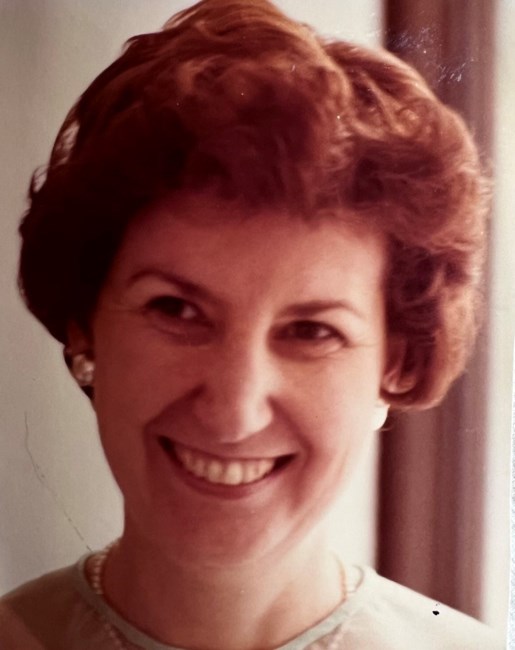
Written by her Granddaughter, Lindsay J. McCunn
With profound sadness, I announce Mrs. Joyce Bullough’s (Nana’s) passing. On August 5th, 2024, she succumbed to the years of damage only Alzheimer’s disease can inflict. She was 92 years old.
I have taken several months to write this obituary. My hesitation has not been because of neglect but, rather, because of self-reflection. Nana was always there for me—each day, from the time I was born until she forgot much of her life as dementia evolved into Alzheimer’s disease. In early 2020, before the COVID-19 pandemic began in earnest, Nana fell in her room at the care home she had moved into. She broke her hip—and her stay at the hospital to recover and receive rehabilitation from surgery was substantially prolonged because of the uncertainty of the virus. The lengthy period away from familiar settings (and the gowns and face coverings worn by those near her for months) catalyzed her loss of the neuronal anchors that held the memories of her family, her surroundings and, ultimately, her self.
When she eventually returned to the care home, she had a new room in the Memory Care ward—for her, each day (and, soon, each moment) was new. Only once over the next four years did she recognize me or my children during our weekend visits from Nanaimo. It has been a long journey to let her go.
Nana was born on September 4th, 1932 in Edmonton, Alberta. For a long time, she was not sure what her circumstances were like before being adopted as an infant to a loving family in a small town called Claresholm. Growing up, she was told only that her birth mother was eastern European, and that her father was an Irishman—and that neither wished to care for her properly. In 2011, we obtained copies of her newly accessible adoption records from the Province of Alberta. We learned that her mother did indeed have a Ukrainian surname, and that her father hailed from Ireland. They were unmarried at the time of her birth. However, to Nana’s relief, the records included statements from her mother making it clear that she tried in earnest to care for Nana by herself, and did not give her up for adoption lightheartedly. She was only a teenager, after all.
Nana went to primary school in Claresholm and enjoyed the care and company of her adoptive parents, brothers, and especially her niece (of nearly the same age), Shirley. They grew up as sisters and had a special relationship for all of their lives. Nana loved to relay fond memories of her and Shirley’s days together as girls on the farm.
Nana was a natural healer and helper. She had a beautiful instinct when it came to nursing and hygiene. She worked in the local hospital in Claresholm to clean and assist the staff. She often described how surreal it had been for her to have both of her babies in the same delivery room that she’d helped prepare for so many women. When she was 16, she attended Bible school in Edmonton (and had suitors, of course) but upon returning to Claresholm and taking a job as a waitress in the local diner, she grew to know an eager ginger-haired cook with a Blackpool accent who had recently come to town after serving in WWII in the British Navy. This, of course, was Eric Bullough—the love of her life. They were married in May 1951. She had two children soon after: Melody Dawn in 1952, and Vaughn Dennis in 1953 (Melody lives in Victoria, BC; Vaughn passed away in 2021).
Nana’s adoptive father passed away early in her life. When her adoptive mother passed after Vaughn was born, Nana felt free to move away from prairie life. Eric decided to enlist in the Canadian Armed Forces and the family re-located to London, Ontario in March 1956. Next was Ottawa in 1957, before a more substantial move to France and Belgium in May 1962. They then moved to Sardinia, Italy in July 1963. After that, it was back home to Canada—to Clinton, Ontario in the summer of 1965, and then to Toronto two years later. Camp Borden was next in 1969... and back to Ottawa for a second time before settling into Saskatoon in the late 1970s. Finally, Nana and Papa made Victoria home in 1986. Saanichton, to be more accurate—a village on the way to the ferry terminal on Vancouver Island. This meant that Nana could keep up her garden all year round and be near members of Papa’s extended family. She was happy to make a life ‘out West.’
Nana had several jobs during those years of military movement. She worked in offices and libraries and stores as a clerk, among other roles. However, her main priority was to raise and care for her children, and to be a kind and resourceful friend. I was born in Ottawa in 1981—soon, my mother and I were living in Saskatoon to be close to Nana and Papa. Nana cared for me nearly every day until they moved to BC (but I came to stay with them each summer until eventually living with Nana during university). The townhouse they bought in Saanichton was the home Nana moved from when she transitioned to assisted living in 2018—it was a significant experience of place loss for her... the kind born of over thirty years of comfort that one cannot begin to understand until it’s happened and real.
In 1990, Papa passed away unexpectedly in his sleep. It was an extreme challenge for Nana to manage his absence so suddenly. I stayed with her during that summer—the idea was that looking after a child would be a positive and productive distraction from her sorrow. I remember her incredible fortitude during that time. She taught me the importance of organization, mature emotions, and the will to carry on. She was exceptionally strong.
Nana was wonderful with children. She and I had an extraordinary relationship, but she also cultivated similar warmth and trust with my two young sons (who she helped care for while I taught classes during graduate school). For over a decade, she volunteered her time on Wednesdays at the little hospital in Saanichton’s baby clinic. She helped weigh babies and measure them... and inevitably soothed them and their caregivers before a nurse took over to perform more formal tasks.
Nana was also an exceptional housekeeper. Her home was always clean, tidy, and fresh. Her daily habits and routines were simple. She loved having neighbours over for tea. She regularly wore earth tones—brown and cream. Her slacks were always ironed perfectly. She curled her auburn hair in the same fashion all her life. She loved salted cashew nuts from Purdy’s Chocolates, and reading cozy novels by Rosamund Pilcher. She collected Beatrix Potter ornaments (but her Hummels were her pride and joy). She listened to CFAX radio in the mornings and watched “Jeopardy” in the evenings. She taped episodes of the soap opera “All My Children” in the day to watch at night, along with her favourite mystery series from the UK. She loved musicals and Wagner and walking though Butchart Gardens. These are humble, everyday facets of her; they deserve to be remembered this way.
I am so glad that my husband and I took Nana back to Claresholm in 2012. We stayed at the old Bluebird motel and made sure to walk past her old house, the diner where she met Papa, the Church in which they were married, and the streets that afforded easy recall of her young years. We went out to the farm that she spent so much time in on Starline Road (and probably trespassed to get a closer look at the buildings left from her childhood). We even got the opportunity to visit one of her lifelong friends in the local care home. Because we dropped in unexpectedly, the way Nana’s friend smiled and cried when she saw Nana was very telling (and not surprising in the least). Nana was treasured and dearly missed. She helped people feel better, wherever she went. She helped me become who I am—and I am one of many who can say the same. We love you very much, Nana.
Show your support
Add a Memory
Share Obituary
Get Reminders
Services
SHARE OBITUARYSHARE
- GET REMINDERS
v.1.18.0