
OBITUARY
Frederick Edward Gerber, II
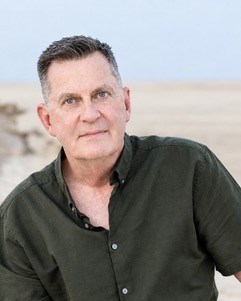
Frederick Edward Gerber II, a retired Army Colonel, died at home on September 17, 2026, in the arms of his wife, after 936 days of fighting and striving toward recovery from a long illness. He was a Soldier, a humanitarian, a husband, father, and friend to many.
Frederick was born at Fort Lee, Virginia, the son of a career Army officer who, like his son, retired as a Colonel. As an Army brat, he grew up on the move, with childhood years in France during elementary school and Japan during middle school. By his senior year of high school, the family was living in New Cumberland, Pennsylvania, and he graduated from Trinity High School.
A lifelong love of horses and riding drew him to Pennsylvania Military College, now Widener University, and its military horsemanship and cavalry program. He graduated in 1973 with a Bachelor of Science degree in biology and was commissioned a Second Lieutenant in the Army Medical Service Corps.
Over the next 31 years, the Army sent him around the world in roles of steadily increasing responsibility. In Germany, he served at Landstuhl Regional Medical Center and the Kaiserslautern Community Health Clinic and commanded the 566th Medical Detachment. In Korea, he commanded the 560th Ambulance Company. He went on to the 1st Medical Battalion at Fort Riley, Kansas where his son, Sascha, was born, and the Medical Field Service School at Fort Sam Houston in San Antonio. At Fort Leavenworth, Kansas, he attended the U.S. Army Command and General Staff College and earned a Master of Science degree in Military Arts and Science.
Fort Bragg, North Carolina, became a second home, where he served with the 1st Special Operations Command, the Joint Special Operations Command, and the 307th Medical Battalion (Airborne). He next attended the U.S. Army War College in Carlisle, Pennsylvania followed by serving in Current Operations in the Office of the Army Surgeon General at the Pentagon.
Frederick led Soldiers at every level, commanding at company level twice, then a battalion, then a brigade. At Fort Bragg, from 1989 to 1991, he commanded the 307th Medical Battalion (Airborne) of the 82d Airborne Division, leading it through Operation Just Cause in Panama, where he made a combat jump, and through Desert Shield and Desert Storm. From 1995 to 1997, he commanded the 55th Medical Group, also at Fort Bragg.
His final assignment, from 1997 to 2004, was as Director of Operations for the Office of the Army Surgeon General at the Pentagon in Washington, D.C., and at U.S. Army Medical Command in San Antonio, Texas. He was key to the Army’s worldwide medical support operations, particularly after the events of September 2001. From June to December 2003, he deployed to Iraq, where he was wounded and awarded the Purple Heart. In October 2004, Colonel Gerber retired from active duty after 31 years of serving his country.
His military honors include the Distinguished Service Medal, the Legion of Merit (two awards), the Bronze Star Medal (two awards), the Purple Heart, the Defense Meritorious Service Medal, the Meritorious Service Medal (three awards), the Joint Service Commendation Medal, the Army Commendation Medal, the Joint Service Achievement Medal, the Army Achievement Medal, and the National Defense Service Medal (three awards). He earned the Expert Field Medical Badge, the Master Parachutist Badge with Gold Star for his combat jump into Panama, the Pathfinder Badge, the Ranger Tab, and the Special Forces Tab, along with the Royal Thai Army Jump Wings, German Jump Wings, and the U.S. Army Order of Military Medical Merit.
Frederick’s service did not end with his retirement. That December, he joined Project HOPE as Country Director for Iraq and head of Special Projects. There he served as Senior Program Manager for the Basrah Children’s Hospital, Iraq’s first children’s cancer hospital, a project of more than $160 million involving multiple contractors and agencies in an active combat zone. The hospital held a special place in his heart because of his earlier service in Iraq with the Army. He had a deep passion for the Iraqi people, and he went on to help many of his Iraqi colleagues and translators seek asylum in the United States in recognition of the role they played in assisting the coalition forces.
Later that December, when the devastating tsunami struck Southeast Asia, he led a coordinated effort between Project HOPE and the U.S. Navy to staff the hospital ship USNS Mercy with medical volunteers, the first effort of its kind. Carrie, his wife, a Nurse Practitioner with extensive global medical mission experience, was among those volunteers, working on one of the ship’s inpatient units and on the ground helping bring a local hospital back into operation. That is how they met.
Frederick went on to lead countless more coordinated efforts with Project HOPE and the Navy around the world, many of them alongside Carrie, drawn by a shared passion for public health and disaster relief.
Together Frederick and Carrie responded to Hurricane Katrina in 2005 and the earthquake in Haiti in 2010, both in coordination with the Navy and the USNS Comfort. After years of working side by side and nurturing a shared love of travel, they married later that year. In 2011, while their daughter Simone was on the way, they responded to the Tōhoku earthquake and tsunami in Japan. Simone was born later that year. The work continued as a family, with the Nelson Mandela Children’s Hospital project in South Africa beginning in 2012 and Typhoon Yolanda in the Philippines in 2013. Simone traveled with her parents from her earliest years.
Travel was a shared passion, and it shaped their family life. The family lived overseas twice. The first time was in Abu Dhabi, United Arab Emirates, from 2018 to 2020, when Simone was in elementary school. Through Knowledge Point, Frederick served as a senior consultant advising the UAE Land Forces and Medical Services Corps on military health service support, helping shape the organization and doctrine of its field medical units.
They lived abroad again, this time in Warsaw, Poland, when Simone was older, during his final contract as Chief of Mission for Aspen Medical. In that role, he led the non-clinical side of a study of Ukraine’s battlefield trauma and medical care system for the U.S. Army, working with the Henry M. Jackson Foundation and Ukrainian and Polish counterparts. He also helped establish the partnership that laid the groundwork for battlefield surgical training courses in Warsaw, the first of which was held in December 2023.
He leaves behind his beloved family: his wife, Carrie Alexander; his daughter, Simone; his son, Sascha (Kelsey) of Charlotte, NC, and his grandchildren, Harper, Brinn, Reid; and his sister, Jane Heflin (Ed Morris) of Chicago, IL. He is also survived by his loyal service dog, Crew; by many nieces, nephews, and cousins; and by countless friends and fellow Soldiers who were an important part of his life.
He was preceded in death by his parents, Colonel Frederick Edward Gerber, U.S. Army (Ret.), and Mildred Jane Gerber, and his nephew Sean McCloud Heflin.
A Gathering of Family and Friends will be held on Saturday, November 7, 2026, at Joseph Gawler’s Ellie, 5130 Wisconsin Avenue NW, Washington, DC 20016, from 2:00–3:00 p.m., followed by a Service of Remembrance from 3:00–4:00 p.m. and a reception from 4:00–7:00 p.m.
In lieu of flowers, please consider donating to Veteran Excursions (https://veteranexcursions.org/donations/), the Wounded Warrior Project (woundedwarriorproject.org) or Victory Service Dogs (victorysd.org/donate).
Show your support
Send Flowers
Add a Memory
Share Obituary
Get Reminders
Services
Gathering of Friends and Family
Service of Remembrance
Reception
- SEND FLOWERSSEND
FLOWERS SHARE OBITUARYSHARE
- GET REMINDERS
v.1.18.0