
OBITUARY
George Albert Dalley
August 25, 1941 – September 1, 2026
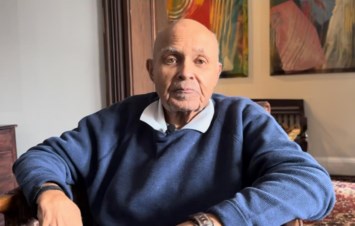
George Luis Albert Dalley was born on August 25, 1941, in Havana, Cuba. His parents, Constance Powell Dalley and Cleveland Ernest Dalley, were Jamaican immigrants who had made their way to Cuba before eventually settling their family in Harlem, New York, when George was five years old. George came from working-class roots. His father made a living as a cook at the Hotel Nacional de Cuba, later at the Horn & Hardart commissary, and eventually at the Waldorf Astoria, while his mother worked as a domestic. George accepted Christ as his Savior at a young age, was baptized into the Christian faith, and remained active in church communities throughout his life, expressing his faith through worship, fellowship, service, and care for others.
Being from New York, and Harlem no less, was a point of pride and an important part of George’s life and identity. The family lived at 1946 Amsterdam Avenue, on the top floor of a six-story walk-up. George received his primary education at the Modern School and later attended Rhodes Preparatory School in Manhattan, where he was among the first Black students, whether American-born or immigrant, to attend. During his New York childhood, George developed his lifelong love for the Yankees and all things baseball. He would walk to old Yankee Stadium, often taking his younger brother Michael with him, sit in the bleachers during the summers, and watch the Yankees of the Joe DiMaggio-to-Mickey Mantle era.
Even while working part-time jobs, George excelled in school. In 1959, he enrolled at Columbia University, beginning on the pre-med track before taking up studies in government, economics, and history. He earned his bachelor’s degree in 1963 and became the first person in his family to graduate from college. George remained at Columbia for graduate study, earning both his law degree from Columbia Law School and his M.B.A. from Columbia Business School in 1966. At the age of twenty-four, he was already a three-time Columbia alumnus.
George’s childhood and young adulthood unfolded against the backdrop of the civil rights movement, anti-Vietnam War protests, and worldwide movements for decolonization and self-determination. He developed a deep interest in politics, economics, human rights, and justice. While a student in New York, he participated in fundraising efforts, demonstrations, and other activities supporting the civil rights movement. Coming of age during this pivotal period, together with his formal education at Columbia, inspired a lifelong passion for politics, public policy, and international affairs, the fields in which he would ultimately make his life’s work.
George began his career as a special assistant to the renowned psychologist and civil rights scholar Dr. Kenneth B. Clark at the newly established Metropolitan Applied Research Center in New York, where he worked from 1967 to 1969. Working closely with Clark placed George within an extraordinary circle of civil rights thought and action. Clark’s pioneering research had helped Thurgood Marshall and the NAACP Legal Defense Fund establish the psychological harm of segregation in Brown v. Board of Education, and he had engaged directly with leaders and thinkers including Dr. Martin Luther King Jr., Malcolm X, James Baldwin, and Swedish economist Gunnar Myrdal. At MARC, George assisted Clark with administration, research, and writing as Clark sought to carry that civil rights legacy beyond courtroom victories and into public policy, developing practical responses to the educational, economic, and social damage inflicted on Black communities by generations of discrimination.
Seeking more direct legal experience, George joined the New York firm of Stroock & Stroock & Lavan, where he practiced from 1970 to 1971. Founded in 1876, Stroock was a well-established commercial law firm with deep ties to Wall Street and a national reputation in corporate and financial matters. George later reflected that he entered private practice at a time when many of the country’s leading law firms had yet to fully open their doors to Black attorneys, making his position within a major firm particularly meaningful. Much of his work involved clients whose interests brought him into contact with Washington and the legislative process. Before long, George developed what he and many others called “Potomac fever”: being near the government was no longer enough; he wanted to be part of it.
During this period, George met Pearl Elizabeth Love, the woman who would become his wife and the love of his life. Their relationship had deep roots in Harlem. Pearl’s cousins, Raymond and Shirley Wright, were George’s neighbors and two of his closest childhood friends. They introduced George and Pearl in March 1967. Just over three years later, on August 1, 1970, George and Pearl were married at North Presbyterian Church in New York City. He was twenty-eight, and she was twenty-three.
Together, they made their home in Washington, D.C., and built a beautiful life during a marriage that lasted thirty-three years, until Pearl’s untimely death in 2003 at the age of fifty-six. Among the greatest highlights of their years together were the births of their two wonderful sons, Jason Christopher Dalley in 1976 and Benjamin Christian Dalley in 1980.
George and Pearl enjoyed traveling together and shared deep commitments to politics, civic life, human rights, and the well-being of Black people throughout the world. They were a well-known and respected couple with an enormous network of friends drawn from their lives and work in government and politics, in New York and Washington, throughout Africa and the Caribbean, and across the United States. Most of all, George and Pearl were very much in love. That love remains evident in the extensive record of letters they wrote to one another over the decades, the countless photographs documenting their shared life and travels, and the stories George carried with him for the rest of his life. Jason and Ben will undoubtedly carry those stories with them for the rest of theirs.
For George and Pearl, the definition of family extended far beyond their household. George embraced his extended family wholeheartedly and remained especially close to his brother, Michael, Michael’s wife, Lydia, and their three children, Kim, Mike, and James. He also maintained deep ties to the large family descended from his mother’s seven brothers and sisters. George and Pearl shared sixteen nieces and nephews on the Love side of the family, whom George embraced as part of his immediate family. In later years, many of their children came to regard him with the affection and closeness of a grandfather.
George was also fortunate to sustain friendships that stretched back to childhood. He remained especially close to his dear childhood friend Shirley Wright and her husband, Stoney, and developed a strong bond with their three sons, Caleb, Judah, and Micah. Other friendships became family as well. Among the closest were Grafton and Carol Biglow and their children, Hope, Holly, and Earl. The Biglow children grew up alongside Jason and Ben, and the families shared holidays, summers, celebrations, and everyday life together. George and Pearl regarded them as part of their own family, and Earl in particular came to be thought of as a third son.
Not long after moving to Washington, George began what would become a long and distinguished career in government and public service. From 1971 to 1972, he served as assistant counsel to the House Committee on the Judiciary. In 1972, he joined the staff of Congressman Charles B. Rangel of New York as an administrative assistant, beginning both a decades-long professional relationship and a close friendship. George was part of an early generation of Black congressional staffers establishing careers on Capitol Hill. His work with Rangel would span much of his career. He returned to serve as the congressman’s counsel and staff director from 1987 to 1989 and, more than a decade later, returned for a third and final tour as counsel and chief of staff from 2001 until his retirement from the House in 2009.
In 1977, George joined the Carter administration as Deputy Assistant Secretary of State for Human Rights and Social Affairs, with a portfolio centered heavily on U.S. policy at the United Nations. In August 1979, President Jimmy Carter nominated him to serve as a member of the Civil Aeronautics Board. Confirmed by the Senate in March 1980, George became the first African American to serve on the Board. He remained there through the end of 1982, during the implementation of airline deregulation. His responsibilities also extended to international aviation, and in April 1980, he served as part of the U.S. delegation in civil aviation negotiations with South Korea.
Throughout George’s years in government, supporting and promoting self-determination for African and Caribbean nations remained central to his life and work. Beginning in the early 1970s, he was part of a cohort of young Black professionals advocating for the creation of a Black foreign-policy lobby capable of giving African Americans a stronger voice in shaping U.S. policy toward Africa and the Caribbean. Those efforts contributed to the creation of TransAfrica, in whose early development George participated. Together with his dear friend and loyal baseball buddy Jim Davis, George later became a leader of TransAfrica’s Washington, D.C., chapter, helping to organize local opposition to the Reagan administration’s policies toward South Africa’s apartheid government.
During Walter Mondale’s 1983–1984 presidential campaign, George served as a deputy campaign manager responsible for constituency outreach, working closely with Black political leaders and voters while also directing the campaign’s Washington operation. He later worked with Congressman Rangel and tax consultant Jon Sheiner on a provision denying certain tax benefits to American companies operating in apartheid South Africa. Enacted as part of the Tax Reform Act of 1986, the measure became an important component of the economic pressure against apartheid.
From 1989 through 2001, George practiced legislative, administrative, and international law. He first served as a partner at Neill & Co. and later became one of the founding partners of Holland & Knight’s Washington, D.C., office. There, he represented foreign governments and international interests before the executive branch, Congress, and multilateral financial institutions. Congressman Rangel later recalled the breadth of George’s international practice, which included work involving Trinidad and Tobago, Jamaica, Costa Rica, El Salvador, Honduras, Nicaragua, Senegal, Côte d’Ivoire, Kenya, Mali, and Botswana. Much of this work focused on encouraging economic development and private investment in Africa and the Caribbean. George worked on the passage of the African Growth and Opportunity Act and enhancements to the Caribbean Basin Initiative. He was also a founding member of the Corporate Council on Africa and served as U.S. counsel to the African Business Round Table.
Throughout his career and into retirement, George generously shared his time, resources, and talents with organizations reflecting his commitment to Africa and the Caribbean, international development, education, culture, public service, and the mentorship of young people. He devoted many years to Africare, serving on its Board of Directors and eventually as chairman. In that role, he helped guide the organization through the retirement of its longtime president, C. Payne Lucas, and strengthened its financial position. After stepping down as chairman in 2005, George continued serving Africare as Chairman Emeritus.
George also served on the boards of the Apollo Theater Foundation and Georgetown Day School; chaired an education advisory committee to the District of Columbia Financial Control Board; was a founding member of the Corporate Council on Africa; and belonged to the Council on Foreign Relations.
In 2001, George returned to Congressman Charles Rangel’s office as chief of staff and counsel. When Rangel became chairman of the House Ways and Means Committee in 2007, George helped guide the office through a consequential period that included major economic-stimulus, tax, trade, health-care, and financial-crisis legislation. Working largely behind the scenes, he provided legal and strategic counsel, managed relationships throughout Washington, and helped advance policies affecting working families, Africa, and the Caribbean.
George’s influence on Capitol Hill extended well beyond legislation. He was a trusted mentor to generations of congressional staff members, attorneys, fellows, and young professionals, helping them understand Washington, build relationships, and find paths to meaningful careers in public service. He took particular pride in opening doors for others, including young people preparing for careers in diplomacy and international affairs. He also helped develop the Charles B. Rangel International Affairs Fellowship, which created pathways into the U.S. Foreign Service for talented students from backgrounds historically underrepresented in American diplomacy. Many of those George mentored went on to successful careers in government, law, and public policy, carrying his guidance and example into the next generation.
Although George retired from Capitol Hill in 2009, he remained highly engaged with the world around him. He continued working as a consultant and adviser, mentoring younger people, maintaining the enormous network of friends and colleagues he had accumulated over decades, and remaining deeply engaged with Africa, the Caribbean, church, politics, and international affairs. He was an avid reader and consumer of news, journaled regularly, and continued to enjoy the music, travel, food, and sports that had long been part of his life.
Baseball remained a particular passion, whether George was watching his beloved Yankees and the Nationals or traveling with friends to spring training. He also remained closely involved in Jason and Ben’s lives and embraced their growing families.
For all that George accomplished over the course of his long career, his six grandchildren, Reid, Lilah, Colter, Margot, Siamek, and Sohaila, knew little of the lawyer, government official, political adviser, and Washington insider. To them, he was simply Grandpa, who showed up for birthdays, graduations, sporting events, school activities, and family gatherings and found ways both large and small to become part of their lives. His habit of documenting the people and experiences he treasured extended to his grandchildren; inside children’s books, he sometimes left notes recording when he had read them together. In his later years, few things brought George greater joy than being a central part of his grandchildren’s lives, just as he had been in the lives of his sons, Jason and Ben.
George’s life was also enriched by close friends and colleagues whose relationships with him became inseparable from family. Some of the people closest to him, including Shirley, Stoney, Grafton, his dear friends C.C. Jenkins and Pete Perry, Congressman Charles Rangel, Randall Robinson, and C. Payne Lucas, preceded him in death. Their absence was deeply felt, but the relationships and families formed around those friendships remained woven into George’s life. Across decades, he had a remarkable ability to turn friendship into kinship, mentorship into lasting connection, and shared experience into bonds that survived generations.
Most importantly, George was loved. He was deeply adored by his family and his many friends and colleagues, and his departure from this life on September 1, 2026, leaves behind a community of people who will miss him dearly.
George was preceded in death by his beloved wife, Pearl Elizabeth Love Dalley, and his parents, Constance Powell Dalley and Cleveland Ernest Dalley. He is survived by his brother, Michael Keith Dalley, and Michael’s wife, Lydia; his sons, Jason Christopher Dalley and his wife, Carrie Bowman Dalley, and Benjamin Christian Dalley and his wife, Rossana Mahvi; his six grandchildren, Reid, Lilah, Colter, Margot, Siamek, and Sohaila; Michael and Lydia’s children, Kim, Mike, and James; the generations of the Love family he embraced as his own; the Wright, Cook, and Biglow families, who became part of his family over a lifetime of friendship; and a large extended community of friends, colleagues, protégés, and people he mentored whose lives were richer because George was a part of them.
Show your support
Send Flowers
Add a Memory
Share Obituary
Get Reminders
Services
Funeral Service
Past Services
Visitation
- SEND FLOWERSSEND
FLOWERS SHARE OBITUARYSHARE
- GET REMINDERS
v.1.18.0