
OBITUARY
Manuel Emilio Valderrama Aramayo
June 25, 1922 – November 27, 2023
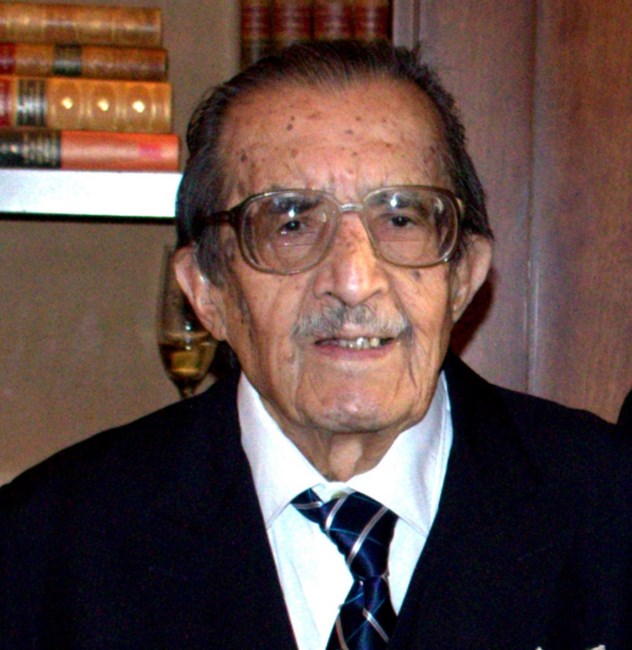
Manuel Emilio Valderrama Aramayo (Age 101). Born in Tupiza, Bolivia on 25 June 1922. Manuel occupied a front-row seat to key events in 20th-century Latin American history. As a law student in La Paz in July 1946, he participated in protests against the dictatorship of Gualberto Villarroel and had to evade machine gunfire from government forces. During the bloody revolution that followed, he prevented an urban catastrophe by commandeering fire engines and extinguishing an inferno in the city’s armory before it reached the explosive ordnance. Upon arriving at the presidential palace, he found that Villarroel had been killed, lynched and hung on a lamp post by a mob. Manuel accompanied the president’s corpse to the morgue in the fire engine.
At 24 years of age, Manuel was appointed as Chief of Staff of Bolivia’s Ministry of Foreign Relations by Vice-President Mamerto Urriolagoitia. He organized Bolivia’s diplomatic mission to the 9th Panamerican Conference in Bogotá, Colombia in 1948, which created the Organization of American States (OAS). Bogotá was suddenly plunged into a violent revolution (“El Bogotazo”) and Manuel was alarmed to find himself walking in the middle of the proverbial No Man’s Land between hundreds of armed rebels and government forces. While seeking refuge at the palace guard battalion headquarters, he and the diplomatic corps endured an unrelenting rebel siege that extended through most of the night.
In 1953, Manuel married Maria Teresa Aramayo, who survives him. He established a law practice with lifelong friend and future president, Luís Adolfo Siles Salinas. In 1955, Manuel became the first Bolivian hired by the U.S. State Department’s Point-Four Program in Bolivia (a precursor to US-AID), was made its highest-ranking local officer and then designed some of the boldest and most important development projects of that era. In 1960, Felipe Herrera Lane, first president of the Inter-American Development Bank (IDB), recruited Manuel to help launch that organization’s operations in Washington, D.C. Manuel planned and secured Board approval for the IDB’s very first development project within just a few weeks. His IDB operational assignments took him to 19 countries throughout the hemisphere. In the late 1960s, Manuel played a key role in the financing and initial development of an uninhabited Mexican island called Cancún. Manuel negotiated with famous leaders, such as General Juan Perón of Argentina, Luís and Anastasio Somoza of Nicaragua, François (“Papa Doc”) and Jean-Claude (“Baby Doc”) Duvalier of Haiti and had a close working relationship with Fernando Belaúnde Terry in Peru.
After returning to DC in 1980, Manuel created the legal structure of the IDB’s affiliated organization, the Inter-American Investment Corporation (IIC), now commonly known as IDB Invest. Throughout his time at the IDB, he demonstrated a special concern for the welfare of his staff.
Manuel is beloved and survived by his wife, 6 children, 8 grandchildren, and 1 great-grandchild. A service will be held on Saturday, 02 December at 11:30 AM at St. Bartholomew (6900 River Rd, Bethesda, MD).
Show your support
Add a Memory
Share Obituary
Get Reminders
Services
SHARE OBITUARYSHARE
- GET REMINDERS
v.1.18.0