
OBITUARY
Peter Robin Brett
Passed away on SEPTEMBER 27, 2019
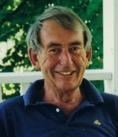
Peter Robin Brett, the Australian-born scientist who was one of the first to study rocks from the moon during NASA’s Apollo space program, died at home in Washington on Sept. 27. He was 84 and suffered from Alzheimer’s Disease.
As chief of the geochemistry branch from 1969 to 1974 at the Lyndon B. Johnson Space Center in Houston, Brett was responsible for much of the planning for the massive study of the Apollo lunar samples. He conducted research on the materials brought back by astronauts on successive flights. He was also involved in planning missions, debriefing astronauts, relaying scientific information to the NASA community, and working with the press.
“Lunar rocks had captured the public imagination, and via the press, Robin facilitated continuing public enthusiasm and comprehension of the science involved in this incredible engineering feat,” said Peter Wyllie, former professor of geology at California Institute of Technology, when he presented Brett with the Distinguished Public Service Medal of the Mineralogical Society of America in 2005.
“I hoped that I could excite the taxpayers about the knowledge and insights we gained from extra-terrestrial science and why it mattered,” Brett said. “By learning about the moon, we learn much more about the earth at present, by putting its past in context. We still have not answered many questions about the moon, but we have come a long way since 1969.”
With the early lunar missions, there was a fear that moon dust might harbor some lethal threat to humankind, so the astronauts were quarantined in a sealed off section of the Lunar Receiving Lab (LRL) where Brett and the other scientists worked. After the Apollo 12 astronauts ¬¬– Pete Conrad, Alan Bean and Richard Gordon – had settled in, there was a spill in the LRL, potentially exposing Brett and his colleagues and sending them into quarantine with the astronauts.
Brett received a NASA Exceptional Scientific Achievement Award in 1973 for his work in Houston.
Before his career with NASA, Brett worked at the U.S. Geological Survey in Washington and retuned there in 1974 until he left in 1978 to head the Division of Earth Sciences at the National Science Foundation. He and his staff were responsible for the funding of earth science research and the Ocean Drilling Program, a multinational effort to explore and study the composition and structure of the Earth's oceanic basins. Brett studied undersea sulfur hot springs, using the tiny research submarine Alvin with the program, previously called the Deep Sea Drilling Project.
He returned to the USGS in 1982 to pursue research and published more than 90 papers on mineral deposits, lunar petrology, meteor impact structures, and the biological extinction of the dinosaurs. He was the first, in 1992, to suggest that heavily shocked anhydrite was a major killing mechanism of the dinosaurs when a meteor crashed into Mexico’s Yucatan Peninsula 65 million years ago.
Starting with the moon landings, Brett learned the importance of educating and informing those outside the science community about the importance of earth science.
“Few disciplines, no matter how meritorious, can survive if the public and decision makers do not find them interesting and relevant to everyday life,” he said. “If we have not convinced them that basic science is fundamental to our existence, then we have failed ourselves and our future.”
Brett was the first American to be named secretary general and president of the International Union of Geological Sciences. At various times, he was president of the Meteoritical Society, the Geological Society of Washington, and chairman of the planetology section of the Geological Society of America. In 2002, Brett was presented with the Superior Service Award of the U.S. Department of the Interior for outstanding career and contributions to the mission of the USGS. “Your leadership at the NASA lunar laboratory is legendary and frontier breaking,” said Charles Groat, then-director of the USGS. “Your work (at NSF) substantially advanced the earth sciences and deep-sea drilling programs of the United States.”
After he retired from the USGS, Brett became a part-time administrative judge for geology-related cases of the Nuclear Regulatory Commission from 1998 to 2003. He also served on the executive board of the International Counsel for Science, the umbrella organization for all scientific unions.
Born in 1935, in Adelaide, South Australia, Brett received his B.S. in geology from the University of Adelaide in 1956, and then left Australia to attend Harvard, where he earned a master’s and Ph. D. in geology and geochemistry in 1963.
He is survived by his wife, Jill Davidson Brett; his sister, Virginia Rebler, two daughters Abigail Brett Miller and Victoria Brett; two step-sons Timothy Stokes Merrill and William Alexander Merrill, as well as four grandchildren, Brooks, Sophia, Lila and Lucas. He leaves a nephew, Markus Badde, and two nieces, Rebecca Stromeyer and Aurelia Badde. His first marriage to Abigail Trafford ended in divorce.
Astro-geologist Eugene Shoemaker, and his wife Carolyn, famous for discovering comets, named an asteroid after Brett in 1999. Shoemaker, a friend and mentor, had worked with Brett in Houston. The Dictionary of Minor Planet Names describes the asteroid’s namesake: “A known organizer, Brett has directed his activities toward advancing international cooperation in research; the fact that he is known as a ‘nice guy’ with a great sense of humor may have helped.”
In a letter to Brett, Carolyn Shoemaker wrote, “Hope you’ll enjoy knowing that a little planet bearing your name will be in orbit in our solar system for centuries to come.”
Show your support
Add a Memory
Share Obituary
Get Reminders
Services
SHARE OBITUARYSHARE
- GET REMINDERS
v.1.18.0