
OBITUARY
Ronald Henry Uscinski, MD
April 3, 1943 – December 11, 2025
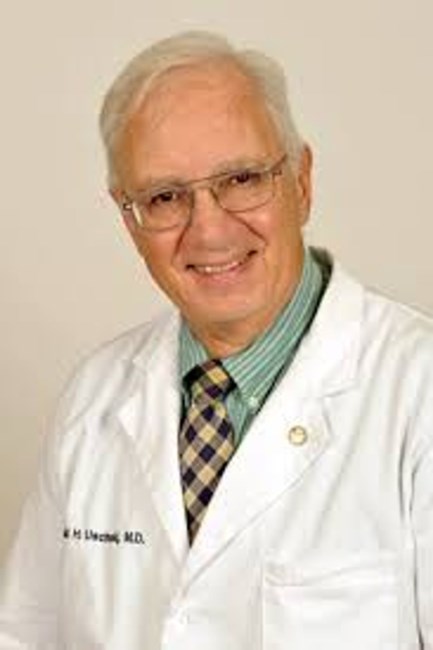
Dr. Ronald Henry Uscinski lived a life shaped by responsibility, curiosity, and devotion to others. A neurosurgeon, teacher, naval officer, writer, husband, and father, he approached each role with seriousness of purpose and quiet humility.
He was educated at Fordham University and Georgetown University School of Medicine, completing his internship at Bronx Municipal Hospital Center and his neurosurgical residency at Georgetown University and affiliated hospitals. He became board certified in neurological surgery and held long-term academic appointments at Georgetown University School of Medicine and the George Washington University School of Medicine, as well as serving as a senior surgeon with the National Institutes of Health.
Many who knew Ron may not have known that he was also proud of his service as a commissioned officer in the United States Navy. During the Vietnam era, he served as a Lieutenant and Submarine Medical Officer, completing training at the School of Submarine Medicine and SCUBA School and serving aboard the USS Thomas A. Edison, a Polaris ballistic missile submarine. The discipline and responsibility required of submarine service shaped the way he approached medicine and life.
Ron continued to spend time on the water throughout his life as an avid rower. He belonged to the Potomac Boat Club and enjoyed bringing family and friends into the hobby.
As a neurosurgeon, Ron spent decades performing complex, often life-saving brain surgery. He never viewed his work as purely technical. He understood that every patient represented a family holding its breath. He stayed in touch with many former patients long after their surgeries, following their lives with care and interest. For those families, his work meant children raised, careers resumed, and ordinary days made possible again.
From an early age, Ron was deeply curious about how things worked. He delighted in understanding mechanisms and systems, a fascination that carried from childhood into a lifetime of scientific inquiry. His professional writing and lectures reflected this curiosity, exploring the intersection of neurosurgery, biomechanics, physics, and ethics. In a 2008 essay titled I Stand With Humility, he emphasized respect for evidence, history, and the human condition.
Ron took every opportunity he could to share his learning with others. He loved to pull visitors and friends into his home office to tell them about what he was studying. His sharp focus and passion for discovery made him a life-long learner, and he was always willing to share his knowledge. Students at Great Falls Elementary benefitted from his willingness to visit and teach students about the brain, and he even occasionally allowed family and friends to observe brain surgery.
He remained intellectually engaged until the end. In his final days, he was still writing, collaborating with colleagues, and thinking deeply about the laws of physics as they apply to living systems. In his final email, sent late at night, he wrote, “We may be biological miracles, but even biology follows the laws of physics,” closing with a favorite Einstein quotation: “God does not play dice with the universe.”
Ron’s final written words were about curiosity and wonder. He was thinking about nature, physics, and the laws that govern living systems. He signed the email simply, as he often did, “RHU.”
In his final years, Ron devoted himself fully to the care of his wife, Donna, following her Alzheimer’s diagnosis. Even after she moved to memory care, he visited her every day and took her to dinner each evening. He held her hand wherever they went and was unwavering in his commitment to preserving her dignity. In a letter to his brother, he wrote of the pain of watching her decline while affirming simply that the wedding vow still stood and he would not leave her.
Yet, somehow, no setback could deter Ron’s optimistic outlook on life. He always greeted people with a smile, spoke jovially with his family and strangers alike, and marveled at the world. In hospice care he said little, but he uttered the words, "Today is going to be a great day."
He was immensely proud of his children and grandchildren and followed their lives closely. Even as his eyesight failed and his independence diminished, he stayed connected, reflective, and grateful for the life he had lived.
Show your support
Send Flowers
Add a Memory
Share Obituary
Get Reminders
Past Services
Visitation
Funeral Service
Celebration of Life
- SEND FLOWERSSEND
FLOWERS SHARE OBITUARYSHARE
- GET REMINDERS
v.1.18.0