OBITUARY
Ambassador William "Bill" Harrop
February 19, 1929 – June 6, 2025
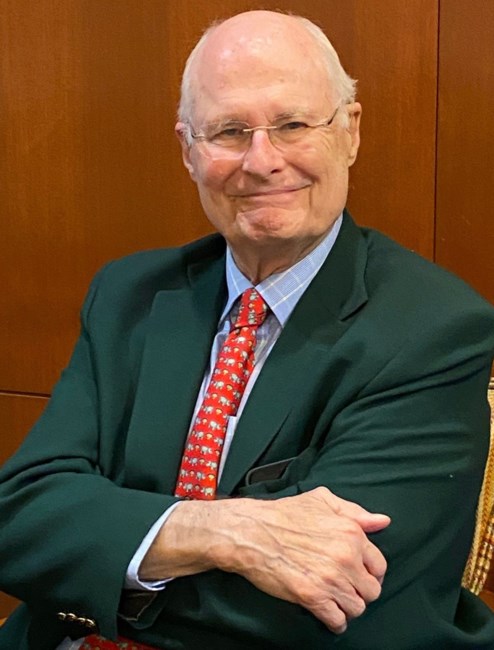
Career diplomat Ambassador William (“Bill”) Harrop, 96, passed away June 6, 2025, of heart failure, surrounded by family. A Baltimore native and Harvard graduate, he served in the U.S. Marine Corps during the Korean War. In a career of 39 years as a Foreign Service Officer, Harrop became Inspector General at the Department of State and Ambassador to five countries: Guinea, Kenya, Seychelles, Zaire (Democratic Republic of the Congo since 1997), and Israel. In retirement, he played a crucial role in establishing the National Museum of American Diplomacy. Among other honors, Harrop received the Foreign Service Cup, the Presidential Distinguished Service Award, the State Department Distinguished Honor Award, and the American Foreign Service Association’s award for Lifetime Contributions to American Diplomacy.
Harrop’s initial Foreign Service postings were in Sicily, Rome, and Brussels. He then served as Consul in Lubumbashi, Zaire, and later as Deputy Chief of Mission in Australia. As the elected head of the American Foreign Service Association in 1972, he successfully led the transformation of AFSA into a union—while retaining its mission as the professional association of America’s career diplomats.
His first ambassadorial post (1977−79) was to Guinea in West Africa at the height of the Cold War. Guinea was a Marxist state under President Ahmed Sekou Touré, solidly under Soviet influence. Harrop headed a mission of 16 Americans, in contrast to a Soviet embassy with a staff of 1,200 that included diplomats as well as engineers, technical advisors, doctors, and mining experts. The Soviets had built Guinea a hospital, university, railroad, and modern airport. Nevertheless, Harrop was able to convince President Touré that it was in Guinea’s interest to be non-aligned in the Cold War. He persuaded Touré to end Soviet use of the Conakry airport for military flights that harassed NATO shipping in the North Atlantic.
Aside from his official duties, Harrop took an interest in the citizens of the countries where he was posted. In Guinea, for example, he noticed that youngsters were playing soccer everywhere using bags of rags or plastic bottles for balls. Using a discretionary fund available to him, he ordered thousands of soccer balls, each with the American assistance symbol of crossed hands. Every village in Guinea received a soccer ball; gratitude to the United States knew no bounds.
As Ambassador to Kenya (1980−83), Harrop headed an ambitious American program to assist the Kenyan government in promoting family planning. Kenya’s population was increasing by 4% a year, doubling every 17 years. At that time the average Kenyan woman bore nearly eight children, among the highest national fertility rates in the world, a serious hindrance to economic development and family health. The American program contributed to a marked decline in population growth over succeeding generations.
As Inspector General (1983–86), Harrop enjoyed strong support from George Shultz, a Secretary of State focused on managing the infrastructure of foreign relations. Harrop emphasized management by objectives, a tool that had rarely been applied in diplomacy. Meanwhile, he faced persistent conflict with Senator Jesse Helms (R-NC), a determined critic of the U.S. professional diplomatic corps. Harrop seemed to symbolize the Foreign Service in the eyes of Senator Helms, who initiated legislation providing that no career Foreign Service Officer could serve as Inspector General. Harrop was obliged to step down, the last career officer to hold the position. When he was then nominated to become Ambassador to Zaire, Senator Helms blocked his confirmation for four months.
As Ambassador to Zaire (1987−91), Harrop dealt with Joseph Désiré Mobutu, a cunning dictator who remained in power for three decades, through skillful manipulation of military and tribal leaders. Mobutu provided dependable Cold War support to the United States, enabling him to mitigate American criticism of rampant corruption and human rights transgressions. As the Cold War ended, Harrop recommended that the U.S. reconsider its toleration of Mobutu’s excesses, but the recommendation met with resistance on the grounds that it was not clear who or what might replace Mobutu. This view proved correct. Despite all his flaws, Mobutu held the huge country together, and his death in 1997 was followed by three decades of conflict, chaos, and violence.
In his last post, Harrop served as Ambassador to Israel (January 1992−May 1993). At that time, 40% of the Israeli economy was controlled by the government or the national labor union, Histadrut. This was seen by many as a self-inflicted brake on economic growth. Harrop discussed the issue with the governor of the central bank, who was interested in edging the economy toward liberalization and privatization. At Harrop’s suggestion, Secretaries of State Baker and Christopher each delicately raised the matter with the prime minister.
At the time, nearly half of American foreign assistance was directed to Israel, an advanced economy with a rate of growth then three times that of the United States. In a speech to Israeli Rotarians, Harrop wondered whether it was in Israel’s long-term interest to finance 8% of its national budget with external aid, even from its closest ally. The strong reaction to his comment resulted in termination of Harrop’s appointment and led to his retirement.
A lifelong advocate of American diplomacy and the Foreign Service, Harrop and his late wife, Ann Delavan Harrop, devoted their time and resources to supporting those causes. After retirement Harrop acted as President and Chair of the Diplomacy Center Foundation, which was instrumental, in partnership with the State Department, in establishing the National Museum of American Diplomacy in Washington. He chaired the international health NGO, Population Services International (PSI), and served on the boards of the Henry L Stimson Center, the Washington Humane Society, the American Academy of Diplomacy, the Association for Diplomatic Studies and Training, American Diplomacy Publishers, and the Senior Living Foundation of the American Foreign Service. He also served as President of the Spring Valley−Wesley Heights Citizens Association in the District of Columbia.
While Bill and Ann made a strong and effective Foreign Service team, they also raised four boys as they moved from post to post. Wherever they were in the world, they created a home for their family filled with boys, dogs, and music. They adored each other. She steadfastly supported his career, despite the fact that the public demands on a foreign service spouse were contrary to her private nature. Late in life, Bill helped Ann publish her poetry. He also devotedly supported her through years of blindness and her final illness. Ann’s passing three years ago affected him deeply.
Old-fashioned in the best sense, Bill fought for what he believed and was intensely patriotic. He was always willing to engage in conversation with opposing viewpoints, although it was not always easy to change his mind. He could be wary of new trends. In the late 1990s, however, he became a passionate early adopter and evangelist of all Apple products, even participating in frequent Mac user groups. In his late 80s, he was also the first in his community to own an electric car.
A force of nature with a great sense of humor and an always curious mind, Bill was an engaging patriarch, an enthusiastic chef, a shrewd poker player, and a lifelong learner who volunteered his time and energy to those around him. He spearheaded family ski trips, ensuring that all of his descendants and their spouses would learn to ski. He loved classical music, particularly chamber music, and was so fond of opera that it was not unusual for him to burst into song. His greatest passion, however, was tennis. He played almost daily well into his 80s and followed the pro circuit closely, even requesting French Open score updates from his deathbed.
Ambassador Harrop leaves four sons and their spouses: Mark and Lucy Harrop, Caldwell Harrop and Susan Spock, Scott Harrop, and George and Lori Harrop; as well as six grandchildren, Jessica, William, Marguerite, Daniel, Maxwell, and Emily Moxon, her husband Jack Moxon, and two great-grandchildren, Josephine and Isobel. He will be dearly missed.
In lieu of flowers, gifts in Ambassador Harrop's memory can be made to the Diplomacy Center Foundation, the private non-profit partner of the State Department, charged with the completion of the National Museum of American Diplomacy. Their website is www.diplomacycenterfoundation.org/contribute
Show your support
Add a Memory
Share Obituary
Get Reminders
SHARE OBITUARYSHARE
- GET REMINDERS
v.1.18.0