
OBITUARY
Anne Dorothea Dorcon Casar
March 2, 1917 – August 7, 2012
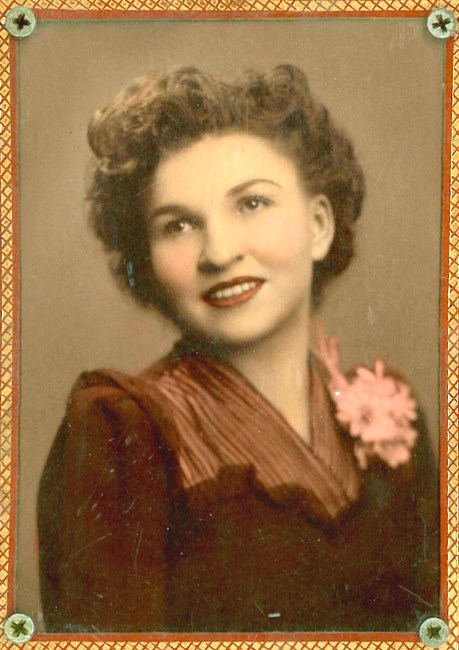
Anne Dorothea Casar (formerly Anne Dorothea Dorcon) was born on March 2, 1917 in Fayette City, Pennsylvania, a small town 25 miles south of Pittsburg. Anne was the third youngest of eight Dorcon children (four boys and four girls). She passed away on August 7, 2012 at the age of 95. She was last living of the Dorcon children.
Her parents were natives of what was Austria-Hungary prior to World War I. Both parents were born in the region of Moravia, now part of the Czech Republic. It is not certain whether the parents knew each other prior to emigrating to Canada around 1900. Her mother, formerly Theresa Tulka, was married to a miner who died in a mine explosion in Vancouver. In the early 1900s, Theresa married her second husband Mathew Dorcon, also a miner. Shortly after their marriage, they emigrated to southwestern Pennsylvania, which was home to many coal miners supporting the coal industry in this region. The couple moved many times seeking work in the coal mines. The story goes that the normally mild mannered Theresa threatened Mathew with a meat cleaver if they moved one more time. Apparently Mathew got the message; they settled down on the family home in rural Fayette City, where both parents lived for the rest their lives.
Anne grew up during the Great Depression; however, she seemed to have only fond memories of her childhood. Based on income alone, her family would have been considered poor. On the other hand, the house was big enough to accommodate the family of ten. Their land was large enough to support a substantial vegetable garden, many chickens, cows and pigs. The family never wanted for food. With so many siblings she was never lacking for companionship.
Anne enjoyed school. English was her favorite subject. Although her memory was failing at the time of her death, she was still able to recite long verses of poetry learned in school such as the Rhyme of the Ancient Mariner, the Raven, and Hiawatha.
When Anne was just seventeen, she joined her two older sisters in New York City to seek work and support her family. There she found work as a self-taught bookkeeper and met her future husband Jesse Casar, who was co-owner of a dental laboratory in the Bronx. They eventually married in 1941. Anne and Jesse had two children: Douglas and Annette Casar. In 1942, the couple moved to an apartment in Astoria (borough of Queens, New York City) where Anne settled in as a housewife and mother. In 1944, during World War II, Jesse was inducted into the army. He was shipped to the South Pacific just two months prior to the birth of their second child. Anne raised the two children alone for approximately two years until Jesse's return from the army.
Anne loved to travel. When living in New York City, Jesse was the technical representative for company that made precious metals for the dental industry. Jesse's work afforded the couple the opportunity to visit foreign countries in Europe and South America.
In 1967, after the children had graduated from college, Anne and Jesse moved to Los Angeles. Jesse taught dental technology and eventually opened a dental laboratory in Encino. In 1975, the couple bought their first home in Agoura Hills. With the children out of the nest, Anne had more leisure time. She took up painting, first in water colors and then in oils. Anne and Jesse shared a love of thoroughbred horse racing. At one time, they were part owners of thoroughbreds good enough to race at Santa Anita and Del Mar Race Tracks. On Saturdays, you would often find the couple at the race track cheering on their horses.
Anne lived in Agoura Hills until shortly after Jesse's death in 1998. She subsequently moved to a condominium in Cerritos, California to be closer to her son. There she resided until her death in 2012.
From a personal perspective, Anne can be described as a sweet, loving woman with a kind heart. In her youth, she was a petite, well-figured, pretty woman. Some have described her as beautiful. A radiant smile came easily to her high cheek-boned face. Her wonderful smile was infectious; it immediately spread to others. She was somewhat quiet, perhaps demure, but she had a good sense of humor. Even in her last years she often came up with clever quips to the delight of everyone. She never raised her voice in anger or argued vehemently. It was unnecessary; she made her point with charming persuasion. She was kind to a fault; always attending to the needs of others in deference to her own. In short, all of the adjectives associated with goodness can be attributed to her character. She will be fondly remembered and sorely missed.
Show your support
Add a Memory
Share Obituary
Get Reminders
Services
SHARE OBITUARYSHARE
- GET REMINDERS
v.1.18.0