OBITUARY
Carl Larry"" Lawrence Carlson
Passed away on OCTOBER 1, 2014
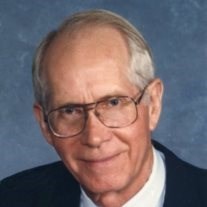
Carl ""Larry"" Lawrence Carlson of Cromwell, Connecticut and a longtime resident of Rocky Hill, CT passed away peacefully October 1, 2014 at home at the age of 94. Larry, as his many friends knew him, leaves sons Bruce and Allan and their wives Audrey and Nancy, all of Newington, CT; daughter Barbara Hebert and her husband John of Brookline, Massachusetts; grandchildren Matthew Hebert of Brookline, Jeffrey Hebert of Seattle and Leslie Schlachter and her husband Jordan of New York City; and two great-grandchildren, Devin and Eliza Schlachter. He also leaves several nieces and a nephew; and his sweetheart and recent companion Jean Stebinger. Larry was predeceased by Dorothy Brewer Carlson, his loving wife of 65 years; Elizabeth Carlson, a fourth grandchild; and sisters Ellen Carlson, Esther Morrison, and Florence Thompson, all of Minnesota. Born in Minneapolis in February 1920 to Carl G. Carlson and Bertha (Nordstrom), Larry as a boy was inspired by his father who excelled at mechanics and was a master carpenter and inventor. Larry was also enamored by everything to do with airplane flight — a life-long passion ignited in 1927 by Charles Lindbergh’s legendary crossing of the Atlantic Ocean and Larry’s having stood within a few feet of the aviator after he landed in Minneapolis during the national tour. Larry graduated from high school in 1938, and from the University of Minnesota in 1942 at the top of his class. There he earned his Bachelor of Science in Aeronautical Engineering and received the Tau Beta Pi Engineering Honor Society national award for distinguished scholarship and exemplary character. That same year he and his close friend Bob Toft came east to work full time at Pratt & Whitney Aircraft. In 1943, Bob’s girlfriend, Joyce Brewer introduced Larry to her distant cousin Dorothy, which resulted in Larry’s marriage to Dot in 1944 and their loving relationship until her death in 2009. At the outset of what would become a 41-year career at P&W, Larry was assigned to the Engine Test Group to further refine their stable of piston engines for the war effort, notably the R-2800 Double Wasp, which powered the B-24, P-47, Navy Corsair, Grumman Hellcat and many others. At war’s end, P&W’s military production contracts were immediately cancelled and operations shut down within hours of the Japanese surrender. Although a news report informed thousands of Pratt employees not to report to work, Larry was called that day and offered the opportunity to improve the Wasp engines for civil aviation. In the early 1950s, Larry worked on compressor development for the J57, a radical axial-flow turbojet engine design on which P&W successfully “bet the farm” and that trumped then-current jet engine pressure ratio, thrust and efficiency by large margins. On the military side for which it was developed, the J57 powered the long-range B-52 Stratofortress, which tipped the balance of power during the Cold War, as well as the KC-135, B-57 and several Navy and USAF supersonic fighters. For commercial applications, the J57 power, efficiency and longer range was chosen for the Boeing 707 and DC-8. Larry also became project manager for the J75, an engine 50% more powerful than the J57 first flown in 1955 and which powered the U-2 spy plane, the F-105, and F-106 military aircraft. The J75 was also used in many experimental aircraft and chosen for the first all-gas-turbine warships. (Many decades later, Larry confided to his family that he was recruited by the CIA during the Cold War to develop the engine for the high-altitude U-2 spy plane. Initially based on Pratt’s successful J57, his modifications were farmed out within Pratt in pieces so that no one person would understand the whole project. If Dot called Larry while he ostensibly was on business at Edwards Air Force Base in California, the CIA would patch the call through to Turkey or another location where Larry had been flown to personally troubleshoot or tweak U-2 engine performance.) For many years, Larry headed the engine performance section responsible for the JT8D engine which powered Boeing 727 and 737-200 aircraft, and the JT9D, which was the workhorse for early 747, 767, A300, A310 and DC-10 planes. In his last position, he directed all advanced engine programs. Offered a vice-presidency in 1982, he chose instead to retire. In 1969, at the height of his P&W career, he bought the engineering plans for the Great Lakes biplane, a 1920s sport trainer. Despite the other demands in his life, Larry spent the next 11 years building the plane from the ground up in his basement and garage. He added ailerons on the upper and lower wings, lengthened the fuselage to fit his own 6-foot four-inch height, redesigned the engine mount to incorporate a Ranger engine taken from a PT- 26, rebuilt the engine, learned to weld the metal fuselage and built every other component except the gas tank. After 50 hours of test flights, he took Dot up as his first passenger. He flew the plane from its completion in 1980 until 1991 before donating it to the New England Air Museum at Bradley International Airport, where it remains on display. Larry retired from P&W in 1982 at age 62, but he never stopped doing, working on projects and learning. During his life he found time to build his own house in Rocky Hill in 1948, be on the town Zoning Board and briefly serve on the volunteer fire department; take the Power Squadron course series; serve on the Board of Directors of the H.H. Ellis Technical School (now called the Connecticut AeroTech School) for many years; and he was instrumental in the school recently moving from Danielson, CT to Brainerd Airport in Hartford. An active man, he also enjoyed sailing, waterskiing, snow skiing and playing tennis and taught his children all these things. A member of the Rocky Hill Congregational Church for 66 years, he served on the church’s Board of Trustees, and later as a member for 10 years of its “Pew Crew.” A private pilot for more than 40 years, in addition to the Great Lakes biplane, he flew his own V-tail Bonanza around New England including myriad trips with his many flying buddies, and around the region and the country with family members and friends. These included trips to national parks, family reunions out west and frequent trips to the annual Experimental Aircraft Association fly-in in Oshkosh, Wisconsin. Larry Carlson was a great man, a loving father and husband and a good friend to all who knew him, and he will be sorely missed. A Memorial Service will be held at 2:00 p.m. on Sunday, Oct. 5, 2014 at the Rocky Hill Congregational Church, 805 Old Main Street. In lieu of flowers, the family requests that donations be made to the Elizabeth Anne Carlson Scholarship Fund for the Performing Arts, 31 Franklin Circle, Newington, CT 06111. For online expressions of sympathy to the family, please visit www.desopo.com.
Show your support
Add a Memory
Share Obituary
Get Reminders
Services
SHARE OBITUARYSHARE
- GET REMINDERS
v.1.18.0