
OBITUARY
George Humphrey Yetter
August 29, 1943 – July 5, 2021
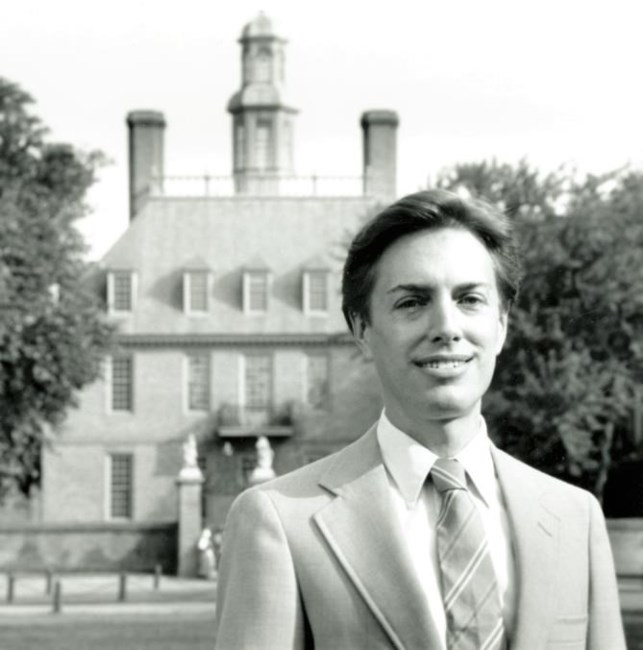
George was the only son of George Alvin and Wilda Humprey Yetter of Tulsa, Oklahoma. He is survived by two first cousins--Stanley Gerald Yetter, Jr. of Manhattan Beach California, and Walter H. Kopp, of Tulsa Oklahoma, and also by his second cousin, Linda Sudderth Sherman, of High Point, North Carolina.
Born on August 29, 1943 and raised in Tulsa, George spoke often of a golden childhood with cousins Melisande and Walter Kopp as companions. He was educated in the city’s public schools, and studied at Tulsa University where he graduated in 1965 with a degree in English. Afterward, George pursued post-graduate studies, earning a Master’s Degree in English from the University of Missouri in 1967.
After leaving Missouri, George served in the U.S. Air Force, attaining the rank of Staff Sergeant. That service included a 12-month tour of duty in Viet Nam, where he was stationed at Pleiku Air Force base, in the central highlands. During his time in the armed forces, George was awarded three service medals plus the Air Force Commendation Medal for notable attendance to his duties in the face of personal risk.
After the conclusion of his military service, George attended the University of Virginia where, in 1980 he earned a Master’s Degree in Architectural History. While in that graduate program, he worked on a summer project for the Historic American Buildings Survey/Historic American Engineering Record, surveying threatened buildings along the Missouri River.
George’s time in Charlottesville concluded with the presentation of his Master’s Thesis on the reconstruction of Thomas Jefferson’s Rotunda building at the University. His research cast new light on that important structure, and on the career of New York Architect Stanford White, who oversaw its reconstruction in the wake of a disastrous fire.
After graduation, George came to live in Williamsburg where he had accepted a position as Architectural Archivist for the Colonial Williamsburg Foundation. In that role, he curated a large, active collection of architectural drawings, maps, and plats dating back to the earliest days of the Williamsburg Restoration. When that valuable collection was divided, George became a librarian in the Special Collections Department of the Rockefeller Library. There he cared for the historic portion of the drawings archive, and helped to manage rare books, photographs, manuscripts, and photostatic reproductions, besides.
During his career with Colonial Williamsburg, George authored Williamsburg Before and After: The Re-Birth of Virginia’s Colonial Capital. This well-received book highlighted the documentary research, archaeology, and architectural investigation that undergirded the restoration. It has since become one of the Colonial Williamsburg’s most popular and enduring publications. In addition, George produced an extensive research guide to the architectural drawings of Williamsburg gardens produced by Landscape Architect Arthur Shurcliff. The subject was a favorite with George, connecting to his life-long love of plants, gardening, and landscape.
George retired in 2013, after 33 years of service to the Foundation. Over that time, his colleagues came to hold him in high regard. He was deeply curious about the world and brought a boyish enthusiasm to any subject that fired his ready imagination.
In retirement, George remained active in his pursuit of many interests. For years he had maintained memberships in two hereditary organizations centered on the war for American independence —the Society of Colonial Wars, the Sons of the American Revolution. After leaving Colonial Williamsburg, he was received into the Society of the Cincinnati, as well, and enjoyed attending the organizations’ functions. Retirement allowed him to indulge his life-long interest in antiques more fully. His home became a place to display and enjoy his finds, each with its own story and associations.
George’s life touched many people. Over the years he visited loved ones across the United States, and maintained many significant friendships in Williamsburg. Among the later was his association with the Wenger family--a mutual adoption in which he became known to all Wengers, young and old, as “Uncle George.” Like his true family, and so many of his friends, the Wengers—Mark, Becki, Jennifer, and Lauren—will treasure his memory, grateful for the privilege of having known him.
A service of remembrance will be held at time and place to be announced. Online condolences may be shared at www.nelsenwilliamsburg.com.
Show your support
Add a Memory
Share Obituary
Get Reminders
Services
SHARE OBITUARYSHARE
- GET REMINDERS
v.1.18.0