
OBITUARY
Emmett A. Clary Jr.
September 15, 1930 – June 15, 2026
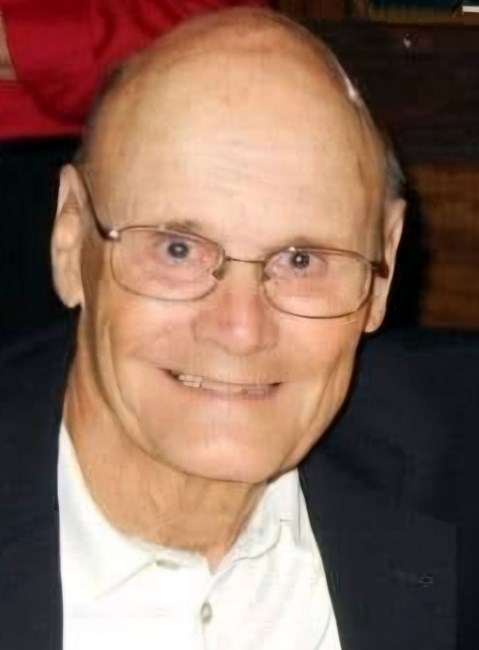
There are some people whose lives are measured by promotions, awards, or titles. Those are worthy accomplishments, and Dad earned many of them. But that isn't how we will remember him.
We will remember his quiet humility, his dry sense of humor, and his remarkable ability to make every conversation a little more interesting than the one before it. We will remember the songs he sang, the books he loved, the places he explored, and the countless stories he shared. Above all, we will remember a man who never stopped learning and never stopped encouraging the rest of us to be curious, too.
Dad was born at home in Los Angeles, California, on September 15, 1930, to Vivian Rothschild Clary and Emmett A. Clary Sr. As a child, his family moved briefly to Oregon before heading east. During the Great Depression, the family settled in Haddonfield, New Jersey, the town he would always call home. Haddonfield became the backdrop for many of the stories he loved to tell.
As a boy, he spent countless hours exploring Hopkins Pond and the surrounding woods. While most children came home with scraped knees, Dad often came home with turtles or snakes. His fascination with reptiles became so well known that years later he wrote, "Herpetology was my hobby until high school, when it became incompatible with dating."
He carried snakes in his pockets to school - explaining with characteristic understatement that they helped keep the bullies away. When they became too large for pockets, he fashioned a special snake bag. One garter snake hidden in a school desk produced a scream that classmates never forgot. Dad loved to retell that story because he never missed an opportunity to laugh at himself.
Dad admired Roger Conant, who became Director of the Philadelphia Zoo. Conant started his career there as Curator of Reptiles in 1935 and spent four decades modernizing what became the renowned Reptile and Amphibian House. Dad dreamed of replacing him as Curator of Reptiles and once donated a water snake to the zoo that was the largest of its kind ever on record. Though life took him in another direction, his fascination with the natural world never disappeared. During nature walks in his nineties, he could easily identify turtles and snakes he saw along the way.
His summers on a 215-acre dairy farm in Ohio were equally memorable. He milked cows, fed chickens and pigs, watered cattle, drove an old Ford pickup through the fields, and learned lessons about responsibility and hard work that stayed with him the rest of his life.
While attending Haddonfield High School in 1948, another life-changing event occurred. He met a new student named Josephine Zayas who came to the US as a child from Cuba. The first time she saw him, she turned to a friend and quietly said, "That's my dreamboat." She was fifteen years old.
On April 20, 1949, they began going steady - a date they faithfully celebrated every year for the rest of their lives.
Like so many of Dad's favorite stories, their courtship came with a little comedy. One day, he tried to get Mom’s attention by knocking on her classroom window as she sat in Spanish class. A little too enthusiastically, he broke the glass. Mom, who was the teacher’s pet, was ironically sent to the front office to report “someone” had broken the window. Dad was never caught.
Decades later, whenever he returned to the old high school, he always made a point of visiting that classroom. It was one of those places he never left behind.
Dad graduated in 1949 and went on to Lehigh University, where he earned a Bachelor of Science in Business Administration in 1953.
Though he graduated more than seventy years ago, Lehigh never stopped being a part of his life. He proudly wore Lehigh brown and white, faithfully attended reunions through the years, cheered for his team during annual Lehigh-Lafayette alumni gatherings, and happily drove around Florida whenever Lehigh athletic teams played nearby. He always called the coaches in advance to make sure he knew the schedule and let them know he was coming.
Our family often joked that if one of us ever won the lottery - which, of course, he never played - Lehigh would probably receive every penny of his share.
We will never forget one funny story he told from those days. Even though he was a strong swimmer his whole life, there was one Lehigh swim meet where he somehow managed to lose his swimsuit. Despite being deeply embarrassed, he finished the race.
After graduating from Lehigh, Dad entered the United States Army, serving from 1953 to 1955. He was never a traditional military man, but it made an impression.
His Army assignment placed him in a company made up largely of Puerto Rican soldiers. The Spanish he had begun learning in high school suddenly became part of his everyday life. As he liked to joke, his fellow soldiers made sure he learned every dirty word.
While Dad was home on leave, he and Mom were married in a small ceremony at the Presbyterian Church on October 18, 1954, in Haddonfield. Married life began in Army housing near Fort Benning in Columbus, Georgia.
Mom still laughs about serving her first baked chicken for dinner, which Dad happily ate all himself. On another occasion she spotted a mouse in their quarters and climbed onto the dresser, where she remained until Dad came home and gently escorted the little visitor back outside.
For more than seventy-one years, they built a marriage marked by love, devotion, loyalty, and unwavering commitment. They even shared a tender hope about growing old together: Mom would live to 100 and Dad would be 103. They signed birthday and anniversary cards "100–103."
When Dad had the opportunity to choose a new telephone number after moving from St. Petersburg to Tampa in 1984, he selected one ending in “1103” simply because it reminded him of their shared goal.
Dad didn't simply marry into Mom's Cuban family; he embraced it. When Mom's mother, Josephine Rasco - our Abuela - moved into their home after being widowed for the second time, English and Spanish drifted naturally through the house. Cuban cooking filled the kitchen.
After dinner came a Spanish tradition called sobremesa - lingering around the table over coffee while chatting about every topic you can imagine, laughing and teasing one another. Dad loved those conversations. They reflected everything he valued most - family, history, humor, and the simple joy of sharing stories.
Together, Mom and Dad raised three children: Bárbara, Michael, and me, Susan, in a home where books filled the shelves, questions were encouraged, and learning was simply part of everyday life.
After the Army, Dad worked as a management trainee with Sealtest Foods in Camden, New Jersey. His summers working on the Ohio dairy farm had prepared him better than he realized for work at the iconic dairy.
When Mom and Dad moved to St. Petersburg in 1959, full-time jobs were scarce. Dad took a temporary position selling World Book Encyclopedia door-to-door. He later laughed that he never sold a single set. "Of course," he wrote years later, "I didn't tell GTE that."
Within months, he joined the newly formed Marketing Department at General Telephone & Electronics (GTE), beginning a career that would span decades.
The World Book story had an unexpected ending, however. Long after Dad left the company, one of the families he had visited called, ready to buy a set. Although he could no longer make the sale, he was able to purchase a 1966 encyclopedia set for our family at a remarkable price. It became one of the treasures of our home.
Whenever a question came up, someone reached for the World Book. Long after most families had replaced theirs, Dad still preferred those familiar volumes. He used them until moving to Winter Park in 2020, often saying he missed being able to look up something instantly rather than wait for the computer to warm up.
Although his career was in sales and marketing, Dad wanted to understand every part of the telephone business. He learned from installers, technicians, and engineers, eventually wiring the telephones in our own home and developing a lifelong appreciation for telecommunications.
After retiring, he helped preserve the story of Almon B. Strowger, inventor of the automatic telephone exchange, because he believed that history deserved to be remembered - an effort that won a historic preservation award. He also became a member of the Telephone Pioneers of America and attended their Florida conventions. He had coffee once a week at Shoney’s in Tampa with all his old colleagues.
His career gave him opportunities he never could have imagined. Through GTE, he traveled to Mexico and Puerto Rico, teaching telephone installation and sales. After retiring from GTE in 1988, Dad began a second career at the University of South Florida, managing its phone systems. Always learning, he went back to school to earn a master’s degree in Spanish at USF. He became a Life Member of the University of South Florida Alumni Association, proud of his connection to USF.
Dad tried to retire a second time, but it didn’t last. He would always go where he was needed. When his best friend died of cancer, Dad took on his role as radio network coordinator for the Florida State Fair, giving fair updates on radio all over the state in English and Spanish.
Looking back on his life, Dad often reflected on where one high school Spanish textbook had led him: Mom, the Army, GTE, Mexico, Puerto Rico, Ybor City, Toastmasters, graduate school, and lifelong friendships. He summed it up with characteristic humility: "All of this, because of the start I got studying El Camino Real," his high school Spanish book.
Spanish found its way into nearly every chapter of Dad's life. He enjoyed serving with the Ybor City Chamber of Commerce and as a volunteer with the Ybor City Museum Society, giving bilingual tours of the historic cigar town.
That same desire to keep learning led Dad to Toastmasters in 1962, although joining wasn't exactly his idea. A supervisor at GTE insisted that he attend a meeting because he thought it would make him a better speaker.
Standing in front of an audience did not come naturally to Dad. In fact, there was a time when he was so terrified of public speaking that he turned down the opportunity to be the best man at a friend's wedding because he couldn't imagine giving a toast. Even after joining Toastmasters, he later admitted that for years his stomach knotted before every meeting. Still, he kept going back.
Little by little, his fear gave way to confidence. Years later, reflecting on that decision, Dad said, "The change in my life was so drastic that I just would never quit." He didn't.
If Dad had a speech coming up, everyone in the family knew it. He walked through the house rehearsing aloud until it sounded just right. He was always surprised when he gave a speech and people laughed at something he said; he injected humor into things when he didn’t realize he was doing it.
Over the years, Dad became a mentor, evaluator, club officer, district leader, and friend to countless Toastmasters. He helped establish five clubs, including a Spanish-speaking club and another that welcomed women before they were officially admitted to Toastmasters. As a family, we attended conventions in many states.
His business travels gave him the opportunity to attend club meetings throughout the United States, as well as Mexico and Puerto Rico, where he taught public speaking. He especially enjoyed serving as Table Topicsmaster, preparing the impromptu speaking questions members answered during meetings. Dad made sure his questions were interesting, educational, and just challenging enough to make people think.
He eventually earned Toastmasters' highest educational distinction, Distinguished Toastmaster. Dad was the eighty-eighth person in the organization's history to earn the designation, a number that has since grown into the thousands. He also received the Presidential Citation for exemplary service and his district's Lifetime Achievement Award.
The ribbons, trophies, plaques, and certificates accumulated over the years until there were simply too many to display. Before long, many quietly found their way into closets and cabinets. Dad never seemed to mind. Helping people discover confidence in their own voices was worth far more than his awards. Late in life, thinking about the frightened young salesman who once dreaded every speech, Dad liked to joke: "Now you can't shut me up."
Toastmasters was only one of the many things Dad approached with enthusiasm. Another was travel. He enjoyed planning trips almost as much as taking them. Long before we left home, maps were spread across the table, routes had been marked, and he had already circled museums, historic sites, and roadside stops he thought we shouldn't miss.
In 1974, Mom and Dad packed the family station wagon for what became a five-week, 8,000-mile trip from St. Petersburg to California and back. We visited many national parks, historic locales, and scenic points of interest along the way. Years later, Dad wrote that although the trip was filled with spectacular sights, one of his favorite memories came after a dusty detour through northern Mexico, when our dirt-covered station wagon was washed in the Rio Grande with the help of amused local taxi drivers.
What I remember most, though, isn't just where we went. It's what happened along the way. The miles were filled with conversation, games, and music. Music was woven into the fabric of our family life. Almost any conversation could remind Dad of a song. Before long, he would be singing a few lines, and someone else would join in. Family road trips were filled with singing - Dad knew so many songs that it would be an immense challenge to try to write them all down. Christmas never felt complete until everyone gathered to sing carols together.
His love of music never faded. Later in life, he had a friend digitize more than 100 albums so he could continue enjoying the music that had accompanied him throughout his life - from college songs and gospel music to standards from the 1930s and 1940s, traditional folk music, and patriotic songs. Nearly every morning began the same way - a bowl of cereal, the newspaper, and familiar music playing nearby. Dad loved to sing, but dancing was another matter. He liked to joke that he had "two left feet."
During his lifetime, Dad visited all forty-eight contiguous states. He came home with stories, and years later a place, a road, or an ordinary conversation could still bring one of those trips back to life.
When he wasn't traveling, Dad explored the world through books. We could hardly keep him supplied with enough to read. He moved easily between history, biographies, travel, languages, novels, and the sacred writings of many of the world's major religions. He would often read those sacred texts over again. There always seemed to be one more question to explore or another subject he wanted to understand.
You know how most people are a bit afraid of what they will do with all that time once they retire? Dad was never at a loss for things to do. After his final retirement from the fair, he joined the Italian Club, practicing the language he had begun learning during his master’s program, and went to their dinners. He volunteered at the Florida State Fair, and taught third graders through Ag-Venture, a hands-on learning experience that teaches kids about the importance of agriculture - a perfect callback to the Ohio farm where he had learned those same lessons as a boy.
I must mention his love of the water. We spent so many weekends and vacations at the beach growing up that Dad had a black inner tube with his name emblazoned in white “Snopake.” He would drift along the Gulf for hours in that tube, sporting one of his famous bucket hats - a necessary accessory ever since the Army shaved his head in 1953. Dad liked to joke that "bald is beautiful."
That same inner tube eventually got him into trouble at the Elks Lodge when they tried to kick him out for using it in their pool. Naturally, he appealed for an exemption.
He also enjoyed dozens of trips with the Florida Sport Paddling Club. With those friends, he canoed and kayaked all over west Central Florida well into his 80s. He would come home and write about those adventures detailing every bird and animal, every pullover when a log was in the way, and the times he became lost and found his way back.
When Mom and Dad moved from their longtime home in South Tampa to The Mayflower Retirement Community in Winter Park in 2020, it was simply another chapter. As always, he quickly became part of the community. He transferred his Toastmasters membership to O-Town Toastmasters, joined the Weekend Writers, became active in the Train Club, started a men's coffee group, served on the building committee, and made many new friends.
For the last six years, unless it was raining, you could always find my Dad walking around the lake at the Mayflower. He looked for turtles, fed the ducks, enjoyed being outdoors, and rarely passed someone without stopping to talk. He knew something about almost everyone because he could always find a connection. He especially reveled in befriending the employees.
The Weekend Writers gave Dad another opportunity to do something he always enjoyed - telling stories. He wrote many of them down with the same humor that had always made him such a wonderful storyteller. Like the stories he shared around our dinner table, his essays were thoughtful, quietly funny, and unmistakably his. He rarely made himself the hero. More often, he found the humor in his own mistakes.
Long before the Weekend Writers, Dad had written to his mother - Vivian Clary - a detailed letter from Florida every Sunday until she died in 1992, keeping her connected to our family's everyday life. Most of them were written on the hotel stationery he had saved during his travels.
Dad believed learning was a lifelong adventure. He believed people were more important than possessions, experiences more valuable than things, and that there was always something new to discover. He taught those lessons quietly. He taught them by asking questions, by encouraging curiosity, by sharing books, by planning family adventures, by practicing speeches until they were right, by learning new languages, and by never pretending he knew everything. He simply kept learning, and because he did, the rest of us learned alongside him.
Dad remained remarkably humble despite his accomplishments. Many people who met him had no idea of the awards he had received, the organizations he had helped build, or the leadership positions he had held. That was exactly the way he preferred it. He believed every person had something worth teaching and something worth learning.
There is so much we will miss.
We will miss his stories.
We will miss his songs.
We will miss his humor.
Most of all, we will miss sharing life with him.
We love you, Dad.
Author's Note
Writing this tribute has been one of the most difficult things I have ever done. For more than a month, I immersed myself in Dad's essays, emails, photographs, and research, constantly discovering new facets of his life and wishing I could ask him one more question.
I rewrote these pages more times than I can count. There were days when the grief was too heavy, and many beautiful stories simply wouldn’t fit. Nearly ninety-six years of a life so fully lived can never be contained on a few pages, and I eventually realized there would never be a perfect place to stop.
My hope is simply to leave my family with a reflection of the man we knew and loved. These pages tell only part of his story, but they were written with all my heart.
To everyone who was part of Dad's remarkable journey, and to those sharing memories, photographs, or kind words with us now - thank you. Your reflections help us know him even better, and for that, I am deeply grateful.
— Susan
Family
Emmett is survived by his beloved wife of more than 71 years, Josephine "Jo" Clary; his children, Bárbara Clary Zayas de Culbertson, Michael Clary (Sharon), and Susan Clary (Lonnie Thompson); his sister, Linda Lee Nussey (Dick); his nephews, Richard Nussey Jr. (Honna), David Ryan Nussey (Paige), and Eric Nussey; his grandnieces and grandnephew; and many extended family members, dear friends, colleagues, fellow Toastmasters, and all whose lives he touched.
He was preceded in death by his parents, Emmett A. Clary Sr. and Vivian Rothschild Clary; his mother-in-law, Josephine Rasco, lovingly known as "Abuela"; and his son-in-law, Gregg Culbertson.
Services
In accordance with Emmett's wishes, no services will be held.
Memorial Contributions
To honor my Dad’s lifelong love for nature, paddling, and the preservation of wild spaces, please consider making a contribution to The Tampa Bay Conservancy, a conservation organization of your choice, or Lehigh University.
Condolences
Those wishing to send handwritten condolences may mail them c/o Susan Clary, P.O. Box 4112, Winter Park, FL 32793-4112.
The family warmly welcomes your memories, stories, and photographs celebrating Emmett's life through the funeral home's online guestbook. Your reflections will become part of the story of a life that touched so many and will be treasured by his family for years to come.
Show your support
Add a Memory
Share Obituary
Get Reminders
Services
SHARE OBITUARYSHARE
- GET REMINDERS
v.1.18.0