OBITUARY
Martha Alvarez
March 4, 1932 – November 22, 2025
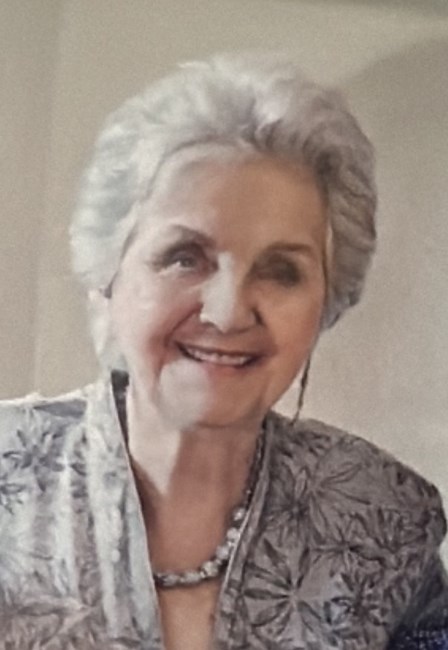
When we’re young, our understanding of our parents and grandparents is very limited. Like we’re trying to see the shape of something that is too large from too close, with only time giving us the distance to form a perspective.
Growing up, I only knew my grandma Martha as a kindly old woman who brought generous presents on holidays and special occasions. And who loved to feed her visitors croquettes and flan. And who entertained her grandchildren by theatrically removing her dentures while we cheered.
I didn’t realize how much my entire life was predicated on the sacrifices she made, the hard work she put in, and her willingness to go without for the greater good of her family. I grew up in freedom and abundance never fully appreciating what my grandmother endured for the luxuries I took for granted.
But as I grew older and began to take in a wider view, with each story of her past relayed, with each observation I could make from keener eyes, I began to form a clearer picture of my grandma Martha. A woman who fostered those who needed care. Who wove herself into the fabric of her community through her goodness and devotion. And gave herself to others without expectation of reward or witness. I know I only possess an incomplete view, but from where I stand now, I see an uncommonly virtuous person who lived — and died — in dignity, strength, and grace.
From an early age, my grandma Martha assumed the role of caretaker for those who needed it most: her younger motherless siblings. When her mother died of cancer, 8 year old Martha was forced by circumstance to cook, clean, and care for her two younger siblings Pedro and Orquidea, learning the role of mother from the example she set for herself. My father recalls hearing stories of a young grandma Martha building makeshift stools from cooking pots to do housework her great grandchildren couldn’t imagine being burdened with today.
By the time she had grown up and was starting her own family, fate dealt another cruel blow not just to Martha, but to her entire island nation. Fidel Castro’s communist dictatorship doled out a generous ration of political terror, economic hardship, and authoritarian repression that Cuba still struggles under today. Like many other Cubans caught in the tentacles of circumstance, Martha had to choose between staying in the only country she had ever called home, or seeking freedom in a strange, distant land. She knew the regime would exact an awful price on her and her husband, but that her son Raul — my father — would be better off. Cutoff from state benefits and ostracized from her community, grandma Martha struggled having to sell croquettes illegally to support her son while her husband was relocated and forced to labor in grueling conditions on a collective farm, an experience from which he would never fully recover.
Perhaps the greatest sacrifice grandma Martha ever made was of the children she never bore. Martha and her husband fully understood the precariousness of their situation and that new mouths to feed would only complicate matters. But for a woman with such strong maternal instincts, who above all loved children, this must have been a bitter pill to swallow. I can’t help but feel so much of the affection grandma Martha poured on to her son, her nephew, her grandchildren, and their children was drawn from a deep well of maternal love whose full expression was limited by circumstance.
Grandma Martha and her family arrived in the United States in 1968, stripped of all but their most meager possessions, and immediately set out to build their new life. She worked on factory assembly lines and as a home attendant, while her husband worked a punishing schedule as a butcher, and their son began attending school and learning the language of his new country. Week by week, paycheck by paycheck, the family found their footing and sowed the seeds from which generational boughs have since grown. Martha and her husband got to see their son Raul grow up in a free country, in a community where he built lifelong friendships, and made the most of the opportunities their sacrifices afforded him. They watched with pride as their son graduated high school at the top of his class, and go on to do the same in college.
Unfortunately, Grandma Martha’s husband did not share her longevity. Years of hard labor and traumatic stress took their toll and by 1982, Martha was a widower. In her grief, she could have receded into herself, but instead she embraced others. She took an active role in her church. She made friendships that spanned decades with tenants in her building and later, at her senior center. She acted as a second mother to her nephew John who in turn acted as her second son. She provided her son Raul with the down payment necessary to buy the home in which her grandchildren were raised and watched those grandchildren grow up. Though Fitzgerald claimed there are no second acts in American lives, Martha’s story suggests that every life contains more than one turn, more than one chance to begin again.
Grandma Martha’s final years moved along competing currents of hardship and blessings. She faced health challenges that increasingly burdened her. But she retained her mental faculties up to her last moments. She experienced the loss of her sister and of her closest friends and neighbors. But she lived long enough to meet her nephew’s children and her great grand children. And the people for whom she had sacrificed so much supported her in her hour of need. Her son Raul, and her nephew John, and John’s wife Elena, managed her health, her home, and her morale. Though largely confined to a lazy boy chair, grandma Martha spent her last years watching her great grand children play at her feet knowing only freedom and prosperity because of what their bisabuela was willing to endure half a century earlier.
We all have our own picture of grandma Martha formed over the years we’ve known her. Each from a different angle, and different time. Each incomplete and missing pieces captured elsewhere or entirely lost. All of us together today, with our memories of Martha, form a mosaic from which we will come away with a shared, fuller understanding of the woman we’ve lost. And though it’s painful to recognize the depth of that loss, it is how we honor her memory, and how she can continue to inspire us to live as virtuously as she did.
Good bye, grandma Martha. And thank you for everything.
Show your support
Add a Memory
Share Obituary
Get Reminders
Services
SHARE OBITUARYSHARE
- GET REMINDERS
v.1.18.0