
OBITUARY
Vilma Jasareno Aranes
December 24, 1936 – August 6, 2026
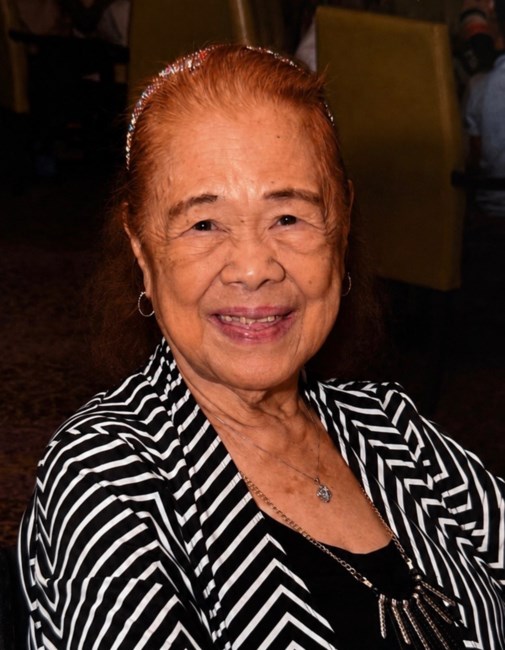
To her family, she was simply Mama (or Ate, if addressed by folks younger than her). Others lovingly knew her as Mama Vilma, Mama V, Lola Vilma, Lola V, or Tyang Vilma. No matter the name, everyone who knew her experienced the same warmth, generosity, and quiet, steady love that defined who she was.
Vilma Jasareno Aranes was born on December 24, 1936, in San Rafael, Castilla, Sorsogon, Philippines, to Gregorio Jasareno and Matilde Guan. She grew up as one of eight siblings in a home that valued education, hard work, and service to others. A consistent honors student, Vilma was bright, determined, and deeply caring. She once dreamed of becoming a nurse, drawn naturally to caring for others, but life led her in a different direction—one where she would care for people not in a hospital, but in everyday life, in ways that touched far more lives than she could have ever imagined.
Long before the word “entrepreneur” was commonly used for women like her, Vilma was already building a life through hard work and perseverance. She ran a fish-buying business that took her across long distances between the provinces in Larap to the inner cities of Metro Manila, and later managed a canteen that fed hundreds of workers at a nearby mining site. It was there that she learned to cook from a chef she had hired, and cooking soon became one of her most natural expressions of love. Years later, it would turn out that if someone enjoyed a meal she made, she would never forget. And more often than not, she would make it again—simply because the feeling of seeing someone else enjoy her food made her feel whole.
But her life’s greatest work were never her business ventures. It was always her family, and Vilma’s understanding of “family” extended far beyond those connected to her by blood. To her, family included not only her children, relatives, or their children, but also friends, neighbors, and even friends of friends. Anyone who entered her life was met with her warmth and care. She had a way of making people feel as though they belonged, often before they even realized it themselves. Her home was always open, her table always welcoming, and her heart always ready to include one more person. Whether through a shared meal, a kind word, or a simple question like “Have you eaten?”, Vilma made it clear that no one was ever meant to feel like a stranger for long. In her eyes, love was not limited by definition or distance; it was something expansive, generous, and deeply human, and she lived it by treating everyone she encountered as part of her family in one way or another.
Her faith was the quiet foundation of her life. A devoted Catholic, she attended Mass whenever she was able, carried prayer with her throughout the day, and was the literal embodiment of The Golden Rule. She believed deeply in kindness, patience, and understanding, often reminding others to be gentle with people because you never truly know what they are going through. She lived her faith not through words alone, but through the way she treated everyone she met.
Those who knew her remember her as soft-spoken, patient, and endlessly kind. She believed in peace over conflict, in conversation over quarrel, and in giving people the benefit of the doubt. She found joy in the success and happiness of others, especially her children and grandchildren, and took pride in speaking about their accomplishments and the good people they had become.
Above all, Vilma lived a life centered on love—steady, quiet, and unconditional. She did not seek attention or recognition. Instead, she built a life of service, sacrifice, and care, one small act at a time, repeated faithfully over decades.
She leaves behind a family shaped by her example, a home filled with her teachings, and a legacy carried forward in every act of kindness, every shared meal, every prayer, and every moment of patience extended to another person.
Vilma’s life reminds us that the most meaningful legacies are not always loud or grand. They are often found in the way a person makes others feel—welcomed, cared for, and loved without condition. And in that way, her presence will continue to be felt for generations to come.
She will be deeply missed, always remembered, and forever loved.
Show your support
Send Flowers
Add a Memory
Share Obituary
Get Reminders
Past Services
Reposing
Reposing
Prayer Service
Mass of Christian Bruial
Cremation
- SEND FLOWERSSEND
FLOWERS SHARE OBITUARYSHARE
- GET REMINDERS
v.1.18.0