
OBITUARY
Donald Stephen Picatti
May 15, 1931 – August 2, 2026
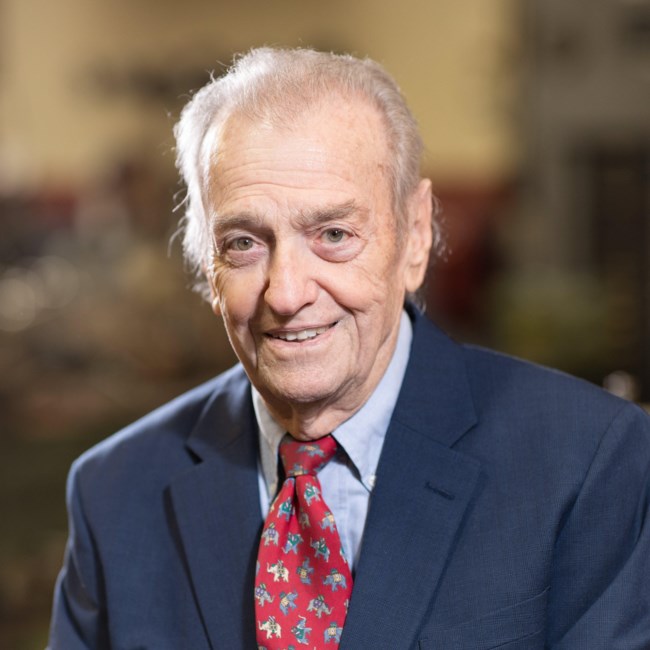
May 15, 1931 – August 2, 2026
Those who wish to honor Don’s legacy are invited to a visitation and vigil on Tuesday, August 18th, from 5:00 PM to 7:00 PM, at Keith and Keith Funeral Home, 902 West Yakima Avenue in Yakima. A funeral Mass will be held at 10:00 AM on Wednesday, August 19th, at Holy Family Catholic Church, followed by a graveside service at Calvary Cemetery, with a celebration of life to follow.
Don Picatti, 95, died on Sunday, August 2, 2026, following complications from a broken hip. He was taken to Memorial Hospital and airlifted soon after to Harborview Medical Center in Seattle, where he spent his final three weeks and underwent five surgeries to repair his pelvis. He passed away in Seattle following the last of those surgeries, surrounded by the devotion of the family he spent his life building.
To understand Don Picatti, it helps to know where his family came from — once you do, his drive and quiet determination make perfect sense. Don’s family story began generations earlier, with his grandfather, Gabriel Picatti, who was born in 1850 in Rocca-Conavese, a small village in northern Italy. Gabriel went to work in the coal mines at age twelve, and after years of grueling labor, trained as a “timberer,” responsible for shaping and installing the timber supports that held up a mine’s shafts. That trade eventually took him and his young family to a mine in Turkey for nine years. Then, in 1901, on the strength of a single job posting spotted on a poster in a Constantinople train station, they traveled to the United States, where the family settled to work the coal mines of Roslyn, Washington. It was at Ellis Island that a clerk’s error dropped a letter from the family’s original name, Piccatti, and the Picatti name was born.
Gabriel’s wife, Maria, made the decision that would shape the family for generations to come. She was a fiercely determined woman who had already insisted, even back in Turkey, that her children be properly educated rather than left to a one-room schoolhouse. In Roslyn, she carried that same conviction forward, insisting simply that her sons were not going to die in the mines and would build their lives through education instead. The business that followed may have carried the name “Picatti Brothers,” but the family has never forgotten that its true founding matriarch was Maria, whose perseverance shaped the men who built it just as much as any of them shaped it themselves. Her youngest son, George Picatti, was born in Cle Elum, Washington in 1904, and became the first Picatti to go to college as a direct result of his mother’s tenacity, attending what was then Washington State College (now Washington State University), and going on to become an electrical engineer. That single act of a mother’s determination laid the foundation for the family business that would carry them for the next century — a century in which, generation after generation, the wives of Picatti Brothers gave every bit as much as their husbands, holding families and households together so that the business and the men who ran it could stand at all. This tradition continues today, as Douglas’s own wife, Darlene, works alongside him at the business by her own choice, still proving that Picatti Brothers has never truly been about just the men whose name it carries. George and his wife, Mary, went on to have three children — Don, the eldest, followed by Dick and Betti. Don would go on to become an electrical engineer like his father, George — a path Don’s own sons, Douglas and Mike, would later follow as well. George went on to help found the family’s electrical business, Picatti Brothers, Inc., which served the town of Hanford, Washington from 1904 until 1943, when the family’s farm was seized by the United States government as part of the secret land acquisition for what would become the Manhattan Project. George Picatti accepted the government’s offer, well below the value of that year’s apple crop alone, without complaint, out of the same sense of duty to country that would come to define his son. What he gave up, unknowingly, was a small piece of ground on which the world would change; Hanford went on to produce the plutonium for the first atomic bomb, hastening the end of the Second World War, sparing untold lives that would otherwise have been lost to continued fighting, and helping establish the United States as the dominant superpower of the twentieth century. Some, looking back, might call George’s decision to leave a hard choice made too easily. Don never saw it that way, and neither does his family. George, and the other families who gave up that land, were quiet American heroes, and history moved because they did. Had George waited, the timeline of the war itself, and the world after it, might have looked very different. George’s sacrifice, made willingly, had connected the Picatti’s to one of the great turning points of world history, and Don made sure the world knew it — he told that story to anyone who would listen for the rest of his life, and it traveled far beyond his own family in ways he likely never fully realized. Don was a lifelong lover of history himself, and there was no story he was prouder to tell than this one. Historians from Washington State University and elsewhere sought him out again and again over the years to record his account of it firsthand, and Don never tired of sharing it. That same sacrifice was also what brought the family to Yakima, Washington, where Picatti Brothers continued for decades to come — the town Don came to love more than any other, where he raised his children, Mike, Douglas, and Lisa, and where the family still lives today, carrying forward the business that once again serves that same community. Years later, full circle, Don’s own company would do contract work and sell equipment into the very Hanford site that had once displaced his father.
Don was born and raised in Yakima, and he graduated from Yakima High School, a class he remained devoted to for the rest of his life. For decades he faithfully attended class reunions, and in later years, as the group grew smaller, Don would personally drive around town picking up old classmates so they could still gather together. Eventually, there were simply too few of them left to gather at all, which was a loss Don felt deeply, having loved that unique bond with his classmates for nearly eighty years.
Don attended Washington State University, earning a degree in electrical engineering and continuing a family tradition that would eventually span three generations. He was also a competitive member of the fencing team. Don was enrolled in Army ROTC and had been scheduled to teach military science at WSU when he was instead unexpectedly deployed to Korea. He served with honor during the Korean War, surviving a bayonet wound, a broken back sustained in a Jeep rollover, and one of the war’s most harrowing battlefield episodes. True to his character, he rarely spoke of it. He carried it not as a story to tell, but as a duty he had done — quietly, and without complaint.
It was also at Washington State that Don met Shirley, who became his college sweetheart. The two thought to marry, but their differing faiths — his Catholic, hers Protestant — made that impossible at the time. Both went on to marry others and raise families of their own, corresponding only occasionally over the following decades. Don went on to work at Allis-Chalmers in Milwaukee, Wisconsin, where he met Dorothy, who would become his wife of 54 years. Dorothy was a devoted stay-at-home mother and a pillar of her community, serving for years as PTA president and active in the Junior League, the Women’s Century Club, Perry Technical Institute, and many other organizations throughout her life. Together, Don and Dorothy were the perfect parents to three children who felt honored and blessed to have been raised by them in such an extraordinary life, and their marriage lasted until Dorothy’s passing.
Years later, Don reconnected with Shirley, who was by then also widowed. What began as a wartime-era romance interrupted by circumstance became a devoted companionship that lasted roughly six years, filled with travel and the rediscovery of old memories from their college days. Shirley’s death from cancer was one of the great losses of Don’s later years.
Don began his career at Allis-Chalmers before eventually returning home to Picatti Brothers, where he worked his way up through the business over many years. He was put through the same grind as everyone else, with no shortcuts for being family, before eventually earning his way to president — a role he would go on to hold longer than anyone in the company’s history. He worked alongside his brother, Richard “Dick” Picatti, for decades along the way. Like his father, George, Don was a natural leader, a quality he carried first into the Army, then into his years at Allis-Chalmers, and ultimately into Picatti Brothers. Over the company’s nearly one hundred years, he was far from the only Picatti to lead that way, but he was one of them. He told you plainly what needed doing and expected you to do it well. He held himself, and everyone around him, to a standard of excellence, believing that “your best” was the only acceptable measure, not some external standard of “the best.” At work, Don wanted nothing short of perfection. He surrounded himself with family — those born into it, and the many bright, capable people who joined it over the years. Together they chased that standard relentlessly, catching genuine excellence again and again along the way. He challenged the whole team, together, to chase their own maximum — not just to clear whatever bar the competition happened to be setting, but to find out how good they could truly be, and he loved every one of them for it, whether their last name was Picatti or not, without reservation. Above all, Don carried forward one of his father George’s core beliefs: that the business existed to do right by its customers, always, especially when doing right was hard or costly rather than convenient. Engineering excellence and simply doing the right thing even when it wasn’t easy became the Picatti way — not as a slogan, but as a standard the family genuinely tried to live up to. Picatti Brothers was built generations ago by two surviving brothers, and led for decades by two more, Don and Dick. Today, fittingly, it remains in the hands of two brothers once again — Don’s sons, Mike and Douglas — who carry the responsibility of Don’s legacy forward. Don loved the business as much as he loved anything in his life, and he never fully retired, remaining abundantly engaged right up until his final days. His family wants it known: Don is gone, but the business he gave his life to is not, and it carries on.
Don and Dick shared a common wall between their offices for decades, and they argued the way Italians argue — loudly, passionately, and often — in a way that alarmed anyone who didn’t understand it. Then, more often than not, the two of them would walk out together and go to lunch as though nothing had happened at all, because nothing had. At work, Don was simply Don, and Dick was simply Dick, business partners who fought hard and loved working together. At home, they were brothers, and the two worlds never crossed — in fact, none of Don’s children ever called him “Dad” at the office, not once, and it never once felt strange to them, because that was simply how they had been raised from the time they were young. Don loved his brother, and he loved working alongside him, quarrels and all.
Don Picatti was sharp, deeply well-read, and engaged with the world until his final days. He was a man whose knowledge of history and current events regularly surprised those who underestimated him because of his age. He lived according to a simple, consistent philosophy: do what needs to be done, do it because it’s right, do it without asking for credit, and love your family without condition, while still expecting their very best.
Don became something of a living institution at Picatti Brothers. Customers, old and new, would come by the shop just to visit; some simply to reminisce about a childhood spent tagging along with a parent to that very same shop; others with a real, present-day problem, asking about some piece of equipment or project from decades past. Often, Don had been the one who designed it, built it, or fixed it himself, and he would tell them so, plainly from memory. It was never just about efficiency. Don believed a family business existed to solve real problems for real people, in a way that made everyone feel welcome — the same simple instinct that kept him at that coffee group every morning for decades.
Don was, by his family’s account, the rescue master of the family — the one who would drop everything for a flat tire, a tripped alarm, a flooded basement, or a call for help of almost any kind. He simply loved being needed, and there was nothing he enjoyed more than being the one his family could call.
Outside of work, Don’s passions were physical, competitive, and inherently a little dangerous, and he shared every one of them with his family. He took up snow skiing almost by accident in his younger years, in order to give the family something to do together in the winter, and he and his brother, Dick, became founding-era skiers at White Pass together, where the Picatti family still holds three of the resort’s historic equipment lockers, passed down for generations. He spent countless summers boating with his family at Vantage, Washington, in a boat he owned with his brother Dick, teaching his children, family, and friends to water-ski, ride the toboggan, wakeboard, and more. Skiing and boating both came with real stakes, and the family has the broken bones, the stitches, the broken-down equipment, and the trips to the emergency room to show for it. But that was, in its own way, the point: the moments that went sideways, the gear that failed, the injuries that had to be dealt with together on the mountain or out on the water, are the ones the family remembers most vividly and fondly today. Don built family bonds the way many families do, through shared adversity, not despite it. He played golf every Monday night for decades, and in his later years was joined by his son Douglas and daughter-in-law Darlene, with the group closing out golf night with breakfast for dinner at Mel’s Diner.
Don was fiercely competitive at golf, tennis, and water skiing alike, and he was not the type to ease up and let you win to spare your feelings — you had to beat him outright, and often, you didn’t. For the greater part of his life, he was a fixture in a local daily coffee group, meeting every morning for a gathering with no agenda beyond simple fellowship among old friends.
Don was fiercely proud of his Italian heritage, and he communicated the way his family always had — loudly, passionately, with his hands as much as his words, and saying exactly what he felt, because that was simply the Italian way, and it came from loving deeply, as opposed to any lack of love. He was a longtime member of the Sons of Italy in Yakima, gathering monthly with deep-rooted Italian friends of his own generation — a tradition he loved without reservation.
Don also remained profoundly connected to his fraternity, Sigma Chi, at Washington State University, and in his later years became the second-oldest living Sigma Chi from the chapter, which made him something of a living legend in Pullman, oft spoken of with real reverence by the current members. No matter how he felt physically, he made the drive to Pullman for chapter events whenever he could, and they loved seeing him there. This bond carried into the next generation, as his son Mike became a Sigma Chi as well.
When Don’s sister, Betti, moved back home a few years ago, it meant everything to him. Don didn’t know it at the time, but one of the last great gifts of his life was celebrating his ninety-fifth birthday with his sister back at the table, surrounded by immediate family and grandchildren, together, one more time, in a moment the whole family will always remember as nothing short of magical.
Don’s legacy is now the obligation of his children, Mike, Douglas, and Lisa. He is also survived by his daughter-in-law, Darlene; his daughter-in-law, Lisa; and his son-in-law, Dan; his grandchildren, Max, Nick, and Jack Picatti, and Cassidy and Eric McClintock; and his great-grandchildren, Devi and Quinn. He was preceded in death by his wife, Dorothy; his companion, Shirley; and his brother, Richard “Dick” Picatti, who passed away roughly a year before him following long-term complications from COVID-19 — a loss made harder still by the fact that Don, recovering from his own broken hip, was unable to attend his brother’s military funeral.
In his final years, Don’s daily care was carried largely by his son Mike, who managed his medical needs, appointments, and daily life with a devotion the family will never be able to fully repay. Daughter Lisa also cared for Don, making home-cooked meals, tending to the house, and engaging with Don’s humor and gift for conversation. Don’s grandsons Max and Jack also lived with him, helping with his care and giving him the gift of their company. The family also recognizes the real personal cost of that caregiving and is profoundly grateful to everyone who gave so much of themselves.
Even in his final days, Don never stopped working, and he never stopped teaching. Two days before he died, his sons Mike and Douglas, and his daughter, Lisa, were at his bedside when a customer called with an after-hours emergency: a rock-crushing motor down at a gravel pit. Without missing a beat, Douglas handed the phone to his father. “Here,” he said. “It’s for you.” Flat on his back, tethered to hospital machines, Don still drew on decades of hands-on motor shop experience and engineering knowledge neither of his sons could match, and he knew immediately what to check. He walked the customer through the real diagnostic steps, one by one, giving him every chance to actually fix the motor rather than simply telling him to go buy a new one. Mike, Douglas, and Lisa stood there and watched, still learning from their father, right up until nearly his last breath. That time was never on any company time sheet — it was simply Don’s passion, freely given, until the very end. In those same final weeks, Don was also pushing through grueling physical therapy, working to fight his way back home, and regularly exceeding what his own therapists expected of a man his age. His body was failing him, but he never failed it back. Even as the machines kept working around him, so did he. He was, in that moment on the phone, still the rescuer, still the engineer chasing the right answer instead of the easy one, still thinking of the customer, the company, and the children at his side all at once. The Don never retired. His body gave in. He never did.
Show your support
Send Flowers
Add a Memory
Share Obituary
Get Reminders
PALLBEARERS
Maxwell PicattiPallbearer
Paul StraterPallbearer
Cassidy McClintockPallbearer
Nicholas PicattiPallbearer
Jack PicattiPallbearer
Eric McClintockPallbearer
Services
Prayer Service
Funeral Service
Committal Service
- SEND FLOWERSSEND
FLOWERS SHARE OBITUARYSHARE
- GET REMINDERS
v.1.18.0