
OBITUARY
Mr. Vincent Wilton Cave
7 April, 1933 – 5 January, 2005
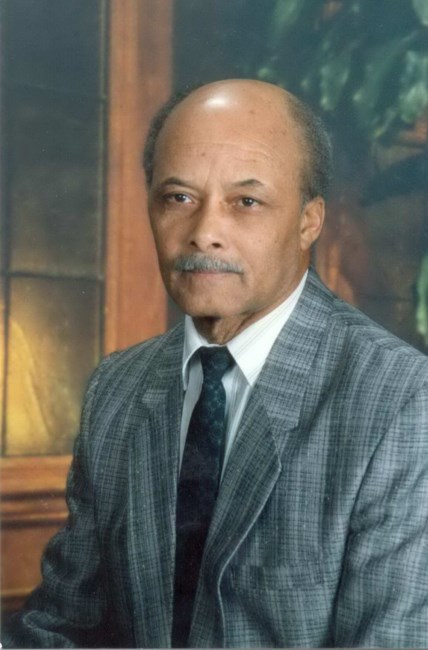
Cave, Vincent Wilton: of Cambridge, suddenly at his residence, on Wednesday, January 5, 2005 in his 72nd year. Beloved husband for 47 years of Norma Edwards. Dear father of Vincent and his wife Linda of England, Julian of Nova Scotia, Wayne and his wife Toni of Toronto, Delcene Persaud and her husband Soamnauth of Cambridge and Nigel and his wife Mary of Mississauga. Lovingly remembered by seven grandchildren, four brothers and four sisters. Predeceased by his parents Arnold and Mondell Cave and two brothers. Mr. Cave was born in Welchman Hall, St. Thomas, Barbados and had been employed at the Cambridge Holiday Inn for 26 1/2 years as the maintenance supervisor and retired in 1995. He served in the Gulf of Aden confliict in the 1950's with the Warkshire Engineers in the British Army. The family received their friends at the Barthel Funeral Home, 566 Queenston Road, Cambridge on Sunday January 9, 2005 from 2-4 and 7-9 pm. The Funeral service took place at St. John's Anglican Church on Monday January 10,2005 at 11:00 am. with Canon Bowyer officiating. Cremation followed. As expressions of sympathy donations to the Heart and Stroke Foundation of Ontario would gratefully be appreciated by the family.
Tell it as it was! This is the story of my life from childhood through teenage years and then to manhood.
There is an island that lies in the Caribbean Ocean, as part of the West Indies called Barbados. Once called Little England, this island of paradise is 14 x 21 miles in size. To go on further with geography, the island lies in the eastern hemisphere. England was the mother country, but Barbados became independent during the year 1966. At which time I was with Her Majesty Military Service as a Government official.
As a native of Barbados, I am one of the Cave’s sons. We were a large family, and considered middle class wealthy family. Caves were well known by the people of the island and very popular in most of the Parishes. I remember my dad had a car and three trucks that he had working in the Highways, Transport and Sugar Cane industries. We transported the canes by the tonnage from the plantations to the factory. My mother helped my dad do the book work since we had a quarry to run, gas stations to attend, and garage for repairing the vehicles. During those days Dad hired servants to work in the home.
A chauffeur drove us to school and brought us back home every day. The chauffeur also drove the plantation vehicles.
Our favorite servant was Pearl Lea Cock. She was a relative of my mother. She always took us for walks during the hot summer days across Sturges Plantation and to the Flower Cave. This was where we use to go under ground each Good Friday to see a miracle. White Lily flowers under the clear calm water, and when you touch them or break one off while in the water, is turn to crystal. The cave was like the Underground, and had a large dome ceiling. The cave must be ancient because our father said it was there when he was a child. It is fascinating. We gathered shrimp in the clear cold water.
My father was a vesty official for the parish of St. Thomas. He eventually became Justice of the Peace. I can remember as a child we were brought up fairly strict. Coseta who was the other servant would take us through our orchard to get fruits; yellow bananas, oranges, grapefruit and golden apples to eat. Sometimes we eat under the coconut trees and get the breeze from around the valley. We would watch the humming birds pluck the flowers and the bees suck the juice from them. We can listen to the music sound from the birds, such as gauling, the crooning of a Wood Dove and Rock Dove, plus a few varieties of sparrows. It gave me that happy and gleeful feeling to be free along with my other sisters and brothers. I was very content during those days. I had nothing to fear, as a teenager going to Southborough Elementary School. I enjoyed going with other kids through the plantation fields and chasing the monkeys from eating the potato crops. Then we would take our turn to cut a sugar cane, peel it with our teeth and suck the juice. It helps keep your teeth shinny and milky white and strong.
At school we had to go to a place called Rusha Gully to cut bamboo cane or Tambourine rods on Thursday for our principal. If we do not learn our school homework he would make us bend over a bench and flog us. Then when you reach home your parents got a letter from the school reminding them, and there goes another whipping, this time with a fan belt. We thought it was cruel, but now that we have grown we understand why it was like that in those days. Well, in my belief, it made me a scholar by paying attention to your homework and schooling. We learnt to respect our family and others. Besides that, flogging hurts! Try to succeed in what ever you do. Parents sent their children from Switzerland and USA to be taught in Barbados’ schools. It’s a typical well-spoken English language on this paradise island.
Some Saturday nights, we had the privilege to go farther down the village and play with the boys and girls. We would play Hop Scotch, play Puss Puss Catch a Corner, or Hot Bees and Butter. Whoever found the hidden belt will run the kids back to their post and try to whip you before you reach your post. Before going home, we get together and sing Gabrielle Gabrielle Noble King and The Moon Is Shining Like Day. I attend Lynches Secondary High and never fail any of may classes even at elementary. I had sat a scholarship exam and had pass to enter the college. The fee was $25.00, but then went up to $50.00 per term. I never regret what our parents done for us, three sisters, five brothers, plus twins died and younger brother died also. When I finish schooling I drove one of my father's trucks in the sugar cane industry and on to the Highways and Transport. Eventually, I got to know how the businesses ran and helped. My father got me in at the Barbados Central Foundry to learn welding, but they started me off in the blacksmith shop under a brawny guy called Stalin. The white sucker made me work like Hell. I was becoming fed up, I went to become a welder, not a blacksmith, but I hung in there, in the end it paid off. He taught me to make horseshoes, claw hammers, punches & prick punches, chisels, curlers, ironing combs, and such things. I passed my exam and went to the molding ground, from there to machining what we call a lathe turner. I trained to be a machinist and was given a job to be done for the sugar cane factories. I went on to pipe bench fitting & trenching. Next was welding, to be trained by a younger scholar than I. Mr. McCony, the foreman introduced me to Claymount. He said “Do you want to become a welder?” As a typical Bajan, I said “Man, yes.” The other students laugh. Claymount said to me "Hold this for me. Quick!” He gave me the end of the tip that held the rod & I started shaking. The power was on and I could not let go. At the time everyone was laughing, but they cut the power off quickly. I learnt well from the lad, eventually we shared our work on the dock welding. I went and done some brazing at the candy factory in St. Johns. The jobs were small, lasted about three weeks.
As a boy I always wanted to become something, go abroad, travel and see what other countries are like. To become a doctor, or a sailor to see the world and travel the high seas, or a soldier to the battle fields and fight.
F
rom the land of sunshine to the land of England.
First job I got in UK was a kitchen porter. In Barbados for my education level this was not for me. In Barbados I think we were too proud of ourselves in what we do and who’s son or daughter you are, but in England things were different. We see the white man doing plenty of work for a living, so I decide to do the same as anyone else; its’ £ you are working for. I left being a kitchen porter to work at Paddington Hospital in London as a health porter, the £ notes were OK. I meet West Indians who work on the London Transport buses, and Station masters at Piccadilly and Oxford Circus.
Friday night we all meet at the Useton Assembly Centre where they have dances it was very near to Kings Cross and Prancros Train Station. You can meet all kinds of nationalities there and have great fun. A good mixture of immigrants all from different countries.
While at the hospital I told my chief, I would like to become a mental nurse student. They got me transferred to Grubeary Road Hospital in Leicester, then they took me 20 miles to a place called Desford Hospital for Mental Kids where I began training. I stayed in the boarding rooms provided for students. I had an elder brother who was chief male nurse at Ruberyhill Hospital Birmingham. I decided £5 per week was not much money, and I packed it in after 1 1/2 years and got a job at William Baker Textile. I started as a knitter and ended up to becoming a mechanic. One of the owners, John Baker, taught me how to read the blue print to set studs in the drum. I learnt the number of chain links for the size of sprocket and the number of teeth. I also learnt to set the stitch calms and put in the needles which takes a couple of weeks. This gives different patterns in the clothing material. I had to learn quality control and the number of stitches to the inch, selection of the yarn. I left the company after a few years when I was called for NS by her Magisty Service to training as a government official in the military at South Wigston Barracks called Glenpava. We had a tough training and went through 6 weeks square bashing and combat training, first with blanks ammo then ending with live ammo and charging bayonets! I was scared. After graduation we were split up to different battalions and regiments, I went with other soldiers to the 1St Royal Battalion of the Warwicks.
Our first tour of duty were in Ireland, stationed at Ballykindler Camp in Northern Ireland section. Lot of border patrolling was carried out. Friday and Saturday nights two trucks load of soldiers would go to New Castle in the town to have their night out. Going into the pub bars and having their drinks while some of us go to the movies. A few times I had to take a turn as a Military Police with four others. After debriefing one that had to go back to England I took his place. This soldier’s wife had given birth, so he had compassionate leave. At that time things were not so bad in 1958, we patrol areas and things were calm. One night going back to camp from New Castle we met with a small road blockage in Neury, but it turned out not to be a serious problem. We believed it was done for fun by someone to give us the scare. We were in Ireland for three months only. We had great night maneuvers as the 1st Royal Warwick Battalion continued our combat training. Mostly of the night was hand to hand combat learning how to block the enemy from charging you with the bayonet on the tip of his rifle.
F
rom the land of England to the Shores of South Arabia, to a place called Aden.
We were on a 48 hour notice call to leave Warwichshire and take the convoy to North Hampton. We travel by night. We began to figure things out slowly. No sooner had we gotten to port when we were asked to assemble on the docks in columns of four to listen up. The Bugle called and we had our briefing of what was happening in Aden between Aden and Yeomen. Two governments were about to clash. Subsequent to the moving out we had collected all our overseas combat gear, rifles, bayonet, shovel, machete, magazine for ammo, mesh pan, spoon, fork, small stove, approximately. 5” x 4” and 82 liter. We boarded the troop ship at 10pm 12:45 am. ship sail out of port, head for middle east.
I enjoyed sailing until we got going through the Bay of Bisco on Sunday morning. The seas were roughs. This large ship rocks and rolls the bow dipping down and up from side to side. Each time the nose bow and came up, the deck was heavily with salt water. Suddenly the bull horn sounded. “This is the Captain, Now hear this, Now hear this, we are now approaching the Bay of Bisco, the waters are rough. All soldiers on deck must go below to your quarters until further notice.” In the meantime, my wife gave birth to a son, our first born and I was denied compassionate leave after applying. I said to a corporal friend of mine “Oh Shit Man, I hope this thing doesn't go down.” He laughed and said “Cave, easy come, easy go, we will reach Aden alive.”. At midnight we were out of it and the seas were back to normal. We were call up for tea but some of the boys were sea sick and couldn’t leave their bunks. One morning about 15:00 while the ship sailed I was down below in the engine room watching the sailor shoveling coal when I heard my rank, number and name announced twice asking me to report to the orderly room on deck 2. I wonder what was going on because I haven’t done anything wrong. On my way heading there some of the soldier said Cave “What’s wrong.” I reply “I do not know.” By time I reach there, I went in and solute Captain Schuzel. Sergeant Shannon’s command was “Stand at ease.” The captain said “Cave, be calm. We got a cable from the war office asking to put you off at Gibraltar.” My father in law went to the police asking them to get in touch with the commanding officer at Wigston to get me back because my son was very ill. So they definitely give me compassionate leave of two weeks. I went to the quarter master officer, in order to get to my gear and fetch my passport and other papers for customs but could not get to the luggage. “Hell man, you would have to unload that ship.” From the ship I was taken to a staff car in style, with British flag flying on the front side of the fender. When the car pulled up at the Airforce building, I was treated like an officer. The driver opened my door for me. I saw some Bryel Cream boys coming from over by a Shachelton plane, and they saw the driver open the door. They breast as about to salute me but never did because they saw I had no stripes. The only stripe I had was a badge like wings on my tunic jacket sleeve initial MT division. I was led into an office and was given papers to clear me in England at Limenum Military Air Force Base. I got on a small reconnaissance plane it took me to Madrid airport and I got aboard a BOAC. It touch down at Limenum, put me off, then a staff car took me down the runway and over to the orderly office, I was given a train ticket from Kings Cross to Loughborough Station and £3 pocket money. I had to report to South Wigston so to let them know I am back in UK and for what purpose. Before leaving Limum, they sent me over to the cook house to have an English cup of tea and to get a couple of sandwiches to eat on the journey.
Tired and glad to be home, I hoped I did not have to go to Aden to fight. I felt so happy to be with my wife and son again because I never had any time with him. Anyhow my wife was pleased to see me, so as I to see them both, at this point of time. My baby son was breathing better. My wife followed up with the medication after being discharged from Gruberry Road Hospital Leicester a week or so later.
After spending 2 weeks at home, I report to Wigston, get a ticket and head to London to report to St. John Woods Military Station. When I got there the warrant officer told me we would be leaving in two days. He took me to the payee Lance corporal officer and introduced me. The corporal me where to sleep and wished me the best of luck. A gurkha in my building told me the time for breakfast, lunch, and supper. After breakfast on the second day, I was assigned to clean horse shit out of the stables with another mate, then groom the horses. There were 6 of them. Next duty was to go to the sergeant mess and clean silvers, spit and bull boots. The third day, the same thing, had enough for now. I saw the payee corporal and ask him when we are leaving for Aden. He said we cannot get a flight yet, so he told me to see him on Friday. He arranged a return train ticket for me to go and spend time with my family for 2 more weeks. An allowance of £8 was given to me and I move again. I could not stick around much longer, I ran on T2 which is my own legs so to catch that 2:00 p.m. train to Loughbrough, the wife was surprise to see me again. My son was much better. I spent another week at home and then went back to London where they were about to get us ready. I was sent back to Leister for shots and vaccination, when I got there I was told to go to Burmingham where we had gotten them before. So I got a return train ticket and went there. They sent me back to London telling me a St. John Woods Medical Officer can give it to me. The following week thirty-five of us were taken to St. Thomas’s V Military Hospital and got our inoculation and vaccination including two jabs in the butt.
On Monday morning they drove us to Heathrow Airport and we were on our way to see alah and the desert of sunshine. First stop was Cartoon, that’s Sudan. Second stop Somali land at Rogadesha Airport. We had 1/2 hour while the plane checks took place so we sat it out in the canteen over a cup of tea. One guy who served up the tea came over and said mucka tea nice? It was like wash up water, but we said nice. He in turn said to mam “camel milk!” Some of the recruit soldiers ran off to the washroom to be sick, I never knew camel milk could be use for human consumption. We boarded the plane and in no time we were flying up the Gulf over Steamer Point City. We touched down at Comaxer Airport.
I came through customs and saw jeeps and truck picking up soldiers. No one called my name or number so I sat and watch everyone else go. It appears no one knew I was coming back or when. I had no money no African currency. One of the girls from Air Central said she’d call to the Warwick Camp by the BP and tell them to send someone to pick me up. A nice looking tan woman came in the waiting room and shouted my name and number. I said ‘Yes Madame.’ She replied “Follow me soldier” in a military voice.
She said I was lucky to be picked up so soon because its 180° and camp closed at 1:00 p.m. No rain for over a year she told me. This lady drove across the salt lake and up the desert road heading for this place she calls Little Aden. It was across from the oil field and the beach was 3 miles to the back of the oil field. When we got closer by the BP, I saw check point and iron bar across the road blocking any vehicle. A police officer on one side and a soldier in the hut came out with his Brengun slung at waist height, 2 bandoleer over his should. He saluted her, asked me a few questions and away we went. I was met by the Mt. Sergeant call Aidken, an intelligence officer. They sort me out to where all soldiers sleep in the huge billet. I found out the lady was an airforce officer. I saw her since at the Lido and she bought me a beer. She wanted to know if I had settle in among the boys because I was the only one there at the moment. You see I am what the English would call half cast. There were three other blacks in the outfit but doing their share of duty up country in a place call Dahla. One of these soldiers, Steve Scott was from Barbados, Mitchell and Snoeybantom, was from Jamaica. I got on the MT with them and we hung out together along with two from Birmingham and Agi Astel from Leicster.
I have taken up my duties driving. Clean up my RL Bedford. Pump grease in the universal joints, oil the springs to the rear and front. Check oil and pressure, check tires for correct pressure and drive to the compound for gas. I run an order after I collect my sterling, one extra magazine and a shoulder of two bandoleers of ammo. I’ve dispatched things to Fort Morbert at Maala. Load groceries to take back. Sometime go to the post office and bring in the mail. Make runs to Singapore Lines picked up some personnel from Comaxer Airport. On pay days I drive a land rover to take the officer to the bank in Steamer Point. A corporal stands behind a machine gun. An officer with his pistol and I carry my sterling. An armor car takes position across from the bank and the Rock Hotel. We had to be armed to the teeth because Yeomenies soldiers come over the border in civilian dress making it hard to pinpoint the enemy. The Yeomenies were mostly interested in the Aden protective Levy Soldiers. They generally cut their throats and web their guts. However, they will also take a pop shot or two at our soldiers. We walk in fours if we go up town to Steamer Point or along the Maala Strip. One night we came from the Lido where all British soldiers, Marines and Air Force hang out for a couple of beers or a swim. The Reckey Truck took us back to camp but surprisingly one of the boys was not with us. We thought he would find his way back just like Little Boy Blue. Around 2am while still playing dominos, cards and draft we heard a groaning under the hill outside our camp. We grabbed our weapons and maneuvered outside thinking it was a setup. We went through the windows from the back instead of going out full force through the door. We took position and crawled to the direction of sound. Others went to 1 and 2 o’clock. Private Astel shouted “Who goes there? Advance to be recognized and give the pass word.” Along this his rank and serial number came a reply. He was one of ours. Apparently, he had been fishing out of bounds. The MP never saw him, but if they had he would be court Marshall and charged, then jailed for a month or so. His left leg was broken. He was taken to the military hospital across the hill. We gave up our Saturday night went up town after 23:45 to retaliate. We used our peck sticks to push and pull down the side walk stores where the Aidenes slept. They started running and shouting, but we caught up and whipped them with the peck sticks. We could hear them shouting “tailie mucka bucra hemsh.” We laid off and headed back to camp. When day break a Somali police officer came around the camp and the guard let him in. He went to the commanding officer Major Badger and made his complaint for the Adenese civilian. After he left, the remaining of us in the camp were call to assemble in the square by the sound of the bugle. We were inspected by the CO and then he spoke to us about the incident. The CO said “I believe you all left camp and went down town and retaliate with Arabs.” He said “I understand you done a hell of a job which I will not tolerate the next time. I want to know you spill blood. Jolly good show. Dismiss!“ He left the square. We went on to duties as usual, we never let on.
The thought of going to Dahla to do our thing, was scaring because we had never fought in a real or skirmishing battle. Some of our officer and soldiers had fought in the Korea war and were very experience guys, but not the milk bottles. That’s what they call us. We had orders to pack after a 72 hr standby, and go to Singer Poor lines where we will join forces with Aden protectorate levies. This is a battalion that trained well, knows the borders, and has experienced problems over the borderline before. These soldiers are of medium built and height. They do not talk much. Very quiet and serious. You would take them for Guinea Indians by looking at their features. They came down from Taize on donkey backs across the mountains and enlisted. Most of them do not like flying in a plane. We got to the meeting point and they had 22 truck load of soldiers. Wee had 16 RL 2 ferrets and one tank to take us through Sheikothman. We stopped at the town to waited for the marines and the remeys. Those guys in the Remeys have all the drums of gasoline, tools to build bridges and necessary parts for the vehicles. They caught up with us and the big outfit moved on as a convoy. Going through the village the locals gave us a warm welcome. We gave the kids a little British red, white and blue Union Jack flag. They shouted, some in English, some in Somali, some in Arabic, “The British is here.” At this point the trucks are howling past. Some of the soldiers were throwing some of their dry pack rations for them, gum as usual, compo dog biscuits, or can tomatoes and tin pudding. It hurt me to see them scrambling for the food. Some did not get any but somehow it thrilled me. I began to think back of when I was a kid on the island of Barbados. The Queen came to Barbados on Jubilee day and we lined the streets with our flags waving to her. Memories like these are not forgotten. Our days were joyous and care free and very happy. I only wish I could live those times over again. Here we are now, grown up and carrying out our own responsibilities, having to bring our children up the best we can and teach them right from wrong.
When we reach to the waddy the water was flowing down stream pretty high and moderate. Some of the solider had to get off the convoy. A ferret crossed and towed a truck to the far embankment. They turned around and catapulted a cable to hook to the vehicles and wrench them across.
Farther on was the Abian Jungle. At the entrance we saw some of the land was tilled and crops of breadfruit, potatoes, bananas and mangoes were growing. I emptied my harbor sack, clipped my sterling on my shoulder and took off. Sergeant Aidken who works in intelligence said “Cave, where are you going?” I said, “I will be back soon, I have to discharge.” I went and collected green mangoes, some potatoes, and cut a bunch of bananas. Returning to the truck I heard a shot fired. I look back and this guy was yelling words at me. I open up in front of him but not to damage him. He dropped his shot gun and put his hand in the air. Our guide Richard went to interpret. We got into our trucks and before I move my truck, Captain Schuzel drove his Jeep along side and said to me, “Cave, see me when we reach Dahla.” I said “Sir," because I know both off us are going to get along together.
Our journey continued through the desert in the hot sun. We drove until sundown, and all we could see was the sand, the blue and white skies and the sand dunes. We drove until we came to the half way camp. With other British soldiers, we had a hot meal and a bottle of beer. Then we went to collect our carton of cigarettes and smoked them before turning in for the night. We got up next morning, checked the trucks and gassed up while some soldiers went checking each vehicle with the detector in case mines or time bombs were stuck to the vehicle. We move on to a longer ride and much tougher time to face. When we reach the end of the desert our tank, mortars, and ferret move up and down through the valley. Guns were in action over the pass and up into the caves where the enemies watched from. When they saw the convoys coming they fired upon them. It’s a steep path cut by the engineers for the vehicles to reach Dahla. When we reach to the top of the plains over the fields we heard the sound of 2 jets from Comaxer Air Base. They flew pass us with the cockpit shields back and gave us a thumb up. They raised the nose up went across the hills and then made a turn back. Heading low towards the valley on one side they fired a few rockets into the cliff. All we could hear was the bang of explosions as we saw the white smoke and the flash of fire. Those pilots disappear back to base. Eventually our convoy continued to climb out of the mountain area and move into camp. It took two and a half days through the rugged mountain to reach there. We put away our vehicles and went straight to the canteen to get a cold beer and then the cook house. We could hear a few mortars drafting near the camp during the night of our boys still retaliate with our anti tank. We kept fires on mountain ridge where the flash was coming from the Yoemenies.
On Sunday morning I was selected as part of a platoon to go scouting. A PL Levie took us to the boundary lines. We left at 0500, and return at 7:45. No one could be seen over the lines, but we could see them at their gun posts as daylight broke. There was a young lad by the name of Ishmel Alhash, nice kid, about the age of 12 to 13. He came to our camp and brought us eggs. We bartered cigarettes for eggs, because we were on dry pack rations. This gave us extra food to survive on, along with our tea bags and small pouch like took paste containing condensed milk. When he received cigarettes he resold them in the village for money. The police found out and arrested him. He would not tell them how he came by the cigarettes. The police came to camp to find out if we gave them to him or if he stole them. Our captain had us line up outside our quarters and asked us questions. We denied ever giving the cigarettes or take the eggs in lew. We did not own up to what we were because it is against the regulation to resell or give away the army surplus. We can be paste up for a couple of weeks, which mean you would receive no pay or over seas advance during this time. The youngster was turned over to the Aden police in Dahla. He was put in a jail cell and had one of his hands cut off. They took him to the well and dug a hole. They shot him then tilled the soil. It hurt us knowing the law was tough and cruel. In fact I have a picture of him sitting with us on Saturday mornings in the hills, over look the Yeoman border.
I sat on Sanger sand banks as the hot sun came up over the mountains with my Jamaican friend Mitchell along side me. I said up into the mountain who should climb but little me. I held my 303 with both hands as I looked down the valley into the foreign land. I ask Mitch, what is it you could see down there, he replied nothing. I told him I could see the green valley which seemed to be adorn with flowers. The rich green leaves on the trees and the vines littered upon the limbs. Looking up I saw the blue skies and the bright sun shine. Twinkling stars seemed to appear before my eyes and I had a great feeling. I replied to Mitchell, "I wonder what my dad would say if he could see me now." Would he be proud of me or would he say to me, “Boy, you are crazy to be in this outfit?” Mitch smiled and said never think about home when you turn your back. Leave what is behind and think of the future facing you my friend. We had the privilege to go into the little town, look around see the captured prisoners. We were not allowed to take cameras or weapons. I thought the law was outdated. Within the dark cells there were no wooden or cement floors. The prison was built of boulder stones and cement. Galvernise top with thick wooden doors 5 inches space between the thick laves of the door. Just soil on the floor and a few blankets spread over corn stalks to lie on. A thick beam of wood projected from the roof out to the front entrance with a rope and pulley. This was use to pull the prisoners up on the skin of his toes, with their hands tie behind their backs and raise for so many minutes. You may not take pictures of the women in their veil. The law says you can be shot. Every Friday the civilians from Yeomen village were brought over to be sold or bartered, these are the women of course. These women are gathered to be auction. The women are jet black, nice looking and smooth skin. They are sold to other Arabs in the village at a price of 500 Yeomen dollars or a camel for 2 women. You can trade a goat or a sack of corn and 3 bundle of cornstalks to feed the goats and corn for chickens to get a women. If you have 24 chickens and a lot about 60ft x 50 ft. it’s a chicken farm to them. One thing that made me laugh when I saw it was what was happening to those women. I told our guide Richard I just could not believe my eyes, seeing slavery still going on. He asked me not to laugh, it’s an insult to those people and I could get into trouble. To me it seems that in some countries we have a lot of backward people. I ask Richard why these people live in these conditions. Dry pack stones and oil cans cut open and straightened out flat as a rooftop. Their beds were blankets and cornstalk on the soil. The goats and chicken stayed there with them. If they give birth to a baby its sleep rough up in there also. Richard told me if the government built homes for them, like the ones downtown they would keep their animals in the same way. So no money is wasted if nothing is built. I felt sorry for them but the women looked happy and healthy.
Trouble started when we relieved the North Hamtonshire Regiment. The APL clashed with the Yeomen Troops. The patrol found six of their soldiers with their necks and throats cut. We drove the soldieries to the plains and we all disembarked from the vehicles and took up position as ordered. The infantry followed the tanks with 2 armor ferret. They were firing as we moved in a wide flank. I traveled with sergeant Shanon, and we saw the enemies running and shooting toward us. I could hear the sergeant Major voice shouting “Bring the Mortar over here. You tity and set up.” We kept firing at them and see some Yeoman’s dropped to the ground between the Breckon and Thorns. I heard “All plates in action.” This was the command given by the corporal.
“Yes Sir!” the Major said. Our enemy machine gun post at 4 o’clock sites up ranging 300 prepare to fire 6 rounds, fire one, fire two, and it went on like this. To be honest I was scared and taken back, as this was my first experience to this. I heard the sound of the bugle and the word came by as an order from Major Badger “Charge bayonets!” We bade the noise and moved in for the kill. Just as trained, we block shield and clobber them around the head with the but of our riffles, they retreat and I jab with the force of my weight. With drawn bayonet I kept going. Our eyes are everywhere, but I still have that flair of fright in me. I saw a bayonet heading toward me. I drew my machete and side stepped, whooping him with a side slash across his left side. Someone fired a shot and got him. That is when I took the machete wiped it on my lower right side and moved on with the boys. To me I felt confident as my mind started charging. I have no feelings for them, it's a job, and I could do this without fear. When you commit murder or knife someone in a city street, you fear the police will take you away and you spend time when convicted. Not here! As a professional, this is the kind of work you trained to do. I had one mind to do one job of this kind whenever we are call upon. At this time I started to use obscene language like some of the others in arguments. You swear and try to push a fight, I would lose my temper put my face up to yours and push you. I would try to grab your apples and squeeze and if it’s not good enough I will bite you and try to throttle you until I see the white ball of your eyes. You have to be rough and let go of being the soft and polite gentleman. I could remember the night we had a brawl at the Blue Lagoon Club in Crater. A few Americans were in port and while at the bar drinking I went to collect another round of beer for our table. When I turned with the drinks I felt a grip on my uniform. I turned around and said, “Please, I am not looking for a fight.” He gave me a few hard shoves. This guy said “Where you are from, Africa?” I told him I am a Bajan from the Caribbean and was with the British Military. Guess what he told me? I am from Pittsburgh, and where I live we have not time for niggers like you.” I told him I am not causing a problem and with that he spat on me. I was scared of this 6 footer. I dropped the tray of drinks, suddenly grabbed his apples and squeezed. I pulled and kicked him on his shin when he bent over with the pain. I brought up my knees caught him in the face then he was side push as the other soldiers clash with his buddies. When he hit the floor it was good for me, I kicked him up his groin a few times and around the head. He tried to get up but I grabbed a chair and began whacking him. Someone cut the lights off. Every one headed for the windows and door to get out. Bottles, chairs and glasses were flying. When we got outside we scrambled to cabs to take us back to camp. Next morning we were talking about it, some of the boys' faces were bruised and busted up. I was clean because my fight with that Pittsburgh was different. Never clinch while fighting you could be knife if that person is carrying one. I never thought that they would stand up for me because he had about six others with him at the other end of the bar drinking the hard stuff, while we can only afford to drink beer. British pay was not much in those days because they took out some to give the family you left behind. To be honest I was about to throw the drinks in his face and punch 2 fingers hard in his eyes and take off, but I had the courage to stand up for myself. From then on I seem aggressive sometimes and will not take nothing from anyone depending on the situation. I thank my English friends.
Vacation time was coming and we had to spend our 4 weeks at Nially Leaf Center in east Africa, a place called Monbassa. I had the privilege to go and spend some holidays. I found that these African natives are loving, caring and hard working. Specially the women who worked in the field. They take the young ones on their backs in a sack and go laboring from 7 am until dusk. Hard workers again when they arrive home cooking and feeding the kids. The work is never done. I have experienced this myself in a small village call Caunda. They have the same vegetation and ground products as in the West Indies. One day a nurse I got to know from the military hospital and I went to pick up a soldier after being discharge. The name of the nurse was Nema Fatema. She was a nice young lady. She invited me to their home the other side of Nially, I stood up to the invitation. She sent her husband to pick me up at the camp gates and took me to the home. I was welcomed in by her son. She whipped up some Cookcoo and Jack fish. I could have sucked the thick lavess of my fingers that afternoon. I ate some mangoes and bananas, just like my home country. I was so thrill to know in a foreign land you could make a friend so easy. We talked about each other’s country. They never travel before and it appears to me that my conversation and a bit of Barbarian history was quite interesting. He asked me how I come to be in the British forces. I told him our country was under commonwealth. When you live in the UK as a civilian you may become an NS Serviceman. When I was leaving they wished me well and hoped we would meet again. I continue to travel to Niroby with a friend. I spent a couple of days there and head out to Tanganegba farther to the east of Kenya to meet his uncle who was a dentist. When we got there and he called his uncle to pick us up and take us home. We spent a few days up there. His uncle drove us around and took us to the safari to see the animals. These animals have a vast area to travel around in. We took a small air craft and went down to Monbasa Airport, took a cab and went back to Niallie Camp. One Sunday morning some of the soldiers and airforce girls and boys were on the beach watching the waves swell and rising over the coral reefs. You could just see the lovely white sand barrier. Suddenly I heard some screaming to the south shores. I ran to investigate. I saw every one running towards my direction, they said a snake was on the beach. I went to the hut to get Sambo the coconut tree climber. He was not there so I took his machete and went down the shore with a gang behind me. I never even went close to a snake before in my life, only seeing the garden snake around the camp that are harmless. Still I kept my distance. When I closed in on the snake it was chattering away with it head and neck about 3 feet off the ground bobbing at me. I raise the machete made a pretty fancy stick licking move and took off the head. I was lucky the remainder of the body swiftly lift up lash out towards me. I ran like hell and then went back I had the biggest frit of my life. Every one came back and said to me “Well-done Cave, you ever kill snake before?” I said a couple of them, but I was lying. I skin it and salted the skin and hang it up outside our billet to dry. It went to Aden with me and I showed it to our officer. He wanted to purchase it from me, instead I gave it to him as a souvenir. Three of us took off to Somali Land which was not that far away. We landed at Rogadeesha Airport where a guide by the name of Abdula Hassen drove us to town where they were having their independence celebrations. This was in 1960 and I watch the celebration marching along the road. We spent one day there, and then headed for Ethiopia. We reached Ethiopia 10 am and drove to the Garrison. It was a big day for the military, the Parade was in honour of the imperial staff of command and I saw one of the last true kings. Hail Solacy in his khaki uniform and white cork hat. When I was a kid I always dream of going to Africa and to Ethiopia and so I had my wish come true. I never give up at anything I want to achieve. I fight to the end. I gain some inspiration after travelling and some experience as well. I got to like Ethiopia, although most of the area was dry and hot, at night it was not as cold as Aden but almost the same. Some parts of the country are very green just like Sudan. They seemed to have had a long drought like Aden. Aden has a volcanic mountain, between Crater and Malla Straight. Someone told me it erupted years ago, nothing comes from it now, but I took a walk for curiosity. Part way up the mountain I saw melted stuff like cinder or burnt coke from the coal mine.
I was Court Marshalled once for threatening a police officer. He did not look like an officer. One day I went to Light House Point on orders not to stop for anyone that was not recognizable, not even to show my work orders because some envelopes have highly sensitive information being dispatch from one head office to another. When I got to the post I saw an Arab with a riffle over his shoulder running toward me trying to stop me, but I speed up, went through the tunnel and headed to the Light House Point, to the other camp. I remember they called it Sheeba Camp. I made the dispatch and on my way back this police officer ran down the hill and into the road stopping me. I did not understand him. I pulled to one side and took my sterling. Pointing at him, I using some vocal language fired 2 bullets over his head pushing him to get out my way. He climbed up the embankment while I run, got in the Land rover and took off. Somehow he got the plate number and reported it to his head quarters. The Somali inspector came up to the camp and complained. I was called by Sergeant Shanon and told I would be Court Marshaled in a few days to give proper satisfaction to the Aden police force. I was not to leave camp at any time. I was to report to the orderly room first thing after breakfast and 10am till night which I comply. When the case came up I told them I was on duty making a dispatch when this occurred. The man could have been a Yeoman soldier disguised in the police top hat and short khaki clothing. I could have been killed, so I took no chances, whenever out with the vehicles we were told not to stop because some of the Yeomen posses like Civilians. I was found guilty of threatening a government police officer. While he was doing his duty and I went through a red light. I did not even see the lights up to now, but passed another vehicle at the entrance of the tunnel. I’d been charged with lack of due care and attention on the highway. I spent 2 weeks confine to camp cleaning the toilets, scrubbing pots and pans in the kitchen, and cleaning silvers in the officer mess. The jobs were not bad but boring at night. A couple of nights I scaled the walls by the harbor master office and walked around the ridge to the Rock Hotel to chill out on a beer, then returned. When I served the time the company congratulated me on my sense of humor and the action I took. I was transferred to drive the MO at Singapore lines for a couple of weeks until his driver return from his African vacation. When he returned I told the MO I never went to Africa, my time was near when I was transfer. He got my name on the list to fly out the coming Saturday. (I went there before.) I visited my friend again. Passing my time at the beach in the day and going to movies or having a drink over a the YMCA. I returned to Aden after having a good time.
Trouble started brewing in the Persian Gulf. They select some of us to go onto the docks at Steamer Point and help some of the 45th Marines to load up ammo and cargo on a frigate. It was going to Bahrain to deliver and we were to go and unload onto another battleship. That was a good cruise for me and the other soldier from our company. The ship went to Oman and stayed about 4 hours before heading back to Aden. We were dismiss by the captain and a petty officer. When we got down the Gangway the Boson shook our hands. A land rover took us back to Little Aden. We took tour of duty into Palestine during that time things were a little calm. I remember when King Fisel was over thrown. I understand he was killed. We were stationed at the New British Territory in Hong Kong to cool off for a while and then on to Bornio to flush out the Sucano bandits. We used the gurkers that joined me on the plane going back to Aden from St. John Woods Military quarters. Their job was to go out early in the morning to scout the trail for us. We used the mules and donkeys to take ammo and weapons up the mountain to camp. I knew there were head hunters and cannibalism at the villages. The tribesmen told us they are good hunters. We pass though a village where they were cooking and I could not believe what I saw. A family sitting and eating a roast dog and the little kids feasting through he carcass of the animal. That was worse than seeing the African children blowing out the guts of a pig and playing football. Listen to this. When the gurkers brought in a couple of heads they rolled them in white lime from the factory, then stuck a bamboo cross up into the lower part of the skull and baked it into the sun for about 3 weeks. When it dried out we had to play football with it, at that time the bread fruit were too young to pick. When they were ripe we gathered a few and played ball to help keep fit. The officer told us kick the hell out of our enemy. “I like to see blood drawn.” So we played ball with the skull because it was an order. This officer told us “I’ve lead soldiers into action during the Korean War with the Americans, which some of our outfit now can tell you about it, if they want to talk about it, very horrible experience. We are here to teach you how to survive while going through the valley of death when the time come. Forget your home, and your mother because she won’t be here to breast feed you. Forget you ever had a father, your riffle is your friend, the machete is your girlfriend. The British army gave me and others the best discipline possible. I noticed when the time came for you to be demob and return to civilian life you are like a family being separated and going to live with different foster parents. It’s a sad feeling going through these heavy gates at Glenpava Barracks and hearing them close behind you. You look around to see stranger’s faces and wonder where you are. It’s like being lost between this huge ground and wish it could be reversible. This is the end of the line. Starting all over again to succeed in the future. My reality is now different and a new page has turned. I can’t go on trying to live the past in a dream, I have to make new decisions because I want to make a future for me and my family. A message to the young ones, enlisting in the armed forces will be great for them because this is becoming a society of violence and death. The forces can give you an education, they can break or make you. We may not like their system at first, but you will gain respect and discipline. You will be honored when you return civilian life, you can become a great solider visiting countries and seeing things you only heard about
Living conditions for those people in Dalah, was pathetic. I saw them come around the camps and turn the garbage over looking for food rations. They pushed at each other and took the crust of bread and the meat bones. They put it into their bags and took it home to eat. We had a freezer operated by our own dynamo electric. The machine broke down because of a shortage of fuel. We had to wait 3 days until the next convoy came through. The meat went bad from 180 degree temperatures. We took the stuff and 2 gery cans of petrol out to the sand dune where we dug a hole, poured petrol in and set the meat on fire. When we look back we saw women, men and children, rush to put the fire out and started pulling the roast meat way. A couple of rounds were fired in the air to scare them. It did not. The corporal told them it was not good for their consumption. I overheard this guy, “No muker talie nuber toman toman” he meant to say it's very good, he will eat and drink plenty ‘mia’, which is water. I was never a serious thinker but made one of the greatest decisions in life when I joined the forces. The tide never turned towards me during these years of my profession, but they always say someday the tide may change and come tumbling after you with a 6 foot wave to take you under. For me, I will still have the guts to fight my own way. I’ve noticed my children took my foot steps to the military. One son stayed the longest and is making a career of it. I am proud he is achieving his goals at this moment. This book gives me the greatest pleasure to thank the officers, the sergeant and the corporal from which I received the best training through a part of my lifetime. Serving in the military service with the 1st Battalion of the Royal Warwickshire Regiment which went through the trouble spots in the middle east was one of the greatest teams. Signing off I stepped through the gates of Glenpava Barracks. Somehow PTE. V. Cave 2358468 stepped on a piece of wire which was bent. That’s where my story of a life time ends leaving Charley company behind. The best foot slogers ever to lie! I leave this with love to my wife and children, my family and my friends in appreciation for all they have done to support me through my career and my life.
Show your support
Add a Memory
Share Obituary
Get Reminders
Services
SHARE OBITUARYSHARE
- GET REMINDERS
v.1.18.0