OBITUARY
Charles Edward Chapman
December 19, 1914 – June 10, 2014
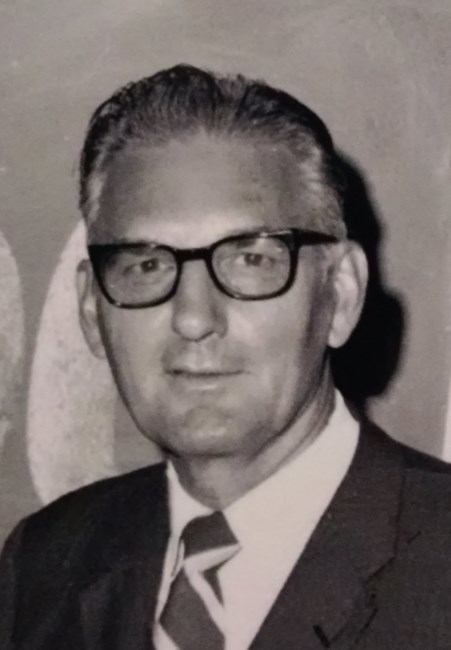
Moving from the McKinley Home for Boys in Burbank, California to a ranch in Montana during the Depression, Charlie earned the nickname “dude” for his city-slicker ways, but learned early on how to use his hands, appreciate nature, make flapjacks in -40 degree weather and work with others to achieve extraordinary things against all odds. With these experiences, he built a diverse career, loving family and wonderful life of adventure and service that impacted thousands of people throughout his century on this earth.
Still in Montana when World War II began, Charlie decided to enlist despite his good draft number. He opted for the new Army Air Corps and was chosen for officer training. After a brief stay at Moffett Field in San Jose, California, he was commissioned a second lieutenant and finished the war a major in charge of several thousand enlisted personnel at an air base in Iceland. He was perfectly happy to talk about the comical cadence of Jimmy Stewart as a training officer, but it was with reluctance that he told of the time he carried a woman from a burning church in London after a Luftwaffe raid.
Throughout his life, he held close two particular items of advice from his mother: to continue his education and to never smoke cigarettes. After the war, this advice helped him make one of the most important decisions of his life, and he turned down a promotion in the Army to earn his Bachelor’s, Masters, and eventually his PhD from UC Berkeley.
Charlie’s PhD focused on a new concept of education spreading in the U.S. in the 1950s and 60s: community colleges. These were so new at the time that, even though he was a recent graduate with his PhD, he was hired to be the President of a newly formed campus in Barstow, California. Shortly after that, he was invited to interview for the presidency of a new community college in Cleveland, Ohio, the flagship community college for the state. He was warned that they had a budget of only $75,000 and no promise of any more. He risked giving up his job at a growing campus in a growing state for a school that didn’t even exist yet. But the potential to do more for more people was there, and the opportunity to create something completely innovative that could improve the lives of countless people was too much to resist. Despite strong political opposition and the many challenges of enabling education for everyone during the height of the Civil Rights movement, Charlie persevered and Cuyahoga Community College, and the entire concept of Community Colleges in America thrived. Over time, the college system he founded and fought for expanded to four campuses, educating tens of thousands of students. After many years, he returned to California and served as the Chancellor of the State Center Community College District in Fresno.
Throughout everything, Charlie was a devoted family man, married to his loving and supportive wife, Naoma Ledbetter Chapman for almost 60 years until her death in 2003. He is survived by three children, Diana (Bob) Smith, David (Marilyn) Chapman, and Cindy (Mike) Roof; eight grandchildren, Storey Smith, Cordell (Stacey) Smith, Chad Smith, Christi (Steve) Allen, Tayler Frances Chapman, Abraham (Paula) Roof, Ashley (Eric) Mayers and Melanie Roof, and six great grandchildren.
At 99, Charlie lived in his own home, with a beautiful garden, his springer spaniel Lady, and had a lively social calendar. A man determined not to be average, Charlie never was. A lifelong learner who read poetry and philosophy until the week of his death and an avid golfer who managed to golf his age until 95, Charlie’s zest for life and knowledge inspired those around him until the very end.
Services and a military honor guard ceremony will be held at Mount Vernon Memorial Park at 8201 Greenback Lane, Fair Oaks, California at 10am on Sunday morning, June 15, 2014.
Happy Father’s Day, Charlie, thanks for 99 amazing years!
Show your support
Add a Memory
Share Obituary
Get Reminders
Services
SHARE OBITUARYSHARE
- GET REMINDERS
v.1.18.0