
OBITUARY
June Viola Garrett
21 August, 1923 – 16 August, 2025
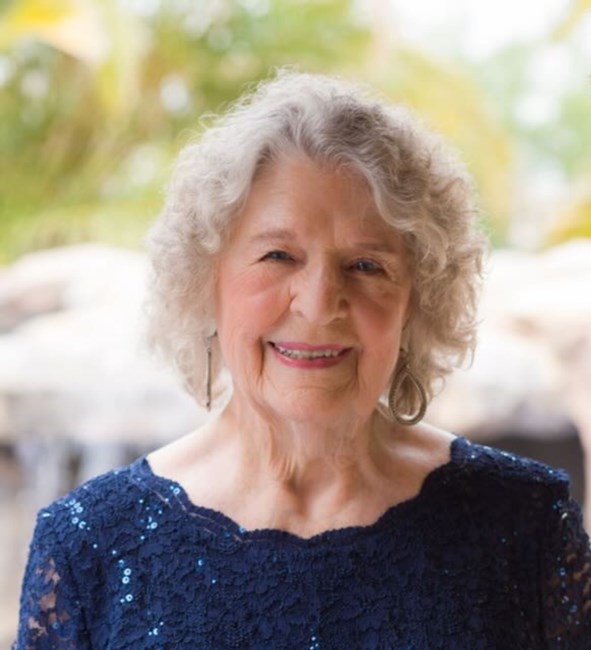
(This tribute was delivered by Alisa Garrett Martin on the occasion of June’s 100th birthday gala on August 19, 2023).
100 years. A century of living and loving. Very few of us here tonight have been or will again attend a celebration like this. As I’ve tried to get my head around who my mom is, what she means to me, and the magnitude of all she has experienced, it occurred to me that the century in which her life story has unfolded has seen the greatest transformation of civilization in all of history. What a time to be alive!
I’d like to share some of her history from my perspective, through some of the stories she has told me over the years. I thought it might be interesting for her grandkids and great grands, extended family and cherished friends of the family here tonight to hear some stories of her life that they may not have heard before. Especially for her grandkids and great-grands, to know the story of where Viola June Garrett comes from is to know where you come from as well.
Born in the little town of Ladysmith, WI to George Foglesong and Gertrude Clymer, Viola June was the third to the last of 7 children. Grandpa had been on his own since the age of 16 and had homesteaded land in Colorado and built a sod house on it when he met Grandma. By the time my mom was born, they had to moved to a little house in Ladysmith, where Grandpa found work at a dairy. It was in that house where June and some of her siblings were born. Maybe there was a midwife, or more likely an aunt or grandmother or a neighbor to help Gertrude through delivery. WWI had ended only 5 years earlier, and America was transforming at home and on the world stage. The last horse-drawn vehicles were disappearing from the streets of small towns, though cars would still not outnumber horses until the end of the 1920’s. The prairies were still vast, the Adirondacks and the Catskills were still mostly devoid of vacationing Yankees, and across the country there were still large swaths of intact everglades, bayou, mesa, desert scrub and Pacific coastline. The west had been conquered not so very long ago, and stories of conflicts with Indians animated June’s childhood imagination. As a very young child, she actually knew people who had fought in the Civil War!!
She has a dim memory as a toddler of her family packing all its belongings into cars and trucks and moving to Nebraska City where her mother’s parents (the Clymers) lived and her dad found work at a meat packing plant. She recalls the thin paper walls and open shelving of her grandparents’ home down by the brick factory. She was only 6 when the Great Depression wracked the country, causing food lines in cities and mass migration from family farms across the heartland. Her dad did extra work wherever he could find it. The family didn’t have much, but they were more fortunate than many and as she tells it, she grew up not realizing she was on the edge of being poor. Like she and dad did for me and my siblings, her parents shielded her as much as they could from hardship. Her mom washed clothes for the family of 9 by hand with a washboard and tub outside in the freezing Nebraska mornings while mom tells of lying in bed, a stone heated by the fireplace the night before still warming her toes. They grew and canned much of their food, and she tells of following her father through the garden, eating vegetables along the way. Sometimes she would eat apples for dinner and hot porridge for breakfast. While her dad worked at the packing plant, he sometimes brought meat home for dinner and that was special. Their first rented home in Nebraska City did not have plumbing. Later, when her dad was hired as a Nebraska City police officer, they would move to a bigger house with indoor plumbing.
As June grew into a big kid, her dad built a reading platform for her in a tree because she was such a bookworm and he wanted to encourage that, a luxury he never had. He also built her a trapeze in the barn because she liked acrobatics and dance. Once when she was upset with her folks about something, she announced she was going to run away to join the circus. Her mom helped her pack a hobo bag on the end of a stick and with a straight face wished her a safe journey. Mom got about a mile down the road before realizing she would have to sleep outside in the dark alone, then ran home!
Family life was different then. The Foglesongs spent evenings together gathered around the radio as there wouldn’t be TV’s in every home for at least another 20 years. Her favorite program on Saturday mornings was Sammy Kay’s Orchestra. Aunt Penny used to tell her “don’t wake me up until Sammy Kay comes on!” School was different too. Unlike the exaggerated tales of many modern parents, she really did walk miles to school in the snow! There were no waterproof snow pants or boots. The kids hung their woolen overpants from pegs on the walls of the school entrance to dry during class, and the whole school—a 100 year old stone building with creaky wooden floors—smelled like a wet dog!
At the time WWII broke out in Europe, my mom was a busy, happy teen, oblivious of the troubles brewing. She had a passion for reading, music, dance and horses. She did acrobatic dance in middle school and then in high school she sang with the Girls Sextet at local rotary clubs, fundraisers, and concerts. On the weekends, especially during harvest, she worked on her older sister Velma’s farm babysitting or helping prepare meals for the work crews. Whenever she could, she’d sneak away from chores to jump on the back of any horse that would get close. Once, Aunt Velma said she could ride Blaze, Uncle Homer’s new horse. Velma didn’t know that Blaze hadn’t yet been broke to ride. Mom jumped on the horse and he tore off down the road with her hanging on for dear life, until he finally wore himself out. When Uncle Homer came in from the fields for lunch, he was shocked to find both mom and the horse gone and sent out a search party. They found her still astride one very tired horse, plodding back toward the barn. Today, generations of Garrett Girls can thank her for their crazy horse girl gene!
The story of June’s life is also an epic love story spanning over 70 years. She knew Joe Garrett from school and the neighborhood as a cocky, annoying boy. She first noticed him noticing her in 7th grade when he stole her hair ribbons and she chased him up a tree, her ribbons in his mouth. She got mad and he offered to give the ribbons back, but she refused because he’d slobbered all over them. Sometime later, she went to a costume party dressed as a gypsy, her beautiful red hair in flowing waves. Out of the corner of her eye she could see Joe inching closer. Solemn faced, he told her “you sure look pretty in that dress.” One day not long after that he asked her out, and she recalls when he came to call on her he cut an image so striking in his impeccably pressed, white shirt and perfectly creased, white trousers that even her mom was impressed.”
Thus began an on-again-off-again romance that would continue through middle school and into high school, where ultimately, they would declare their devotion to one another and hatch a plan to elope. Mom was 16 and a junior in high school and dad was not quite 18 and a senior. They were married in secret on March 2, 1942 at a courthouse in nearby Rockport, MO with two friends serving as witnesses. My mom wore her new Easter dress. Afterward, they went back to their parents’ homes and pretended like nothing happened! They managed to keep it a secret for a few months, with the plan for mom to finish school before telling their parents and moving in together. But when mom became pregnant with Alan, the secret was out. Their parents Were.Not.Pleased.
A mere 18 months after Alan came Gil, and a short time after that mom and dad made the decision to go west to California to start a new life with their young family—in the middle of the Mojave Desert of all places. There was not even a town there! Dad had learned of the possibility of good paying government jobs helping to build a new Navy base (ironically called China Lake, as there was no water for miles and miles). As a girl mom had always wanted to go to California, and here was her chance. Dad went first, taking his parents and little Alan with him. They would ready a new home and then send for mom and Gil. One of my favorite stories is of my mom’s train trip across the country with 18-month old Gil. She was heartsick at being separated from her family, and told dad she couldn’t take it anymore; she was coming to California whether the house was ready or not. It was 1943 and WWII was still underway. The trains were full of military men preparing to ship out. There were no seats for the young mother and her toddler, so they rode across several states with mom sitting on her suitcase and Gil perched on her lap. Some servicemen took a liking to the curly-haired cutie (Gil was apparently quite the charmer), and doted on him, taking turns passing him around and playing with him. Mom was relieved to have a break—until they returned him with a belly full of candy to puke on her! Finally, a serviceman generously gave up his seat for her, and the exhausted pair were able to sit for the rest of the trip. Can you imagine the guts it took for a young woman maybe 20 years old to climb aboard a train full of military guys with her toddler and travel across the country, leaving her parents and hometown behind for a hamlet so small it was originally called Crumbville?? She was determined that she, dad and their boys would be reunited and nothing was going to stop her.
And it was in that place—ultimately renamed Ridgecrest—that June and Joe Garrett made their lives and raised their 8 children over the next 42 years. Against seemingly impossible odds and the early disapproval and skepticism of their parents, the middle school sweethearts persevered through elopement, parenthood as teenagers, global crises, financial hardship, social upheaval, and health crises. Yet their love remained intact right up until my father’s death in 1999.
While the girl—and her boy--left Nebraska, Nebraska never left them. They took those values with them and endeavored to instill them in their children: integrity, hard work, honesty, humility and faith. They were loving towards each other and loving towards us. They made mistakes, as every parent does, but we respected them and we never doubted their love. They created an orbit that many extended family and honorary family here tonight were drawn into—a safe space, a place where you felt love and trust. That legacy of love is the gift that Joe and June gave every one of us, and which my mom has continued.
At 100 years old, she has experienced the rare gift of seeing all 8 of her children grow up, make their way along different paths, find love, raise families, and be blessed with good health. She has been blessed with 17 grandchildren, 19 great-grandchildren, and 4 great-great grandchildren—the vast majority of whom are here to celebrate with her tonight! And none of us landed in juvie or jail, so I’d say she did pretty good!
Dearest mama, you have a perspective that few people have. You have witnessed so many iconic moments, events and life-changing innovations:
Talking movies.
The dust bowl and Great Depression.
Pearl Harbor, VE Day, Hiroshima and Nagasaki.
The beginning and end of WWII and every war since.
Television
The space race and the first human on the moon.
Protests for civil rights, women’s rights, and anti-war protests.
JFK and MLK Jr.
The Cold War.
The fall of the Berlin Wall, and the World Trade Center.
The internet and smart phones.
A global pandemic
George Floyd.
The dawn of Artificial Intelligence and space tourism
And now maybe even a CA Hurricane?! What is your secret??
Once again, you are witness to a time in human history of great upheaval and change. Probably like those who came before us, we who are living through it are not sure whether we are at the pinnacle or at the precipice of our society. The world may seem turbulent, but you’ve witnessed great change and turbulence before. Yet I don’t ever hear you longing for the good ‘ole days. You seem to be able to be happy where you are and stay centered in gratitude. Despite the massive change in the world during your 100 years on earth, you have managed to remain essentially the same person you always were: kind, common sensical, loving, pragmatic, optimistic and open-hearted. A believer in the essential good nature of humans. And a believer in the Lord, Jesus Christ. And yet somehow you also manage to be amazingly resilient and adaptable; to keep loving, to keep opening and expanding your heart to accept new ideas, new people, new realities. Whether it was learning belly dancing and taking college classes in your 50’s, caregiving for dad in your 60’s and 70’s, managing a small resort together and then adapting to life as a widow in your 70’s, taking up yoga and water aerobics in your 80s, and helping raise another grandchild in your 90’s, you kept adapting, learning and growing. I think somehow this must be your fountain of youth. For a small-town girl of humble beginnings who described herself as shy and meek, this resilience is amazing to me. Perhaps this is why yours is called The Greatest Generation.
And so I say to you now, my dear mama: thank you. For who you are, for the love you put out into the world, for your example of strength and resilience. I love you.
Sail on, Silver Girl.
Show your support
Add a Memory
Share Obituary
Get Reminders
Services
SHARE OBITUARYSHARE
- GET REMINDERS
v.1.18.0