
OBITUARY
Lloyd Thorndyke
28 May, 1927 – 11 December, 2020
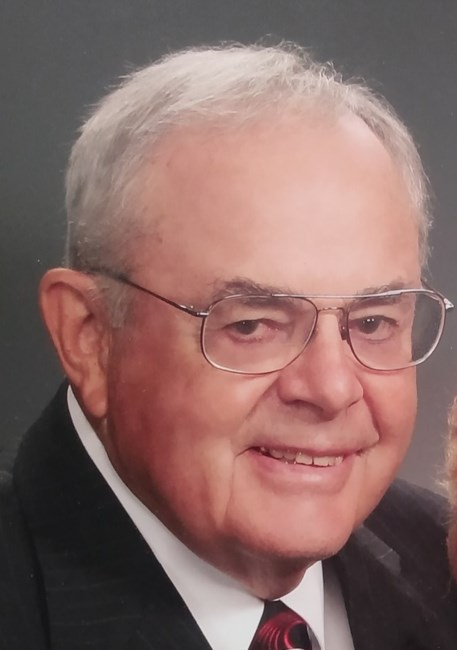
Lloyd Milton Thorndyke was born on May 28, 1927 in Osborne County on a farm near Edgerton, Minnesota in the Southwestern corner of Minnesota. He had one brother born before him, William Keith, and two sisters born after: Geanne, and Marilynn. His father, William Keith Thorndyke, was a register of deeds and a full-time tinkerer. Lloyd grew up first learning how to help in a kitchen and how to herd sisters while the family was busy.
He grew into adolescence, surviving the typical childhood dangers to grow into a wiry 125 lb quarterback for the Pipestone Arrows. Band also claimed his time as a trombone specialist. World War 2 was a signal change for the entire country, and Pipestone was no exception. The draft quickly snapped up all eligible men in the draft, including the physics teacher for the Pipestone High School. In his place the Chemistry teacher attempted to teach the class, but it was soon apparent that chemical formulas and physics did not mix well for him. Lloyd and his friend whose last name was Earhart offered to teach the physics class for the instructor and he would administer the tests and post grades. He did this from 1943 through 1945, when he graduated and was drafted into the Navy.
Lloyd served at naval bases in Illinois and in Washington, DC, where he made an impression on peers and officers alike when he helped tutor his class in the metric system, which was (relatively) new to America and had become a priority since the United Kingdom had sent some radar systems to the US. These systems used metric measuring which meant that knowledge of the metric system was important to understanding them. Lloyd was soon a hunted man. With the war over and as a draftee, he was due to be released from service. His intelligence and value had been recognized and an unofficial ‘bounty’ was put on his head of $100 and 30 days leave to the person who could convince Lloyd to re-enlist. The bounty remained uncollected and he mustered out.
From there Lloyd went to Hamline University on the GI scholarship fund, finishing a physics degree in three years, and finding the love of his life, JoAnn Thompson, on an arranged blind date. They married while still in college and remained married for 71-1/2 years. He went to work at a business that made neon signs and wanted to get into making electronic components. He helped get them started with working to help produce resistors. A few moves later he ended up with a fast-growing computer company called Control Data Corporation, run by William C “Bill” Norris.
At Control Data and others, the future of the computer industry took shape as these pioneers developed large-scale computers. Lloyd was one of the early ones to realize that high-performance peripheral systems such as tape drives and card readers were needed to send the data at a speed and volume the computer could make best use of it. His vision and expertise helped propel Control Data into supplying peripherals to other businesses, and put Control Data at the forefront of computer and peripheral development through the 1960’s and 70’s. Lloyd helped develop the 606 tape drive which NASA used up to the end of the 1980’s due to its speed and reliability. During the ‘70’s Lloyd was put in charge of the Advanced Projects Laboratory which turned out a number of innovations. At the close of the 1970’s Lloyd became an Executive Vice President and turned his abilities towards the first Super Computer, the STAR 100. With this, Control Data took the lead in computer development.
The 1980’s saw Lloyd continue with Super Computers, following the STAR-100 with the Cyber 203 and 205 series. These computers had stiff competition from Cray Computings own Super Computers. Control Data took a look at itself and found that its own size limited its ability to innovate. Lloyd was asked to start an entirely new company, called ETA, to develop the next generation of super computers. He jumped at the chance to lead this company and ETA was soon spun off as a company separate from the Control Data Corporation with the mandate to develop the world’s fastest and most powerful supercomputer. His innovative background helped push the ETA-10 to come in early and under budget. It used a new technology, CMOS for it’s memory, and liquid nitrogen cooling for the CPU and memory boards.
ETA-10 had troubles with how the software system should be implemented. Despite this difficulty, a number of universities in the United States and Japan excitedly ordered the ETA units. Control Data, finding that it’s spin-off company was outselling the parent, reversed its hands-off approach to ETA, and eventually reabsorbed it, effectively shutting it down and releasing all the employees. Lloyd was retired in 1988, and he moved permanently to Arizona in 2003, where he became an avid horseman, riding well into his late 80’s. Later, as his and wife JoAnn’s needs became more difficult to meet without help, they moved to Wichita in 2018. He passed away on Dec 11, 2020.
Show your support
Add a Memory
Share Obituary
Get Reminders
Services
SHARE OBITUARYSHARE
- GET REMINDERS
v.1.18.0