OBITUARY
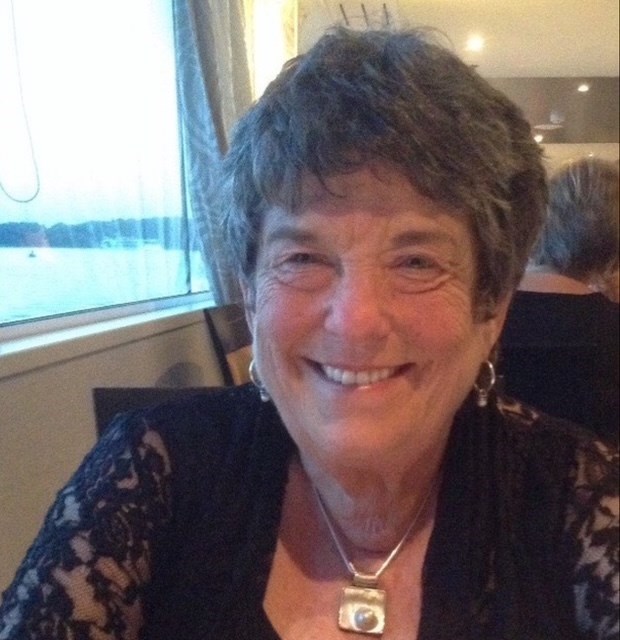
Mary Janet Thomas Dart
5 March, 1946 – 7 December, 2024
“Lost love is still love….It takes a different form, that’s all. You can’t see their smile or bring them food or tousle their hair or move them around a dance floor. But when those senses weaken, another heightens. Memory. Memory becomes your partner. You nurture it. You hold it. You dance with it….Life has to end…Love doesn’t.”
--Mitch Albom, The Five People You Meet in Heaven
Mary passed away peacefully in Guelph General Hospital on Saturday, December 7th, having been admitted on the evening of Thursday, December 5th. Her family kept vigil throughout this brief hospitalization. Cremation has taken place. A future celebration of life will take place at our home in Mount Forest once Mary’s daylilies are in bloom.
Throughout many years, Mary primarily supported four reputable animal rescue organizations: Audrey’s Rescue (Arthur, Ontario), Pet Patrol (www.petpatrol.ca), Soi Dog Foundation (Phuket, Thailand: www.soidog.org) and Animal Aid Unlimited (Udaipur, India: www.animalaidunlimited.org). Anyone wishing to make a donation in Mary’s memory might consider these or any charity of their choice.
With Mary’s death we lost a bright light, one who could be counted on to speak up for justice, kindness, equality and the compassionate treatment of all living things. In pursuit of these ends she was a powerhouse, a force to be reckoned with. She was fierce in her love for family: Richard, her husband of 52 years, and her two sons, Joel and Nathan, were central to everything she prioritized in her busy and committed life and work. Her circle of love grew with the addition of new members, Ezio then Kaitlyn and most recently grandsons Oliver Thomas (Ollie) and Benjamin James (Ben). She would have wished for more time with all of these beloved ones.
Mary’s life began in Sioux Falls, South Dakota where, even after her parents left the prairies she returned with them each summer when her Mom and Dad helped on the family farm. An only child, she spent summer days fashioning bracelets and garlands of daisies and grasses, drawing with sticks in prairie soil, studying the clouds as they offered hints of coming storms, planting seeds just to watch things grow, shelling peas in the shade of the porch, brushing the horses and sneaking carrots and apples to them, sitting with her grandpa as he told stories of his Norwegian roots. Although cousins were occasional companions there, Mary spent most of her time alone. An outgrowth of these early experiences, Mary became a master at entertaining herself, an attribute that benefitted her throughout her life. She valued alone time to read and to think, and she constantly challenged herself by posing both imagined and real dilemmas and moral quandaries, some simple and some complex. Also, she became remarkably self-sufficient and capable in many spheres.
Mary and her family moved from South Dakota to Tacoma, Washington in time for her to begin Grade 3 at Mary Lyon School. It was there that her friendship with Richard would begin. She and he lived only 2 blocks from one another and shared teachers and playmates in elementary school. Their friendship continued through Junior High and High Schools, becoming stronger as the years progressed. Although they went their separate ways to university, they always reconnected on summers and holidays. Mary graduated from Occidental College in Los Angeles in 1968 and entered the clinical psychology graduate programme at Harvard University the same year. Both she and Richard had their own romantic interests, but remained fast friends. In 1969, Richard moved to Boston and stayed briefly with Mary until he found his own place. Friends were reunited. In time, friendship blossomed into love and when Richard moved to Waterloo, Ontario for graduate school, Mary completed her Boston internship and followed. Married in 1972, they went to live in the “mother-in-law extension” of an old heritage farm house on a pig farm near Bloomingdale, Ontario. There began three years of Mary’s staying at home writing (and typing!!!!!) her Ph.D. dissertation (a study of the impact of cognitive therapy on outcomes in pregnancy), while Richard was completing his clinical internship and going to work. While living in the country they watched dynamic weather over farm fields, navigated a one-quarter mile lane winter and summer, walked on country roads and through densely treed forests and read the Hobbit and the Tolkien trilogy out loud to one another. It was idyllic indeed. Mary delighted in tending a huge garden, plowed by our landlord farmer, and “putting things by”—canning every vegetable under the sun and making jams and jellies of every variety. And…there was a burn barrel for torching discarded paper. Mary was truly in her element: she was back on a farm, attuned to the weather and the seasons of growth and decline, and revelling in her sense of self-sufficiency and frugality.
Mary spent her entire professional career at the Trillium Day Hospital and Mental Health Centre in Guelph, Ontario, moving to a few years of private practice work after retirement. Early in their marriage Mary and Richard made a life-style decision to work only part-time and maintained that schedule throughout their working lives. This made for a perfect arrangement once the boys came along, with Richard home three days a week and working two long days and Mary working three days and home two. They learned that parental consistency was overrated: the boys quickly learned which rules reigned on which days.
Mary took her professional responsibilities very seriously and she was impressive in her therapeutic and her research accomplishments. She became expert in the treatment of borderline personality disorders, giving talks on the subject at professional conferences both in Canada and the United States. She was also sought after for her expertise around programme evaluation research, which was one of her primary duties when she began at the flagship Day Hospital in Guelph.
Once her sons came along, they became the centre of Mary’s thoughts and activities. There was the chauffeuring of kids to practices and rehearsals and lessons and helping with homework and science projects. Mary also meticulously recorded everything about her boys’ lives, keeping a journal of memorable events, cute stories, endearing antics and expressions and milestones of every type. Life became very busy and the little clapboard 1 ½ story farmhouse in Cambridge became too small. For six months, the family endured major renovations to enlarge the place while continuing to live there. The disorder, the noise, the sawdust, the nighttime animal marauders that entered the house and scurried about undeterred by the orange tarp that covered the hole that awaited the back-ordered French door prompted Mary to vow that it was a once-only experience never to be repeated…the next house would be brand new…and it was. During the 36 years in that house at 23 Jardine Street, Mary laboured to ensure that everyone in the family felt safe, much loved and valued for their uniqueness. She made celebrations at every opportunity, sewing complicated Halloween costumes every year and new Christmas pajamas for her boys. She led the charge in planning interesting trips and holidays and parties at Valentines Day, Easter, New Years. Nathan recently dubbed her “the Queen of celebration”. As she became older and her energy flagged she mourned her inadequate energy that limited her to a single bower of celebratory balloons festooning the porch pillars rather than the three of her younger years; she was sad to resign herself to the reduced complexity and drama of Halloween decorations and jack-o-lantern faces. She celebrated nonetheless!!
Mary also showed devotion and love for her four-legged children----so many cats were part of the Dart family over the years (always more than one and once NINE!) as were occasional two-legged flighted visitors and gymnastic squirrels in need of nurture. Mary felt a reverence for all animals, even assisting in the care of one no-legged tenant, Snakie, a garter snake Richard used in therapy with a snake-phobic patient; by the time therapy finished Snakie needed to be wintered over for safe release in the spring.
From the time she was 26 years old Mary suffered serious asthma, which worsened with time, particularly in her advancing years. Then, in 1995, Mary was hit head-on by a drunk driver on a country road. There were many broken bones but the worst injury was a near amputation of her right foot. This ushered in a series of 7 surgeries over as many months with a final fusion of the ankle and months of rehabilitation. When all was said and done, Mary would say, “Well, I have a foot on the end of my leg and it points generally in the right direction.” Mary believed in rising to the occasion!! Though pain was with her the rest of her life, she resumed work and entered fully into life at home. Family and friends rarely heard complaints or excuses. Doctors repeatedly offered to affirm her disability so that she could retire early, but Mary refused. She was my hero and the most stoic person I have ever known. Her positivity is apparent in the family’s 1995 Christmas letter where Mary wrote, “I suppose that we have all figured out, one more time, how to reinvent ourselves in changed circumstances and to appreciate what we have, however altered it may be.” She loved Leonard Cohen and took as her own anthem his words:
Ring the bells that still can ring
Forget the perfect offering
There is a crack in everything
That’s how the light gets in
--Leonard Cohen (Anthem)
Her commitment to her professional work as a clinical psychologist was equalled by her commitment to work as an animal rights advocate, and once retired, the latter became all-important to her. In 1969, as a young couple still living apart, Richard and Mary made separate decisions to become vegetarians-- for moral reasons, but also for the environmental importance of eating off the bottom of the food chain (Diet for a Small Planet). These early efforts did not survive, but when Mary moved to Canada, “we two formed a multitude” and the couple committedly embraced a vegetarian diet. Mary remained a dedicated vegetarian until her death, enjoying the burgeoning availability of plant-based alternatives. In retirement her political advocacy around animal rights legislation became her self-imposed daily responsibility. She spent at least four hours a day writing detailed letters and making phone calls to legislators both in Canada and the U.S. This became an onerous task because she required herself to have in depth knowledge of the issues; she believed that demonstrating such knowledge gave her the credibility to ensure that she was taken seriously and not reduced to a simple tally. This approach won her frequent detailed replies. Few people realized the toll her in-depth research on the suffering of animals took on her sense of peace and happiness. She always felt she could and should do more in this arena. To say that she was a dedicated champion of the humane treatment of animals, both in research and in husbandry, would be an understatement.
Locally, she became dedicated to cat rescue, both in Cambridge, the location of our first home, and then in Mount Forest, where we lived after retirement. In the early days Mary worked on the front lines, responding to frantic calls, setting live-capture traps in many unsavoury places, crawling under porches and through thickets, searching drainage ditches and begging hoarders to relinquish their sad collection, all in the interest of bringing aide and comfort to the lives of hurt, lost, discarded, abused and unneutered animals. She found essential allies in Ayr Animal Hospital and New Hope Veterinary Clinic in Guelph and in Audrey’s Rescue in Arthur, and Pet Patrol in Wallenstein. As Mary became older and less mobile she took on a more ancillary role, fielding desperate calls and arranging vet appointments and transportation for spay/neuters and other veterinary care. She always sang the praises of her rescue allies.
Mary was an extraordinarily curious woman; she read widely and was ecstatic with the advent of the internet which provided answers to her dozens of daily questions with just a few keystrokes of input. Then came online shopping! Enter Amazon Prime and Temu where in spite of her increasing mobility problems she could shop to her heart’s content without leaving her chair. All possibilities were revealed with just the movement of a mouse. In her youthful years, when she wanted company on her shopping adventures there would be serious negotiations with Richard to determine the number of hours he would promise to tolerate. If the number were too low, Mary would go on her own. (Richard had very low tolerance for “Oh! This is nice and it fits, but I might find something nicer AND CHEAPER at another store. Let’s keep looking!”)
The sure way to give Mary a grand day was with a bouquet of flowers, picked in a field, bought at the grocery store, purchased at a roadside Mennonite gladiola kiosk or delivered by the local florist shop, it didn’t matter. Flowers were guaranteed to bring the biggest smile. Her own perennial gardens brought her great joy. These were Mary’s proud creations and she tended them lovingly. She wandered about, redistributing mulch, pruning, feeding, removing unsightly debris and ruthlessly weeding. She watered with attention to the spray, from hearty to gentle mist. Mary had every type of hosta and fern in shady areas and sun-loving peonies, iris, hibiscus, phlox and delphinium in bright spots. Peonies in early spring and daylilies from July through September, were her favourites. She took great pride in the daylily collection she had painstakingly curated over many years. Some had emigrated from the gardens of the Cambridge house; many were new Mount Forest additions; all were chronicled on her constantly updated garden map. Her more recent selections were chosen for their prolific flowering with multiple buds on every stem. She had a particular fondness for “rebloomers” and for a flower with ruffled edges and a contrasting “eye” in the center of the bloom. She knew them all by name and, though Richard admonished her, she insisted on weeding, proclaiming that the low-to-the-ground vantage point got her “up close and personal” with her prized collection.
At the time of her death Mary had a good deal of unfinished business. She was looking forward to more summers at the cottage on Lake Huron, summer holidays in another ocean side house with her sons, their partners and our two precious grandchildren. Her watercolour quilt, started after her accident in 1995 and edited repeatedly in response to the ebbs and flows of her recovery, remains incomplete. The poems she was committed to write eulogizing each of our many pets will sadly remain undone. Richard still finds scraps of paper everywhere with lists of hard-won rhyming words or kernels of ideas to poetically fashion. There is silence where before there were requests for Richard to collaborate and “think of other words to convey the feeling of floating”. In truth, for Mary there would never have been an end to the business of learning,loving and protecting her family and loving and protecting any animal anywhere.
Mary always found comfort in a phrase from the Anglican Book of Common Prayer:
“…upon another shore in a greater light”
And Richard would tell you, “Don’t ignore the signs that she’s all right and it’s all right.”
“…all endings are also beginnings. We just don’t know it at the time.”
- Mitch Albom, The Five People You Meet in Heaven
Here is one of Mary’s many poems in remembrance of pets past:
Sherlock Bites the Bee
I bite bees. I don’t know why
I have the impulse and must comply
There is no logic, reason, rhyme
No trauma, archetype lost to time
I have no insight, no root cause
No childhood dreams of teeth and claws
For pain or gain I have no need
No unfair dictates I must heed
No deprivations, blame or threats
Thwarted ambitions, grave regrets
Never lost, molested, scorned
No tragic losses that I must mourn
Just affirmations of charm and worth
Celebrations of my day of birth
Always praised, protected, treasured
Cared for, loved, beyond all measure
No conflict, doubt, no missing meals
But bees are my Achilles’ heel
I see the bee. I hear the drone
It bombinates with seductive tones
It is a trap my mind well knows
Yet still I rise from sweet repose
My brain says there’s no time to waste
Quick seize upon the bee to taste
The bee awakes to greet the morn
A quest for queen, bee babes unborn
A noble species I am told
Unless threatened, never bold
Never selfish, never vicious
But to me so bumble-licious
The bee does not provoke or harm me.
Rebuke or otherwise alarm me
It cares nothing of my heart, my life
My talents, foibles, joys and strife
It does not even notice me
Yet I feel compelled to bite the bee
From the grass the siren call
And I, compelled, forsake it all
I clench my jaw, avert my glance
I calm my tail and still its dance
I think of bones to clear my mind
But the thought of bees remains behind
I go outside, I need to pee
There is naught to do and naught to see
But smell the news, anoint the tree
Seek yellow snow, my lost Frisbee
But then a movement in the weeds
A black and yellow thought it seeds
Plumpish fuzz my feet do trap
At rustling wings my jaw does snap
The pain is fierce as is my yelp
Alarmed, my people run to help
To soberly admonish me
To cease my bee activity
Bees sting my cheeks, they bite my tongue
They make my nose go fizzle-numb
The taste is quick, so sharp and cruel
It tears my eyes and makes me drool
I shake and spin and paw my face
In shock, in pain and full disgrace
My people think that I’m possessed
Dark spiders do my brain infest
My doctor says give up the bees
Bees bring good dogs to their knees
I nod and promise yes siree
But in my bonnet lives a bee
It buzzes there, a tempting drone
A song of pollen, hive and home
An invitation given free
To share in swarming harmony
Come to the garden you will see
The joys of apis family
A fuzzy crunch and sparkling pain
Impulse from which I can’t refrain
I startle, retreat, awash with shame
Still I feel a need the bee to tame
It does not tame. It takes offence
Its striped fury makes no sense
It ignites with stinger sparks
On fragile nose it makes its mark
My beezer burns with piercing flame
I regret I undertook this game
But a soft crooning from nearby
Invites me to but once more try.
It was never my intention
To violate rules or contraventions
Just one small bite most reverent
Sober, respectful, elegant
But they sing to me. The bee’s to blame
Lie, lure and trick, my nose to maim
Temptation pursues me everyday
In every spot, in every way
Fields of clover, ditches wild
Tombstones draped with roses mild
Peachy orchard, onion rows
The call comes in and I must go
I need help or therapy
To overcome my taste for bees
A 12-step programme, intervention
An exorcism for redemption
Analysis or CBT
So I can simply let bees be.
Show your support
Add a Memory
Share Obituary
Get Reminders
Services
SHARE OBITUARYSHARE
- GET REMINDERS
v.1.18.0