
OBITUARIO
Andrew Ramotnik
5 julio, 1923 – 30 mayo, 2018
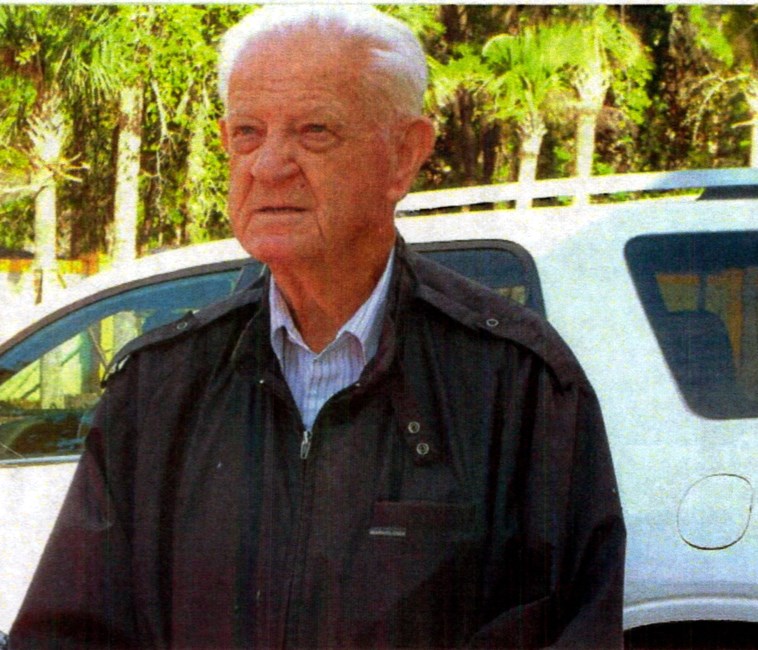
Andrew Ramotnik, 94, a former WWII veteran and POW, died May 30, 2018 at an assisted living facility in Jacksonville, Florida. The cause of death was from natural causes, said his son, Lieutenant Colonel Andrew M Ramotnik, US Army (retired).
Mr. Ramotnik was born in Clarence, PA on July 5, 1923. His parents had immigrated from what is now Slovakia. He served in the Civilian Conservation Corps for several years as a cook before enlisting in the United States Army Corps in 1941 where he remained until retiring from the United States Air Force after serving 21 years, at the rank of Master Sergeant. At that time he began a second career with the Grumman Corporation on Long Island, NY. Following his second retirement, Mr. Ramotnik moved to Jacksonville where he remained until his death, enjoying the comradery of members of the military. But it is his stories of being a German POW and escaping not once, but twice, from the Germans that inspired other veterans and members of the military, as well as audiences at several universities and civic organizations. He was imprisoned at Stalag 17 near Krems, Austria, the prisoner camp that was later the subject of a movie
Mr. Ramotnik entered service 2 weeks after the bombing of Pearl Harbor, HW. After basic and radio operator training, he was assigned to a B-25 medium bomber squadron in the North African desert in 1943. At 20 years of age, Mr. Ramotnik was on his 43rd bombing mission when his aircraft was shot down on October 4, 1943 over Italy, and was then taken prisoner after parachuting into enemy territory. He was incarcerated as a POW for 19 months. His story continues with his noting his first escape on April 8, 1945 while on a forced march with 4,000 other prisoners that were divided into groups of about 100 men each. While bedding down for the night in an open farm field and getting water, he noted the lack of guards at one of four posts. He rushed back without water and asked his friend if he wanted to make a break for it. He agreed. Taking only a few blankets, they returned to the water pump and seeing the one area still without guards, they walked slowly into the night, and coming to an open field, they ran, only to hear the crack of rifle fire coming from behind. They found safety in a cave. But after several days on the run, they were recaptured by German troops. The next day, and while on another forced march--this time with about 20 Frenchmen--on reaching a bend in the road and out of sight of the German guards, the two made another run for it. After befriending a Polish teenager who noted their bad condition due to lack of food, the teenager took them to a farmhouse where they cut wood and were given food and slept in a barn. Mr. Ramotnik also reiterated a story that could have had ill-fated consequences: a German officer dressed in a black uniform and carrying a side arm—most likely an SS officer—approached the farmhouse one evening, and on entering the kitchen, asked him in German how far to the next village. With only a quick moment to think about his answer that would involve not only his safety, but that of the entire family at the table, he pointed to the group sitting as if they were the ones to know. The German officer was satisfied and turned and left, ordering his troops outside to continue their march. After total silence which may have seemed like hours, Mr. Ramotnik and his fellow POW were directed to leave immediately. Ironically, while deciding in total darkness to either go left or right on the dirt road in front of them, the same Polish teenager came running from the house. They had just heard on the radio that the war was over and that they could stay. They did.
Perhaps the biggest battle he faced though was trying to get 2 weeks of pay back after it was denied by the War Claims Commission while he was in the state of escapement. After fighting for years to get his $13 back since he did what he was supposed to do as a POW—escape—he received a final letter. It was denied. A group of physicians at his last speech presented him with a check of over $100, which included the $13 and accrued interest.
In his later life, Mr. Ramotnik enjoyed rounds of tennis on a near daily bases. Even into his 90s, he continued to play a game he loved.
Mr. Ramotnik is survived by his son Andrew and granddaughter Sara of Upper Marlboro, MD, and two daughters, Pam Dunstone of Sarasota, FL, and Cindy Ramotnik of Corrales, NM.
Interment and a military ceremony are planned for Monday, June 25, 2018 at 1000 at the Hardage-Giddens Riverside Memorial Park and Funeral Home at 7242 Normandy Boulevard, Jacksonville, Florida.
Muestre su apoyo
Comparta Un Recuerdo
Comparta
Un Obituario
Obtenga actualizaciones
Servicios
COMPARTA UN OBITUARIOCOMPARTA
- RECIBIR RECORDATORIOS
v.1.18.0