
OBITUARY
Kurt A. Gitter MD
March 14, 1937 – March 25, 2026
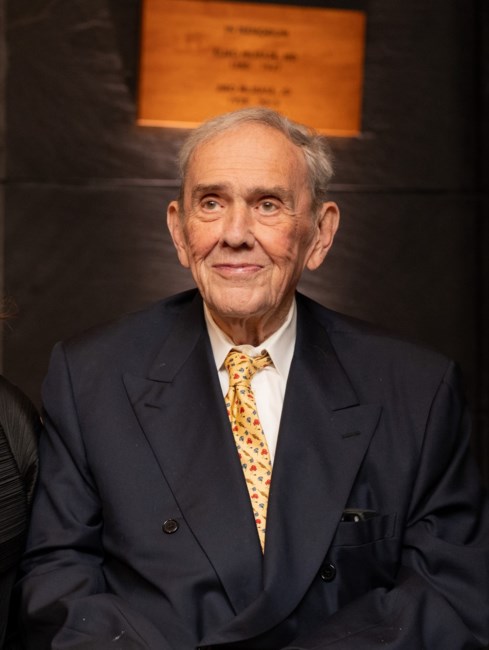
The beloved Dr. Kurt Gitter of New Orleans and New York City, a pioneering retinal surgeon and internationally acclaimed collector of Japanese art, passed away on March 25, 2026, in New Orleans. His extraordinary life devoted to family, medicine, and art came to a close at the age of 89. Kurt’s primary commitment throughout life was to his family. First and foremost, Kurt adored his wife of 40 years, Alice Yelen Gitter, their daughter Manya-Jean, his eldest children from his first marriage, Linda, Greg, Ricky, and Douglas, and all 11 of his grandchildren and four great-grandchildren. Just as he prioritized his parents and sister in his early life, his commitment to his wife and five children preceded all else.
Born in Vienna, Austria, in 1937, to parents who left everything behind and fled with him to America six months after the March 1938 Anchluss, Kurt escaped the rise of Nazism and the Holocaust, an experience that shaped the course of his life and underscored the resilience and determination with which he built his future. His grandparents and the many aunts, uncles, and cousins who remained in Europe, were murdered by the Nazi regime.
Gitter was raised in an immigrant family in Washington Heights, New York. He attended an orthodox Yeshiva, the Ramaz School until age 16, and graduated from the Barnard School for Boys. He received his BA from Johns Hopkins University (1958), graduated from the State University of New York, Downstate Medical Center (1962) and was awarded a medical residency in ophthalmology at the Wills Eye Hospital (1965-1967), the most celebrated training in the field worldwide.
In 1963, Gitter was drafted by the United States Air Force and stationed as an MD Captain and flight surgeon at Hakata Air Base in Japan. For two years, he and his first wife, Mildred Hyman Gitter, lived with their first three children Linda, Greg, and Ricky, in a traditional home several miles from the base, learning about Japanese culture firsthand. It was there, at age 26, when his lifelong passion for Japanese art and culture began.
Kurt became a distinguished retinal surgeon who devoted more than fifty years to restoring sight and caring for his patients with excellence and innovation. He served as Chief of Ophthalmology at Touro Infirmary in New Orleans from 1986 to 1996, where he was respected for his leadership, commitment to patient care, and ingenuity in research. There he founded his private practice, Retina Associates of New Orleans, specializing in diabetic retinopathy and macular degeneration.
Dr. Gitter was a gifted researcher, receiving an NIH grant as a medical resident that later resulted in him authoring the first textbook for ultrasound in ophthalmology (Ophthalmic Ultrasound,1969). He was a pioneer in ultrasound imaging for ophthalmic diagnosis as well as in surgical and therapeutic treatment of space-occupying and vitreo-retinal diseases. Working on many clinical protocols and studies, Gitter published almost one hundred academic articles, textbooks, books, and numerous book chapters, detailed discoveries in fluorescein angiography and laser photocoagulation that helped shape the emerging field of retinal subspecialties. His work created a foundation for techniques that are now central to ophthalmic care, and have helped prevent and restore vision loss, particularly in diabetic patients and those with degenerative macula diseases. Gitter was the first ophthalmologist to perform each of these cutting-edge surgeries in New Orleans, and was the first person in the country outside of Johns Hopkins University to use the argon and krypton lasers in private practice.
As an expert, he was committed to training the next generation, exposing and inspiring many ophthalmologists throughout the U.S., the western world and Asia to the newly available techniques through extensive lectures in prestigious global institutions. Dr. Gitter mentored and continuously trained medical residents on a one-to-one basis in his own practice and as a clinical professor at Tulane University and Louisiana State University (LSU). He served on the editorial boards of peer reviewed publications such as the Retina Journal and Ophthalmologic Times. He was Director of the Foundation for Retinal Research from 1977 to 2013, and President of the Macula Society from 1999 to 2002, the most prestigious retinal society.
In addition to having a groundbreaking medical career, Dr. Gitter became one of the most acclaimed collectors of Japanese Edo Period painting, building over decades one of the most significant private collections of Japanese and self-taught American art in the Western world.
Yukio Lippit, Jeffrey T. Chambers and Andrea Okamura, Professor of Art and Art History at Harvard University calls Gitter “one of the most impactful collectors and philanthropists in the art world during the postwar period.”
While in medical school, Gitter became acquainted with the painter Philip Pearlstein and his housemate Andy Warhol. Pearlstein introduced him to other contemporary artists at gatherings at the Cedar Tavern in New York’s Greenwich Village. Artists including Robert Motherwell, Ad Rheinhart, Alex Katz, and Franz Kline were all part of this circle. (Pearlstein later painted portraits of the Gitter family members). Before abstract art gained public attention, Kurt saw its aesthetic value. As his student budget allowed, he began acquiring works by such artists, planting the early seeds of a growing collection.
During his military service as a flight surgeon in Japan with his family, Gitter became enamored with Japanese art, culture, and people, and began to develop what would become lifelong relationships with leading Japanese art dealers and preeminent scholars who taught him about artists and schools of Japan’s Edo period (1615-1868). Gitter was drawn by what he called the “visual dynamism and immediacy of Zen painting” that he said “struck me, much like the bold abstract expressionist action paintings” that he had seen in Greenwich Village. The Japanese largely viewed these paintings in a religious context, but Gitter focused on their aesthetic qualities.
Later, in 2000, the first exhibition of Gitter’s Zenga paintings in Japan (Zenga—The Return from America) toured the country and drew significant attention as it encouraged Japanese viewers to understand Zenga as Gitter did: as the imagery of talented painters rather than solely as religious expressions of their Zen faith. The art historian Yamashita Yuji of Meiji Gakuin University credits this exhibition for elevating the status of Zenga in the eyes of the Japanese public. This exhibition eventually led to the designation of a work by a Zenga artist (Hakuin Ekaku, 1685-1768) as Important Cultural Property of Japan for the first time.
Guided by expert dealers and his own keen taste, Gitter began to amass an extraordinary collection, parts of which was first exhibited at the New Orleans Museum of Art in 1976, the first exhibition of its kind to feature Zenga and Nanga genres extensively in the United States, and the first of over twelve exhibitions of Gitter’s collection held on four continents over the next 50 years.
Following Kurt’s marriage in 1986 to Alice Yelen Gitter, a museum curator, specialist in American self-taught art, and educator, the couple continued to broaden their collection to include sculpture, Edo-period paintings from the schools of Nanga (literati painting), Zenga, Rinpa, Maruyama-Shijo, and Ukiyo-e, as well as contemporary ceramics. Together, they began to collect self-taught American art as well.
The Gitters lent and donated hundreds of works to museums worldwide, contributed to scholarship, and meaningfully enriched the cultural life of New Orleans, New York, and the international arts community. Exhibitions focused on Gitter’s collection have been shown throughout the US, including the Museum of Fine Arts (Boston), the Princeton University Art Museum, the Museum of Fine Arts, Houston, and the Japan Society (New York). Zen exhibitions and catalogues containing Gitter’s collection have been produced in Japan, Israel, and Australia, the latter two being held at their respective national museums.
Dr. Gitter donated over 350 Japanese art works to the New Orleans Museum of Art (NOMA) and facilitated the donations of scores of other gifts from friends, family, and colleagues. Since the early 1970s, Kurt had a very close relationship with the NOMA and Director Emeritus, E. John Bullard, who would join the Gitters on trips to Japan to buy works of art. After joining the Board of Trustees in 1973, he was later named an Honorary Life Trustee in 1991. In 2003, NOMA presented Gitter with the museum’s Isaac Delgado Award for his distinguished lifelong service to the institution and the field. In 2024, NOMA dedicated the Kurt A. Gitter, M.D. and Alice Yelen Gitter Gallery for Japanese Art in honor of the couple’s transformational impact on the museum and its community. Their donations, both direct and indirect, form the core of NOMA’s Japanese art collection, which had only six paintings prior to his 1972 involvement. NOMA now stewards one of the foremost collections of Edo-period Japanese painting in a public collection outside of Japan.
Dr. Gitter also donated pieces to the National Museum of Asian Art, Smithsonian (previously the Freer Gallery of Art), where he also served as trustee; the Museum of Fine Arts, Houston; the Metropolitan Museum of Art; the Philadelphia Museum of Art; the Princeton University Art Museum; and the Israel Museum, Jerusalem.
In 1997, Gitter and his wife Alice founded The Gitter-Yelen Art Study Center in New Orleans. More than one hundred scholars, including scores from Japan, have stayed at the center while studying the Gitter-Yelen Collection in depth. Entire graduate level seminars from Harvard, Princeton, Columbia, and Gakushuin University in Tokyo stayed at the Art Study Center to examine rare artworks firsthand for days at a time. Exhibitions and conferences sponsored by Gitter resulted in important publications that are used in art history courses all over the English-language world. Most recently, the exhibition None Whatsoever: Zenga Paintings from the Gitter-Yelen Collection at the Museum of Fine Arts, Houston, and the Japan Society Gallery of New York (2023–24) offered a new history of Zenga collecting in the modern era.
Dating back to Zenga and Nanga: Paintings by Japanese Monks and Scholars in 1976, the New Orleans Museum of Art has organized eight exhibitions drawn in whole or in part from the Gitter Collection—including Japanese Fan Paintings from Western Collections (1986), which traveled to the Asian Art Museum, San Francisco; Zenga: Brushstrokes of Enlightenment (1990), which traveled to the Mint Museum of Art, Charlotte, the Seattle Art Museum, and the Los Angeles County Museum of Art; Enduring Vision: 17th–20th Century Japanese Paintings from the Gitter-Yelen Collection (2002), which traveled to the Seattle Asian Art Museum, the Japan Society, New York, and the San Diego Museum of Art; The Sound of One Hand: Paintings and Calligraphy by Zen Master Hakuin (2011), which traveled to the Japan Society and the Los Angeles County Museum of Art; and New Forms, New Voices (2017), the first exhibition of the Gitters’ collection of modern and contemporary Japanese ceramics.
Dr. Gitter was honored in June 2025 by the Japan Society with the Japan Society Award for his “Lifelong and transformative dedication to Japanese Art.” In 2014, he was recognized with the Distinguished Service Award from the United States-Japan Foundation, an award largely bestowed to diplomats and university leaders.
Dr. Gitter served his community through board involvement throughout his life. Among them, as a trustee of the Johns Hopkins University, the Freer Gallery of Art (National Museum of Asian Art, Smithsonian), the New Orleans Museum of Art, the American Museum of Folk Art (New York City), the Japanese Art Society of America, The Macula Foundation, and the Jewish Federation of Greater New Orleans. He was a board member of Southern Union Gas, Metromobile, Escalon Company, and the Akorn Company.
His life’s work bridged medicine and culture — restoring vision in one sphere and expanding it in another. He was unwavering in his commitment to the Jewish community locally and globally. Kurt was profoundly loved by so many and will be truly missed.
Dr. Gitter is preceded in death by his mother, Mania (Maria) Rosler, father, Milo Gitter, and former wife, Mildred Hyman Gitter. His mother earned a PhD in 1925 from the University of Vienna in Austria where she studied under Sigmund Freud and Alfred Adler. After emigrating to the U.S. in 1938, she worked with Aldred Adler to establish the Adler Institute in Manhattan. Dr. Gitter’s father earned a business degree from the University of Liege in Belgium. He worked as a diamond dealer in Antwerp and Vienna and became a wholesale rare stamp dealer in midlife in New York City.
Dr. Gitter is survived by his wife of 40 years, Alice Yelen Gitter, their daughter, Manya-Jean Gitter, and his four eldest children from his first marriage, Linda (Jim), Gregory (Laura), Ricky (Katherine) and Douglas (Cathy). He is survived by eleven grandchildren: Justin, Jillian, Kaley, Leah, Ben, Chase, Jake, Annie, Joel, Allie, Josh, and four great-grandchildren, Eli, Miles, Millie, and Naomi. He is also survived by his sister, Dorothy Gitter Harman of Jerusalem and his beloved niece and nephews, Danna, Oren, and Mishy.
Funeral services will be held on Sunday, March 29, 2026, at Shir Chadash Synagogue, 3737 W. Esplanade Ave. Metairie, LA at 2:30 pm with visitation to begin at 1:30 pm until service time. Interment will follow at Chevra Thilim Memorial Park, 5000 Iberville St. New Orleans, LA. Shiva will be observed in the family home at 11 Bamboo Rd. New Orleans, LA on Sunday evening following the burial, on Monday, March 30 and Tuesday, March 31 from 1:00 pm - 3:30 pm, and 6:30 pm through the evening.
Kindly omit flowers, memorial contributions in memory of Dr. Gitter are suggested to the Jewish Federation of New Orleans or the New Museum of Art.
Show your support
Add a Memory
Share Obituary
Get Reminders
Services
SHARE OBITUARYSHARE
- GET REMINDERS
v.1.18.0