
OBITUARIO
George E. Manning II
25 febrero, 1949 – 13 enero, 2025
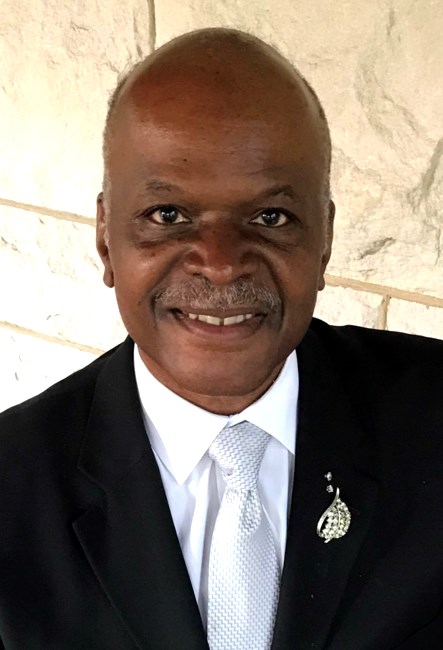
George E. Manning II was born on February 25, 1949 in Chicago, Illinois to the union of George E. Manning Sr. and Jamesia L Manning (nee Stewart). George departed this life on January 13, 2025. He leaves to cherish his loving memory, his niece Marie Anita Bell, great niece Salina Simone, God Mother Fredonia Bey, cousins Carol A. Jones, Michael B. Jones, Victoria Jones, Monet Branch, Sylvia Williams, Bryan B. Cox, Stewart A. Cox, Rodney Jackson, Theresa A. Clay, Jessica A. Simmons, Marc A. Rodgers, his Honorary God Children, his First Immanuel Church Family, neighbors, and friends.
George was the youngest of two children, a Little Prince, born to Jamesia and George Edward Manning Sr. in Chicago, Illinois. Little George and his sister Mary Anna were fortunate to have two loving parents who blessed them genetically, culturally, educationally, spiritually, and sociologically.
Little George and his family lived at 1224 South Lawndale in a Jewish neighborhood for a brief period of his childhood. Their landlord was a Rabbi at the synagogue close to their home. Rabbi Branson, a friend of George’s father, “adopted” little George and took him to the temple as often as he could.
In 1954, the Manning family was approached by a Lutheran Pastor from First Immanuel, located on Ashland Avenue near what is formally known as the West Side Medical District. The Pastor indicated that he was eager to have a Black family integrate their all-white congregation. Mr. and Mrs. Manning were offered the “run down” parsonage next door to the church located at 1124 South Ashland Avenue and that sealed the deal. Little George’s father served as the custodian of the church during the family’s transition to a new congregation. This was the beginning of “70-plus years” of commitment to service, membership, friendship, and worship.
In 1963, George took a trip with his father to the East Coast. They traveled by train for three days and during that time little George became known as the “pillow boy.” When they finally arrived at their destination, George asked his father, “Is it time to go home, yet?” However, his father answered with a kiss and said “Not yet, baby, we just got here.” After walking several blocks, they reached their destination with thousands and thousands of other people who gathered to hear people speak about education, segregation, and voting rights. George remembers telling his father that one man’s speech was redundant when he said “the speaker has said ‘I Have a Dream’ at least ten times already!” His father told him, “Listen for both of us, this might be an important speech one day.” George’s father was deaf but he managed to communicate with others by reading lips. Together, among a massive crowd of people, they witnessed Dr. Martin Luther King Jr. speak during the March on Washington.
George began receiving formal art lessons at the Junior School of the Art Institute of Chicago at age five. George studied painting, anatomy, figure drawing, sculpture, printmaking, and ceramics at the Art Institute. He continued his lessons at the Art Institute while attending Joseph Medill Elementary, and he remained there until he graduated from Richard T. Crane High School. His background in painting and sculpture served him well, as a member of the Review Committee for the City of Chicago Arts grant program. He also pursued a post-secondary education at Ripon College of Ripon, Wisconsin, where he majored in Russian studies. George also received advanced degrees in piano performance and pedagogy from Roosevelt University and the University of Chicago.
Not only was George an accomplished musician and performer, but he also composed music as well.
He attended Second City for courses in Theater Games. His father and mother insisted that he take ballet and his dramatic musical work, the Majesty, has been presented annually at the historic First Immanuel Lutheran Church (est. 1854) in Chicago, Illinois.
George remained actively engaged in education throughout his life and he was proud of a select group of individuals, who selected him, often referred to as his “children”. These young people referred to themselves as BUFF(S), Brothers, Uncles, Fathers, and Friends including several (Sisters). There were approximately 20 inquisitive, talented, attractive, selfless, scholarly, and argumentative human beings who benefited from George accepting the role of ombudsman and mentor during their time at UIC. Members of the BUFF family affectionately called George, Dad, Baba, Father, Pops, or Mr. Manning. All of George’s “children” were encouraged to be accountable for their actions and to remember that they are not the only one who is special among God’s creation of 6 billion humanoids, each unique in his/her own way. In other words, it was unacceptable to have a “big head” and finally, know that ONE person can make a BIG difference in the lives of many.
Once every four years, George presented 40 young Chicagoland scholars to the community via a Scholarship Cotillion which was held in the Grand Ballroom at the Chicago Hilton and Towers. He enthusiastically taught participants social etiquette rules, workplace decorum, and best practices for taking tests. George also tutored students preparing to take SAT and ACT test and encouraged students to visit potential college campuses. Furthermore, he also taught avid learners the art of Ballroom dancing (a metaphor for placing one foot in front of the other) and to play the piano. Approximately 90 percent of his Cotillion participants (roughly 250) have successfully completed their college education and obtained impressive jobs.
Professional interests led George to the Department of Mental Health and Developmental Disabilities, where he focused on the developmental needs of autistic children. Later he worked with a triple Agency Children’s program called “Fall Between The Crack Youth,” which was funded by the Illinois Department of Corrections, Children and Family Services, and the Department of Mental Health. George facilitated strategic plans as Youth Supervisor, Mental Health Specialist, and Activity Therapy Supervisor. George received the State of Illinois Employee of the Year Award, three times, while working for the renowned Illinois State Psychiatric Institute (ISPI). The ISPI is currently known as the Psychiatric Institute at the University of Illinois.
New opportunities became available at the Department of Psychiatry where George served as the Director of Research Surveillance; the Director of Community Relations; the Director of Consumer Groups and Special Events; as well as the Project Coordinator of Educational and Research & Clinical Services. George strategically divided his time between research and development meetings held at the West Side Veterans facility, civic meetings, construction meetings, UIC research meetings, fundraisers, and issues affecting mental health consumer and advocacy groups. George also acted as the liaison between the Department of Psychiatry and the UIC School of Public Health.
Extracurricular activities include but were not limited to… playing the violin in an orchestra full of young gifted musicians at Northwestern University, under the direction of Maestro Isaac Stern, when George was just 16 years old. George also played the piano for 3 United States presidents, one being the late President Jimmy Carter. Additionally, he also played the organ at the Washington Cathedral, Grace Episcopal Church in Oak Park, Grace Lutheran Church in River Forest, the Westminster Abbey Pipe Organ (St. Peters) in London, England, and the First Congregational Baptist Church (Chicago) which has the largest Kimball Pipe Organ just to name a few.
Some of his more fun-filled hours were spent coordinating the activities of film production crews shooting scenes at the Psychiatry Institute; for example, the series Cupid and the made-for-TV drama Kwik Stop. George had also agreed to serve as the music consultant for the movie HARDBALL, featuring Keanu Reeves; however, he pulled out of that negotiation after he discovered the production’s negative use of kids and the use of inappropriate language written for youngsters to speak throughout the film. Nevertheless, George was responsible for helping to establish shooting sites for the movie.
Furthermore, George founded, presided, and was a member of several Chicagoland neighborhood associations (e.g. the Austin Schock Historical Association as well as the Society of Midway Park). George was passionately involved in the preservation of architectural and historic landmarks and participated in lectures and/or panel discussions on the subject. He has also been a panelist on the Chicago Department of Cultural Affairs, regarding Preserving Landmarks Preserving Community, held at the Chicago Cultural Center, as one of four Chicago community leaders.
In 1975, following the death of his father, George bought his second home, a historic Victorian-styled house, built in 1891 by Architect Frederick Schock. George single-handedly restored the 18-room house that included a third-floor ballroom. The house was featured on Oprah, following its restoration, and recognized in numerous periodicals (Ebony, Inland Architect, Chicago Magazine, the Sun-Times, Chicago Tribune, and the New York Times). George’s home is also listed in the National Register of Historic Places, District of the Austin Community. This historic house was built 400 years after the discovery of the New World.
George believed that everyone should have a passport and that they should use it as often as they can. Some people are blessed to have a home away from home, and George was one of those people. Periodically, George would take his vacation during the months of September and October to spend time traveling between his home in Glattbrugg, Switzerland (a suburb of Zurich) and Northern Africa. He also spent time in England, Italy, and France just to name a few. In turn, his Swiss housemates (Swiss Airline personnel) had the luxury of calling George’s Chicago residence, their HOME when they vacationed in the United States.
More importantly, George proudly devoted his time and energy to the leadership and membership of First Immanual Lutheran Church, where his family has served and worshiped since 1954. George also served as one of the church’s pianists (piano, organ, and pipe organ). Additional duties include but are not limited to Special Event Coordinator, and Costume Designer for the annual Christmas Pageant “Majesty,” etc.
After many years of service, the Lord said unto him, “Well done, good and faithful servant. You have been faithful and trustworthy over a little, I will put you in charge of many things; share in the joy of your Lord” as George made his transition, on Monday, January 13, 2025.
An evening visitation at First Immanuel Lutheran Church for George will be held Friday, January 24, 2025 from 4:00 PM to 7:00 PM at First Immanuel Lutheran Church, 1124 S Ashland Ave, Chicago, IL 60607.
A morning visitation at First Immanuel Lutheran Church will occur Saturday, January 25 from 9:30am-10:30 am, 1124 S Ashland Ave, Chicago, IL 60607. The funeral service will follow promptly at 10:30am. Interment at Wunder's Cemetery, 3963 N Clark St, Chicago, IL 60613.
Muestre su apoyo
Comparta Un Recuerdo
Comparta
Un Obituario
Obtenga actualizaciones
Servicios
COMPARTA UN OBITUARIOCOMPARTA
- RECIBIR RECORDATORIOS
v.1.18.0