
OBITUARIO
John Weidner
13 mayo, 1924 – 14 enero, 2017
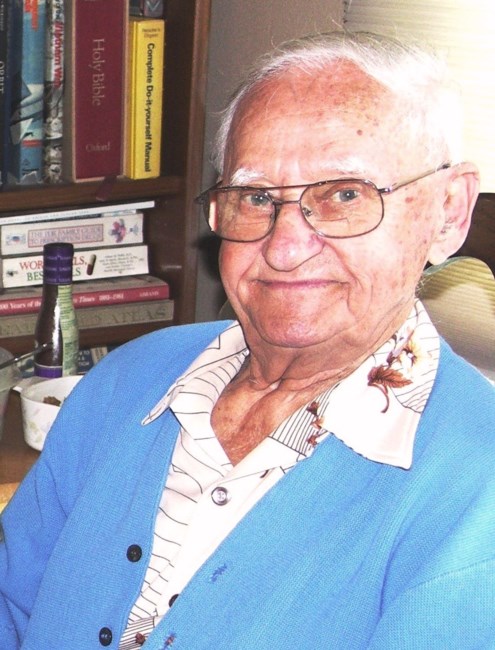
JOHN WEIDNER OBITUARY
=====================================================================================================================
John Weidner 92 passed away peacefully on Saturday, January 14, 2017 at Sharp Chula Vista Medical Center, following a brief illness. He was born on May 13, 1924 to Johan and Elizabetha Weidner of Hatzfeld, Romania.
John was predeceased by his beloved wife of 66 years, Maria, on February 3, 2015. They were married in Linz, Austria on August 14, 1948, and immigrated to the United States in 1950.
John is survived by his two sons, Joe Weidner (Debbie) of Prescott Valley, Arizona, and John Weidner (Chris Berggren) of San Diego, California, and two grandsons Michael Weidner of Fullerton, California and Jeffrey Weidner of Orange, California.
John excelled in his career as a master machinist and worked in the aerospace industry for 30 years. He machined precision parts which were used in NASA’s Gemini, Apollo, and Space Shuttle programs.
After retirement, John and Maria spent many wonderful years together traveling, visiting friends and relatives, and tending to their many fruit trees, vegetables and flowers. John loved his family, his friends, and the outdoors, including camping, and hiking the mountains and lakes.
There will be a Celebration of Life in his honor on Thursday, March 16, 2017 at 10:00 am at Eternal Hills Memorial Park, 1999 El Camino Real, Oceanside, California. (760-754-6600). Interment will be immediately following the service with a reception to follow.
In lieu of flowers, the family would ask that you consider a donation to the "Keep Tahoe Blue Foundation."
=====================================================================================================================
JOHN WEIDNER BIOGRAPHY
=====================================================================================================================
John (Hans) Weidner, was born to Johann and Elizabetha Weidner on May 13, 1924, in Hatzfeld, Romania.
The Weidner family was a part of the Donauschwaben** community. (see below for Donauschwaben history).
Hans and his parents, like the majority of families in the town, led a very simple and modest life.
Hans attended primary school and then a trade school where he was an apprentice to become a shoemaker. World War II broke out and changed everything. The war ended his education and apprenticeship, and would change the course of his life forever.
A quickly advancing Russian army threatened his country and his home which forced Hans to choose between being conscripted into the poorly equipped Romanian army or enlisting in the well equipped German army. He and a few of his friends made the simple and unanimous decision to join the German army together, only to be turned away and sent back home, because they were just under the legal age for enlistment. Undaunted, Hans and his friends tried a different approach. This time they swam across a river to a neighboring town and were allowed to enlist there. Hans was deployed to Yugoslavia, where he fought the communist partisans led by Josip Broz Tito. Hans’ older brother Feri was sent to Greece to fight the Russian army. Unfortunately, Feri never returned. He was listed as “Missing In Action” and would never see his brother Hans again. Hans was wounded, but survived the combat and was ultimately captured by the British and sent to a prisoner of war camp in Cambridge, England. After the war ended, he was set free and was sent to Austria to work for the American army.
Of the four hometown friends who enlisted together with Hans, only one remains alive today. Peter, the lone survivor, was also the best man at Hans' wedding. Peter currently resides in St. Augustine, Florida.
While in Austria, Hans met the love of his life, Maria, a girl from his hometown. They were married in Linz, Austria on August 14, 1948, and remained married for 66 years, until Maria passed away on Feb 3, 2015. Joseph, their oldest son, was born in Linz, Austria on August 12, 1949. Eight months later, Hans and Maria made a life-changing decision that would alter their lives forever. They were granted permission to immigrate to the United States. Unsure of the future but with the hope of a better life, Hans, Maria and young Joe crossed the Atlantic Ocean aboard the SS America. They were processed through Ellis Island, New York, and took a train to Chicago, Illinois, where they lived for ten years. Hans found work as a machinist working for the A.G. Optical, Co. During this period a second son John was born in 1951.
The cold and damp winters took their toll on Hans. Health reasons forced Hans to seek employment in a warmer, dryer climate. In 1960, the family relocated to Alhambra in Southern California where Hans continued his occupation as a machinist. He worked for Accurate Grinding and Mfg Corp. in Los Angeles, manufacturing parts for the aerospace industry. He worked there for 17 years, machining precision parts that were used in NASA’s Gemini and Apollo programs.
While living in California, John and Maria were active members of the Los Angeles Donauschwaben Dance Group. The group was founded to promote and perpetuate the story of the Donauschwaben people, so that future generations can take pride in their heritage and pass it on to their children. Here, they met many old friends from their homeland, and made many new friends, who all shared a common heritage. These friendships lasted their entire lives.
After raising their sons, Joe enlisted in the Air Force and John moved to San Diego to attend college, Hans and Maria sold their home in Alhambra and moved to Vista, California. Hans went to work for the Deutsch Co. in Oceanside making electrical connectors for the space program, including the Space Shuttle. Here, Hans attained the greatest achievement of his career by attaining the designation of "Master Craftsman". He became the instructor to all new machinists, passing on his expert knowledge and experience to a new generation of machinists.
After retirement, Hans and Maria spent many wonderful years traveling, visiting friends and relatives, and tending to their many fruit trees, vegetables and flowers.
When the upkeep of their large house became too much of a burden, Hans and Maria downsized and bought a smaller house in the Ocean Hills Country Club community in Oceanside, where they lived for 8 years.
With their health declining, and to be nearer to their son Joe and daughter-in-law Debbie, Hans and Maria moved into assisted living in Anaheim in 2014. During their residence, Maria had an unfortunate fall and fractured her right femur, from which she never recovered. She passed away on February 3, 2015 at the age of 90.
Without his beloved, life-long partner at his side, Hans' Alzheimer’s disease progressed rapidly and he was placed into memory care in Chula Vista, California, which was near his son John and daughter-in-law Chris. He received the best of care and constant loving support from his caregivers and John and Chris. Hans slipped away peacefully on Jan 14, 2017, after a brief illness.
Hans was a kind and generous man, who was quick with a joke and always had a smile on his face. Although he is sorely missed by all that knew him, he will never be forgotten.
** The Donauschwaben, or Danube Schwabians. is a collective term for the ethnic Germans who settled the lands of southeastern Europe in the 17th and 18th centuries. These lands became Yugoslavia, Romania, Czechoslovakia, and Hungary. During the time of the Donauschwaben settlements, these lands had been recently freed from 150 years of Turkish Ottoman Empire rule, and after many years of war, were devastated and largely depopulated. The victorious Austrian Hungarian Empire of the Hapsburg Monarchy, wished to quickly settle the lands with settlers in order to establish a barrier against further Turkish invasion. Even with the native Hungarian and Serbian peoples returning to the area, the empire felt the need to entice peoples from all over its empire to adequately populate the area with its subjects. The Monarchy especially wished to settle various Germanic peoples in order to establish a Roman Catholic foothold in the area and bring the agricultural skills of these people to the region. The promise of free land, tax exemptions and opportunity, enticed many Germans to make the journey down the Danube River from their German, Schwabian origins along the river’s shores. These settlers arrived by barge and quickly set to turning the land into prosperous farmland. The settlements occurred in three waves from 1718 to 1787 and were named after the monarch that intiated the settlement. The first wave, designated as the “Karolinische Ansiedlung” or Caroline Colonization, occurred between 1718-1737. This first wave of settlers endured the attacks of the Turks, wishing to regain the land, resulting in many deaths. From 1744-1772, a second colonization occurred, called the “Maria Theresianische Ansiedlung” or Maria Theresian Colonization. From 1782-1787 a third and final colonization occurred, the “Josephinische Ansiedlung” or Josephine Colonization. These pioneers created over 800 villages, towns, and cities that thrived, because of hard work and the desire for a better life.
Muestre su apoyo
Comparta Un Recuerdo
Comparta
Un Obituario
Obtenga actualizaciones
Servicios
COMPARTA UN OBITUARIOCOMPARTA
- RECIBIR RECORDATORIOS
v.1.18.0