
OBITUARY
Donald "Don" Davis
December 4, 1931 – August 19, 2025
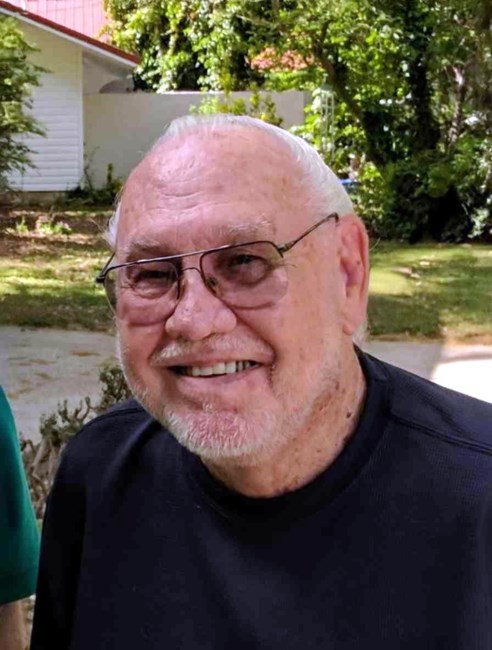
Southern painter, visual‑information specialist, and inventor whose quiet, reverent canvases now stand as a testament to a vanishing way of life.
Donald "Don" R. Davis (December 4, 1931 - August 19, 2025) died at home in Huntsville, Alabama, after a prolonged silent battle. Dementia is a difficult disease for all involved. He may be gone, but his memory and impact will live on.
Preceded in death by parents, Louis E. Davis and Lydia B. Jackson Davis; and siblings, J. W. Davis, Louis “Buddy” E. Davis, Jr., Matthew “Mack” E. Davis, Helen Pearl Harbin, and Peggy Joyce Gooch. He was the beloved husband, for 72 years, of Barbara Ann Jordan who passed just a week before.
Don is survived by his children Donna Kaukler (William), Cindy Strickler (Alan), Jay Davis (Bonita), and dear brother James “Jack” W. Davis.
Funeral Arrangements
We thank Hospice of North Alabama for their excellent care and support. No services are planned, with cremation handled by Valhalla Funeral Home & Memory Gardens in Huntsville. In lieu of flowers, the family requests donations to Alzheimer’s Research.
Early Life and Formative Years
Don was born in Jackson, Mississippi, to Louis Elmer Davis and Lydia Belle Jackson. He grew up amid the fading farms, weather-worn fences, and slow-moving rivers of the deep South, which would later become a recurring theme in his artwork.
Don enlisted in the U.S. Navy, where he served for four years before being honorably discharged in November 1952 as a Fireman Apprentice. He married right after to Barbara Ann in 1953.
Following his military service, Don began working for the Department of the Army as an illustrator and visual information specialist. In January 1986 Don received a performance appraisal in which he was lauded as an “excellent Visual Information Specialist” whose material was technically accurate 95 % of the time without revision and who consistently met or exceeded all deadlines. This military commendation, far from being a footnote, illuminates the twin pillars of his career: meticulous craftsmanship and an uncanny ability to translate complex concepts into clear visual language.
Don was a self-taught artist who developed a unique "splatter" technique that combined bold brushwork with controlled drips of pigment to evoke the fleeting moments of rural life. He often recalled that “the vanishing past of my native southland” was his greatest source of inspiration—a sentiment echoed throughout his career. He believed that “only through firsthand observation can I achieve the desired effect,” so he spent countless days sketching on porches, under cottonwoods, and beside old stone fences before ever touching paint.
His preferred medium was acrylic - valued for its immediacy and vibrancy - but he also mastered watercolor, to evoke the fleeting, almost cinematic moments of rural life. The splatter method, which he refined in the early 1970s, gave his canvases an energetic edge that resonated with younger audiences accustomed to street‑art aesthetics while retaining the discipline of academic realism. Critics noted that his work “captures a quiet, gentle somberness and serenity of days gone by” through a balance of delicate washes and explosive color bursts.
Career Milestones and Exhibitions
From the mid‑1960s onward, Davis mounted one‑man shows across the United States—Alabama, Florida, Georgia, Illinois, Louisiana, Minnesota, Mississippi, New York, Tennessee, Virginia, and Washington, D.C.—and his paintings entered the permanent collections of numerous regional museums. His reputation as a “top southern artist” was cemented by repeated invitations to juried exhibitions such as the Northeast Alabama State Fair and the Chattanooga Civic Arts League Jury Show.
Don’s work attracted an impressive collector base that extended far beyond private homes. Major corporations such as IBM, government entities like the U.S. Army Missile Command, and a host of museums acquired his paintings for their ability to convey both regional authenticity and universal emotion. Private collectors throughout the southeastern United States also prized his canvases, often citing the “quiet, subdued, and pensive” quality that made each piece feel like a personal memory captured in pigment.
Legacy & Final Chapter
Donald Davis left behind a body of work that feels both timeless and urgently contemporary. His paintings are more than nostalgic snapshots; they are visual poems that capture the soul of a disappearing South while speaking to universal themes of memory, place, and resilience. Each canvas invites you to step onto a quiet porch at dusk, hear the distant hum of crickets, and feel the brush‑laden air of an artist who never stopped chasing the fleeting light of his youth.
Don Davis was a man of passion and dedication who left a lasting legacy. He will be deeply missed by his family, friends, and all who knew him.
Show your support
Add a Memory
Share Obituary
Get Reminders
Services
SHARE OBITUARYSHARE
- GET REMINDERS
v.1.18.0