
AVIS DE DÉCÈS
Gregory Lee Kuhn
28 juin 1947 – 22 septembre 2025
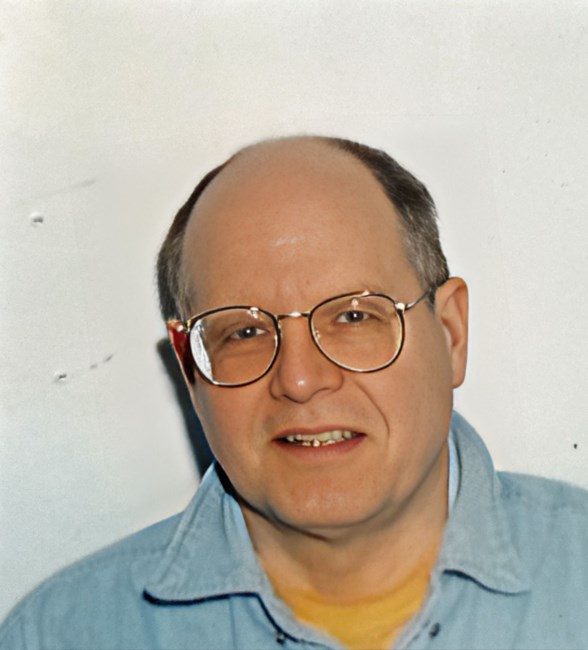
Greg Kuhn graduated from Arizona State University in 1970 with a Bachelor of Science degree. He began his career at Motorola (now part of Google and Lenovo), where he worked from 1971 to 1979 before joining Intel in Silicon Valley until his retirement in 1987.
Greg’s work centered on inventing and bringing into production the first generation of microcomputer chips that still drive the modern world. At Motorola, he was one of three engineers who created the legendary 6800/68000 microprocessor family. Later at Intel, he was one of five key developers behind the company’s nonvolatile memory, flash memory, and microprocessor families.
He held two patents, authored twelve published papers, and presented his research numerous times before the Electrochemical Society. At Intel, Greg managed a production team of more than one hundred people and oversaw output valued at the equivalent of more than $600 million annually. His early research also helped establish the foundation of today’s field of nanometrics.
During his years at a classified Motorola facility, Greg contributed directly to the U.S. space program. He designed and built components for NASA missions including Atlas, Apollo, Viking, and Voyager. Remarkably, some of the parts he crafted by hand continue to operate aboard the Voyager spacecraft as it journeys through interstellar space.
In recognition of his lifetime of work, the Smithsonian Institution’s National Museum of American History accepted more than 40,000 pages of his personal papers in 1988 into its Division of Work and Computer History. His legacy lives on in the technology that powers daily life and in the history of American innovation.
Montrez votre soutien
Envoyez Vos
Condoléances
Partager
L'avis De Décès
Obtenir les mises à jour
Prestations de Service
Partager l'avis de décèsPARTAGER
- RECEVOIR DES RAPPELS
v.1.18.0