
AVIS DE DÉCÈS
Vaughn E. Hampton
1 octobre 1928 – 3 octobre 2012
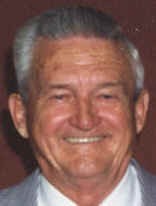
Vaughn is survived by children David (Carole), Diane Bittorf (John Kelly) and Michael (Linda), grandchildren Beau (Zeynep) Hansen, Christopher (Stephanie) Hampton, Ryan (Catrina) Hampton, Holly Hampton and four great-grandchildren with one more on the way. His wife of 60 years, Wilma, preceded him in death. Memorial services will be at 2:00pm on Thurs. at Crown Hill Mortuary, Pavilion of Reflection. His ashes, along with Wilma's, will be placed at Arlington National Cemetery.
Vaughn E Hampton’s Memoir’s
I was born 1 October 1928 to Bert E Hampton and Alma Williams Hampton in Johnston City, IL, a small coal mining town in southern Illinois. I was told my father operated an insurance co until after the depression started. The earliest time I recall was my mother being sick in bed with (TB) Tuberculosis and that’s the only memory I have of her. My memory begins with her telling me to go outside and bring a switch so she could use it on me. I don’t recall why or if she did or not. I’ve been told she died from the TB in 1931. My one sibling, brother Gene, was born 7 April 1921, being 8 years older than I. My next recollection was living at my Uncle Cliff and Aunt Grace’s house out in the country. I recall my uncle Cliff taking me down in a coal mine walk through the coal tunnel. The Miners all had to walk bent over to go through the tunnels. I recall being taken squirrel hunting with Uncle Cliff and his 22 rifle. He was a good shot and it seems like he always brought back a couple squirrels for Aunt Grace to cook, fry or in a stew. Uncle Cliff placed me by a tree and told me not to make a move or I’d be in trouble. I also recall my Aunt Grace frying a skillet of eggs and making a batch of biscuits every morning for breakfast. .It seems that we ate a lot of squirrel stew and fried fish. Then I’m back with my father and riding long distances, stopping periodically to eat and have refreshments. I was told WW ll Veterans received a service bonus in the mid 30’s so that could be what paid for the trip to Colorado. The next memory I have is living in Colorado Springs with a stepmother named Edith, we lived next to a large pile of sand and I was told it came from the “Golden Cycle Mine”. I recall seeing a flood in Colorado Springs as I remember standing on a viaduct bridge and watching the roiling water below overrun its banks and spread water in the low lying areas. My next memory was being in a Colorado Springs “Nutrition Camp” and later found out it was because my parents was unable to provide for me. It seems I was there for a period of time and then was moved to Denver Colorado but don’t recall how I got there. I remember my stepmother Edith was managing a rundown type of Hotel at 1730 Larimer Street where she rented rooms for the night or longer. I adapted to that lifestyle and remember my father was drunk most of the time. He received a small pension check for WW l Army service. I believe Edith told me he was gassed while fighting in France so it could have been a service connected pension. I recall accompanying Edith down to the Denver City Jail on the corner of 14th and Larimer and getting father released from jail as he’d been there for being picked up for drunkenness. The Hotel Edith managed was located on a seedy Denver street that had beer joints scattered all along both sides of the street Our living quarters was on the 2nd floor facing Larimer St and I remember lying in bed and watching the street life activity below. Denver had streetcars in the 30’s and there were two sets of tracks with streetcars clanging up and down Larimer St. 24 hours a day. There was a Safeway grocery store on 20th, 3 blocks up the street and that’s where we bought groceries. I found out I could gather up empty wine bottles found thrown away by the numerous “winos and sell them for a nickel each. So I found a gunny sack and walked up and down alleys gathering bottles and selling them at the corner liquor store. There was an old man that bought rags, pieces of metal, and misc things that had a horse drawn wagon and came up and down Larimer Street yelling “rags today, rags today”. And people that had something he might be interested in, stopped him to see if he would buy whatever they had. Later I either made or someway obtained a shoeshine kit and after buying cans of black and brown shoe polish and locating a brush someplace, would sneak in beer joints & hustle drunks for a 10¢ shoe shine. Some barkeeps would chase me out after spotting me. Some wouldn’t wouldn’t bother me. On St’ Patrick’s Day I found a trinket shop and bought Irish trinkets and visited the beer joints selling them to the drunks. I gave Edith most of the money made as we needed it for food. She didn’t get paid much for managing the hotel except our room and a small amount of money each month. I don’t recall my father ever having a job but he would appear periodically either from bumming around or being in jail. Edith was a Seventh Day Adventist Church member and she was able to get me in their church school which I attended through grade school. It was located in Denver at Alameda and Exposition which was 3 - 4 miles from where we lived on Larimer St. I was young and able so I had no trouble walking back and forth when I attended the Church School. On Saturday’s Edith and I walked to 9th and Sherman St. about a mile or so attending the Seventh Day Adventist church. Unable to recall the exact date but we moved to 1128 Delaware St. just several blocks from downtown Denver. Thid would have been about 1939 or 1940. I got a job selling the Denver Post newspaper in downtown so I went to the newspaper daily, located just off 16th and Champa St. After paying 3¢ a paper on credit for Page 2 - the evening papers, I sold them for 5¢ a copy and I settled up my account daily. I usually sold 25 or 30 papers a day giving me some change. On Saturday I sold the Sunday Post in front of the Cigar store at corner at 15th & Lawrence. I sold the Sunday papers for 10¢ after paying .07¢. There was a big Loop Market right across from the Tramway “Loop” where the streetcars would turn around to start their return trips over again. There were many different ethnic merchants diverse selection of groceries. A lot of people riding streetcars would drop in the Market to buy groceries before transferring streetcars to continue home. There were two of us selling newspapers on the corner; one was selling the Rocky Mountain News and I the Denver Post. After selling several papers, I went to a ‘Burger joint and had a bowl of 10¢ chili and a couple of hamburgers for a dime. That’s right! They only cost a nickel a piece as this was early 1941. I made enough money to buy a 2nd hand bike and was able to use it to pick up my daily papers from the Post. One day while I was at school, my father called a cab, loaded my bike in the trunk and sold it to a Pawn shop on Larimer Street to buy booze. I never forgave him for that that stunt. About 1941 I completed Baker Junior High and registered for West High School but thought I didn’t need any more schooling so stopped going to school. We moved again to a place in the 3600 block of Gilpin in the fall of 1942. I don’t know the reason, we could have been evicted or some other reason. While there, my stepmother and I had a argument and I decided it would be better for all concerned if I lived on my own. So I left the house for good at 13. I ran across a young friend and we found a cheap room to rent and had menial jobs for enough to live on. I decided to hitchhike eastward. I stopped off in several small Kansas towns and washed dishes, bussed tables to get enough money to continue on. One time, I hopped a freight train and rode it through most of Kansas ending up in Kansas City, MO. After working several dishwashing jobs, I ran across a young man and he told me I could probably get a job where he worked, at a luggage factory. I got a job on the assembly line making more money until after several months, I was let go as I wasn’t able to present my birth certificate showing I was 16 years of age. Then I got a job as a “flyboy” for the Kansa City Star newspaper making $5 a day working 4 – 5 hours a day. A flyboy stands at the end of the press, catching a group of 50 newspapers as they came off the press and then placing it on a conveyer belt to be wrapped with wire. Then the bundles are loaded on a truck and delivered to different locations for sale.. A very good job but I lost it due to not being able to prove I was 16. Being 14 had its drawbacks. It was spring of 1943 and I decided to hitchhike out to the west coast. Between hitching and hopping freight trains, I made it to Flagstaff, AZ. I was stuck there for a couple days and about froze to death. I finally got out of there and ended up in Los Angeles, CA. I found work at menial jobs again but needed more money. At that time World War ll was going on so I got the idea of registering for the draft which would prove I was 18 and allow me to get a decent job. I went to the Selective Service and registered for the draft. It was in early June 1943 and I soon had a good job in an electrical shop. About 10 days later after registering, I received a letter from the Selective Service telling me to report for my pre-induction physical. I did and was accepted into the military Service and received a letter telling me to report for induction several days later. I reported and was told to stand in the Marine lineup. When I was second in line, we were told to move over to the Navy line as the Marine quota was filled for the day. I was inducted into the Navy for the duration of the war plus 6 months, and lined up for many inoculations. The men were told to progress through the line until finished. There were medical Corpsmen on each side and each were giving shots of various vaccines as each man walked in front of him. All told we must have received about 10 shots of vaccine. Then we were loaded in a Greyhound bus to San Diego Navel Training station. When we arrived, we disembarked and were greeted by groups of other young Boots shouting “you’ll be sorry!, you’ll be sorry!”
After we were run through the barber shop and issued uniforms, we were divided into companies of 120 men and marched to our barracks for the next 8 weeks of our training. Every morning and evening, we were assembled and marched to the Parade grounds (Called the grinder) and were led in calisthenics by an instructor standing on a raised platform. He would yell get those damned arms up over your heads as he led us in Jumping Jacks, side straddle hops and other exercises. All incoming Recruits (Boots) i.e., Apprentice Seamen had sore arms due to the inoculations received previously. During the 8 weeks of training, we were instructed on the firing range in firing handguns, Grease guns (Machine guns) and rifles. We were checked and instructed in how to use our jumpers as an emergency life preserver, and how tear gas smelled and affected
Page 3 - our eyes. We were placed in a gas chamber with gas masks on and then had to remove them and walk out of the chamber with eyes open. We ran through obstacle courses, climbing ropes, climbing and disembarking from a structure using rope webbing. Finally we graduated 31 August 1943 and assigned to schools according to IQ tests. I was assigned to Amphibious School learning to handle and beach landing craft used to transport troops to enemy shores. I was pretty good in handling an LCVP which could carry 36 armed troops to the beach. After school I was assigned to the San Diego Navel Receiving station being available for any and all work details until assigned to a ship. One work detail was aboard the USS LCI (Landing Craft Infantry) (L) 450. I worked on that ship for several weeks and was finally assigned to her as Ships Company. The ship was 158 ft long with a 23 ft beam. There was no keel with a flat bottom, and she had a blunt nose bow. The ship was originally designed to carry 100+ troops to land on beaches via landing ramps on each side of the ship. The ramps were extended by steel cables and retracted the same way. We were converted to a semi-gunboat and the troop quarters were converted into ammunition holds and 5 rocket launchers were attached to each of the port and starboard ramps. A raised 40 mm gun tub was installed on the well deck and the bow 20mm was replaced with a 40mm gun. The gun deck had two 20mm gun tubs on the leading deck and two 20mm tubs to the rear of the ships Conning Tower. The ships commanding officer controlled the ship from the Conn tower and usually had a signalman with him to interpret any blinker or semaphore signals received. The helmsman would steer the ship from the lower Conn tower via voice commands from the officer on the bridge. We loaded the ammo holds with rockets, 40mm, 20mm, and 50 cal machine gun shells. We stocked the ship with canned goods, fresh milk, and vegetables. The ships small freezer was stocked with as much as it could hold and we sailed in convoy the late afternoon of 6 January 1944. I was assigned to a work detail in the Bos’n locker, in the bow of the ship. The locker was stocked with new lines (ropes), 5 gallon paint cans and etc. The odor of the paint and new ropes was quite strong and the ocean swells off the San Diego coast caused the ship to roll and bounce up, down and around soon making me seasick. I spent the next day or so leaning over the side not being able to keep anything down in my stomach. By the third day my mal-de-mer was gone and I was never seasick again even through some mighty rough storms. Due to wartime the convoy zigzagged its way across the Pacific to Pearl Harbor, Hawaii arriving 12 days after leaving San Diego. We went on gunnery maneuvers firing guns and rockets, returning after several days to Pearl Harbor. We sailed in convoy for our first enemy action at Kwajalein Atoll, Marshall Islands. We arrived the night of 30 January 1944 and entered it’s lagoon after midnight receiving no enemy fire as Roi-Namur was receiving incoming fire from the Battleship’s, cruisers, and destroyers. At daybreak carrier planes made bombing runs as the outlying ships ceased firing. Shortly after daybreak, LCI gunboats led the troop loaded landing craft toward the beaches. We were firing our 40mm and 20mm cannons and then firing a ranging rocket to make sure it was hitting in from the beach, all 10 rocket launchers started firing. I recall some shells being fired at us but no hits. At about 300 feet from the beach, the ship stopped and the waves of Marines proceeded to the beach, dropping ramps and disembarking troops. The ship then proceeded towards our 2nd objective. The ship sailed to its 2nd objective through a cut between a couple islets and I was told the Captain was wearing sunglasses up in Conning tower and failed to notice the shallowness of the sea we were sailing through. Those of us at our gun stations could clearly see the coral right under the ship and suddenly there was loud screeching as the ship grounded herself on the coral. The Captain reversed the props to back off but we were stuck fast on the coral reef, unable to move. We remained at General Quarters and our gun stations as there was some incoming fire but a larger ship fired its guns and stopped the incoming fire. While grounded on the reef, those on deck observed 4 Marine amphibious landing craft flip over in the roiling surf throwing the combat laden troop into the sea. A line was shot into the group of men which allowed them to pull a heaver line securing it to a secured buoy. Then they started making their way towards the ship through the shallow sea. The following article was in the New York Times from a war correspondent from Page 4 – the NY Times that visited the ship after the island was secured:
------
“Special dispatch to New York Times ' cussed ' LCI saves fifty from drowning by Robert Trumbull (copyright by New York Times) aboard an LCI, Kwajalein south Pacific February 4, 1944 (LCI (G) 450). Navy men on the big sleek warships refer to an LCI (Landing Craft Infantry) as " A Barge With A House On It." These ugly ducklings of the Navy are seldom noticed except to be cussed or good naturedly derided, and they do a ticklish job under fire with scant credit. This one happened to have saved 50 men from drowning in the furious white water that pounded the sharp coral ledge around Ennubirr island, during the marine landings there January 31, 1944. These small beamed 150-foot craft are designed to snub against a beach and debark assault troops down a ramp. Sometimes, instead of bringing in troops, they are gunboats that knock out enemy positions on the beach. That's what this one was doing that morning, when a strong current pushed her onto the reef. Battleships were bombarding the island, the shells whistling above the LCI. In the roar of the gunfire Lt. (jg) Thomas F. Kennedy, jr., Bryn Mawr, Penn., who has been Captain of this humble ship since she was commissioned at Barber, N.J., couldn't hear the racket of his vessel going aground. The situation was humiliating, Kennedy thought, but he didn't have time to worry about it then, for four Alligators (troop-carrying amphibious tractors) were capsizing on the reefs 150 yards astern.
MEN EXHAUSTED-
The men struggling in the water were near exhaustion, and the Alligators in the wave behind them had struck some. Dr. R. B. Hardy, marine surgeon, once was pinned under an Alligator, but he was a powerful man--a former All American football player at Harvard-- and managed to break free. Lt. D. N. Boydston was near drowning, later he said that as he was battered under the waves, he seemed to see a picture of his wife. The LCI threw a line to Dr. Hardy, P. S. Layser, J. R. Boltuc and A. J. Tiedway, the four strongest swimmers among the overturned marines--in fact, the only ones who were not too beaten by the waves to swim. The line was hurled from the LCI's fantail, and the four marines fought with it through the surf to a reef buoy, where they tied the end after losing the line several times on the way. Now it developed that the wash of the ship was strong enough to break the hold of the other castaways on the line, so Kennedy brought out two more stout ropes, which Layser and Tiedway held in their powerful hands so as to form a square around the outside of the viciously tugging current. By this route all of the stranded men were brought aboard, three of them so exhausted that they had to be carried by Boltuc Meanwhile Hardy remains aboard the LCI and set up a make-shift hospital in the radio room, with the ships Pharmacist's Mate 1/c Sydney Baumber of Boston. All of the marines were aboard by 1 P.M. After a continuous two hour battle with the sea, six of them were dead. Kennedy was about to order his lines hauled in for he needed them, when two more Alligators commanded by a Lieutenant Montgomery also capsized on the reef. Three men drowned immediately, and Ensign O. J. Banasik had taken so much salt water aboard that he had to be worked over for three hours before he revived. In all, 55 Marine men were saved. Hardy and Baumber stripped them all and had them lie on the LCI's broad fantail for examination. Some of them had serious cuts from the sharp coral, which they were unaware of, and the Doctor worked over these. Meanwhile the bombardment of the islands continued. Kennedy put the sickest cases, including Boydston and Banasik on cots in the mess hall. The LCI crew broke out the ships cigarettes and gave their guests dry clothes and ammunition for the weapons they had salvaged. Two days later Kennedy put the 50 men in small boats with a supply of food and landed them on Ennuebing. Kennedy had time then to talk the matter over with his subordinate officers- Ensign Gerald Conners, of Toledo, Executive Officer; Lt. (jg) Robert Main, of Middletown, Oh. Engineer; and Ensign Wallace Brady of Bancroft, Wis. Young Kennedy was not at all impressed by the fact that he had saved 50+ men to fight another day. Instead he was extremely downcast because going on the reef had prevented his fulfilling his mission of shooting up Ennubirr beach. "I hope," he said ruefully this morning in his tiny, spotless wardroom," that we get a chance to redeem ourselves."
------
After the Marshalls were secured, our ships bottom was temp repaired and we were pulled off the reef with difficulty and then the Cape San Martin started to tow the '450' astern of the disabled USS Anderson, DD 411. Due to heavy seas, tows were snapped and the '450 started running into in to the Destroyer with danger of our ship coming down on the destroyers depth charges located on the 411’s fantail, so tows were removed and we finally floated loose and kept lookouts through the night. Morning light allowed the USS LST 45 to get several lines to Page 5 - us and then slowly towed us back to Pearl Harbor for repairs. Some time after reaching Pearl, I was called into Mr. Conners, the ships Executive Officer’s wardroom and informed that my father had notified the Navy that I was only 15 years old, and illegally in the Navy, he requested that I be discharged. My objections carried no weight so on 4/7/44 I was transferred to Waipio Point Amphibious Base Receiving Station. They must have misplaced my records because 10 days later I was assigned to the USS Auriga (AK98) as an S/2c. Since I was a veteran of an invasion, I was made a Cox'n on one of the Auriga’s LCVP landing craft and we went on landing maneuvers practicing for the next invasion. The records must have resurfaced because on 5/2/44 I was sent back to the Amphib Base. In the Military, strange things happen so on 5/5/44 I was assigned to the USS Oak Hill (LSD-7). (Landing Ship Dock) which was a much larger ship. Here are some comparisons between it and a LCI. We had fresh water showers instead of salt, toilet commodes’ instead of a 8 ft trough, refrigerated water instead of drinking from a bulkhead scuttlebutt and the chow, even though Nick, our cook tried, he couldn't put out meals from his galley like those that came out of the Oak Hill's. We also had daily pastry. We got underway and went on maneuvers preparing another invasion (Turned out to be Guam) and upon returning, those records reappeared and caught up with me again. I was returned to the Amphibious Base Receiving Station and daily work parties. We received weekend liberty and went in to Honolulu’s limited establishments. While there I had this picture taken at some downtown Honolulu photo shop. Liberty was only allowed during the day as the businesses were closed at night due to a darkened city during war. There was plenty of Island action during the daylight hours though. All servicemen had to be back on bases by 17:00 hours (5pm). There were a large number of servicemen from all Allied countries on the various Hawaiian Islands during the war. They were there for Rest & Relaxation or training for the next invasion somewhere. Eventually space was found on some troop ship for me heading stateside. I was quartered in one of the troop holds where the bunks were stacked 5 high and filled with mostly infantry type troops. Most of them forgot about seasickness earlier and now stomachs got queasy and most started tossing their cookies. They got mal de mer (sea-sickness) and the troops hold stunk like vomit. I spent as much time as possible topside to get fresh sea air. The troops were fed twice a day and usually the meals were cold shortly after finding a table to eat from. Fortunately the voyage only lasted 5 Days and we arrived at San Francisco and quickly separated into service branches and bussed to our respective Receiving Stations. Being Navy I ended up at Treasure Island Receiving Station. We were given liberty every night and after checking out Frisco and Oakland, I decided on Oakland for my liberty time ashore. I had this picture taken while on liberty. I hadn’t bought any combat ribbons for my uniform as they hadn’t issued papers authorizing the ribbons I had earned for being overseas.
On June 14, 1944, I was given a General Discharge under Honorable Conditions. And a golden colored pin called a “Ruptured Duck” to indicate that I was an honorably discharged serviceman. I was given no medals or ribbons entitled me as I don’t believe they were available at that time. I was paid some money for travel pay back to Los Angeles as that was where I was inducted into the military. I made my way back home traveling on a train that took 5 days to get to Denver. During the war, passenger trains was lowest in train travel priority and had to wait for any freight traffic to use the rails first, All freight trains had wartime priority and was given the 1st right of passage in all directions. After arriving in Denver I stayed downtown in a hotel awhile and was still wearing my sailor uniform as I had no civilian clothes as yet. Even though I was only 15, I had no problem ordering a drink when I went into a place. Eventually I contacted my parents and made arrangements to meet them and I can’t recall how I Page 6 - got to their place as they were caretakers for some absentee rancher who had a place off North Federal in what was called Broomfield, CO at the time. I got there someway or other and waited until fall when I returned to school. That didn't last long because there was a world of difference between the 15-year-old kids in school and my 15 years. I needed more excitement so in January 1945. I decided to go out on my own again and headed back to Los Angeles. On March 10, 1945, I was able to get a Merchant Marine Coast Guard Certificate and sailed as an Ordinary Seaman on the SS Verena, a T-2 tanker carrying aviation fuel. We ended up at Noumea, New Caledonia and then returned back to San Pedro, California. I hadn't enjoyed being on the tanker with all that volatile gas so I made sure that my next ship was different. On 8 May 1945, I shipped out on the SS George H. Powell, a liberty ship with holds loaded and tanks, trucks and other equipment secured topside. We dropped off some material at Pearl, picked up other equipment and headed towards the south Pacific. I recall being anchored for 30 hot days at Ulithi atoll. Then we received orders to sail to Buckner Bay, at Naha, Okinawa in June 1945. Okinawa was secured for the most part but we were told that there were a few enemy stragglers roaming around the Island. Since it was only several hundred miles away from Japan proper, it seems that every day there were several kamikaze attacks against some of the larger ships in the Harbor. While we were anchored there, we were strafed about a dozen times by kamikaze aircraft heading towards bigger navy ships but amazingly, we didn't suffer any casualties during the runs. I do remember hitting the deck the several times I was topside when we were strafed. When you're being strafed, it's over before you have time to react. The Jap planes would skim the outer sea and then zoom over the hill and drop down into Buckner Bay to commit suicide by crashing their plane into a big warship and dying for their Emperor. The ships gunners in the Harbor tried to make sure they died before reaching a ship. I was able to observe some of the strafing that occurred against other ships and it was something to observe it happening. When it’s happening to another ship, it’s in seemingly slow motion, when it’s happening to you, it’s over before you even realize you’re being strafed. It was a wild and wooly anchorage there in Buckner Bay when a lot of ships were trying to shoot down the kamikaze planes; we heard from our armed guard, that there were always some casualties from friendly fire. On August 15, 1945 the word came down that the war was over and it seemed that all the ships in Buckner Bay went wild by shooting their guns up in the air. When a shell is shot upwards, it has to come down and there were some unintended casualties from these rounds before the firing could be stopped. After we finally off-loaded some of our cargo, we headed to Sasebo, Japan to finish offloading the rest of the equipment and then sailed back to San Pedro, CA with an empty ship where I was discharged from the ship and the US Coast Guard which all Merchant was under. My youthful odyssey had run its course and I returned to Denver civilian life again feeling older than my sixteen years. The Government offered a benefit to ex-GI’s called the 52/20 Club. That offered the serviceman $20 a week for 52 weeks to find a job and adapt themselves to civilian life. I decided to sign up and I partied hearty for several months until I got tired of that and started work in the Bakery department of the Rainbow Bread Company in Denver. I quickly found that type of work didn’t interest me so in April 1946, I decided to go back into the military and joined the Army Air Corps for a 3-year hitch. I was sent to Ft. Riley Kansas for processing and then to Amarillo Texas for 8 weeks of Basic Training. I had no trouble with Basic or with the 20 mile hikes to our Bivouac area where we put up 8 man tents to sack out in. There were a couple of “Meat Wagons” (Ambulances) following our company march to pick up the couple of troops that couldn’t make our forced march. There were blisters and sore feet for some when the days march was over. We spent several days in the field and killed several rattlesnakes in the countryside. We then prepared the camp to leave and start our 20 mile walk back. There was more formation drilling on the grinder than I recalled in the Navy Boot Camp. After Basic, we were placed in barracks to await our shipment to whatever schools Page 7 - we were assigned to. Since I was a veteran of the Navy, I was assigned as barracks chief and drilled our company of men in formation drilling everyday of the week except Sunday. The rest of the time was spent policing the area and killing time. Eventually I was sent back to Lowry Field in Denver to attend a 5 month Armorer’s school. I had been seeing a girl, Wilma Tull from Denver before going into the Air Corps and while attending school, Wil and I was married 16 March 1947. I remained at the Base while attending school and given a pass every weekend which I spent at her parents house. There was streetcar and bus transportation available so it wasn’t too much trouble and only cost 10¢ each way. After school, I was assigned to the 4th Fighter Group located at Andrews Field in Maryland, just outside of Washington DC. My brother Gene offered me a 1931 Chevy sedan he had for $300, with nothing down and $25 a month. I bought it and Wil & I started driving to Maryland. We stopped off in Kansas to visit her relatives and then continued. After reaching someplace in Iowa, car troubles popped up! I started hearing a rod threatening to go so stopped in a garage to have it checked out. The garage allowed us to sleep in the car overnight and the following morning I was given the bad news the engine would have to be rebuilt. They offered me $150 for the car; I grabbed it and bought two tickets to DC on the Greyhound Bus. We got a hotel room the first night after arriving in DC, and found us an apartment the next morning. That afternoon I made my way to the Air Base and reported in and I believe I still had about a week before reporting for duty with the 336th Fighter Squadron which was flying P-80 shooting Star jets, the first Air Corps Jet fighter squadron. The planes were called “P” (pursuit) because they hadn’t adopted Fighter for their planes as yet. My job was to work in the Gun shop helping maintain 6 - 50 cal MG and bomb racks per plane for the 12 jet planes in our group. I believe there were 4 of us Armorer’s plus the M/Sgt Honcho working in the shop. I was now a Corporal after arriving and the extra money will help. As it was, we lived frugal as there wasn’t much. In mid 1947 the US Air Corps was renamed the US Air Force. We traveled to several places to have gunnery practice which required us to package all our tools and they were flown in a C-47 to wherever we were going. We followed in a separate C-47 and the pilots flew their P-80’s to the location. I recall one place was McDill Air Base in Tampa Fl. After about a week, we packed our tools again and they headed back to Andrews field. We followed in a separate C-47. We arrived but the C-47 with all our gear crashed on the way up north destroying the plane and killing the pilots.
We also lost one of our P-80 planes and pilot when he failed to pull out of a dive bombing run. That’s the only plane we lost while I was with the fighter group. Wil had became pregnant and delivered our boy David the 28 September 1948 at Bolling Air Force Base Hospital in Wash DC. He exercised his lungs well and frequently By this time we had an apartment in Capitol Height]s MD and I caught the bus down a block to the base. We used to go to the base to see a movie in an air conditioned building as our 2nd floor apartment was hot in the summer. Wil’s mother rode the bus out to DC to help Wil and welcome her new grandbaby. I believe she visited about 10 days and bussed back home. We flew United back to Denver in a 4 prop DC-8 and I believe David cried all the way. After visiting a day, I went to Lowry Field and caught a hop back to DC. At that time Lowry was still a working Air base. In April 1949, I was discharged and due to our new Baby, I signed up as an AF Reservist Weekend Warrior for the extra money. I got a job with Town Talk Bakery as a bread route deliveryman. I was making $50 a week and we were living in her folks basement apartment and paying them rent. One day when David was about 18 months old, he was setting on his grandmothers lap in the kitchen next to the stove. He must have waved his arms as he knocked over a hot coffee pot spilling it on grandmother and him self. A ambulance was called and his grandmother and David was rushed to the hospital. It turned out David suffered 3rd degree burns on chest and arm and his grandmother had some 2nd degree burns on her arm. I had been working and as soon as I was notified, I rushed to the hospital to help as I could. Dave was kept hospitalized for about 9 days and came home bandaged up. His grandmother healed with no problems but David ended up with scars that are still with him. In December 1949 Wil delivered a girl baby we named Cynthia Diane. In February 1950, we bought a new 2 bedroom masonry house at 452 Columbine St for $8000. At that time, I was able to get a GI loan and moved in with no down payment and a $50 a month mortgage. We had no car so I rode the bus back and forth to work. I put in a new lawn and things were coming along just fine when the Korean War started in June 1950 and I was called back to active duty for one year in October 1950 as a Buck Sgt and assigned to Kessler Field in Biloxi MS to work in the Radio shop repairing radios the base planes used. Wil remained in Page 8 - Denver and we had to sell the house as I was unable to make the mortgage payments on a Sgt’s pay. She got $10,000 for the house as it appreciated that much in the 7 months we lived there. Wil bought a train compartment ticket as by that time we had 2 children, David & Diane. Sometime in late 1950, I heard my grandfather on mothers side had died and left me a $2000 war bond. It was mailed to me in Biloxi and I bought Wil a 1951 Chevy 4-dr Fleetline Sedan and taught her how to drive it. She was tickled pink and was able to secure the two kids in the back seat and drive. I rode the bus to the base every day. In 1951 the south still had the Jim Crow law and it was strictly enforced. There were white and black drinking fountains, rest room and places to eat. Blacks were not served in white café’s and I suppose that white’s were not welcomed at the café’s for blacks. One day Wil learned about the separation of races when she took the two young ones out for a stroll. She noticed a black couple walking down the sidewalk towards her and as they approached each other, the black couple moved into the street and walked around her. Back in Denver, this wouldn’t have happened! Down south in Dixie it always happened. As my separation date approached, I took a leave and drove the family straight through back to Denver. I can’t recall how far it was but it took me about 24 hours to drive back. When you’re young, this can be done, now I couldn’t do it While in Denver, I applied for and had a job promised working for the Mountain States Tel & Tel Company as soon as I was discharged from the Air Force. I caught a hop on a B-25 at Lowry Field back to Keesler Field. I believe I had some leave coming so I was discharged and caught a hop back to Lowry Field. This time my plane was diverted and landed in Great Falls Montana. I tried to get a hop back to Lowry but there wasn’t much traffic in Great Falls so I ended up riding a Greyhound bus back to Denver taking 18 hours to arrive. That’s the trouble catching military hops, never sure where you’ll end up. After arriving in Denver, we sold Wil’s new Chevy and used the money to buy an old house at 3630 W 29th Ave in Denver for $6000. The house was built in 1892 and showed the years. It had 3 rooms upstairs and kitchen, DR, LR, and an oblong room downstairs. All sorts of potential! It had a floor furnace that the two ladies of the house loved as they would stand over it and the warm air would rise and warm their lower body parts. I started work for the Tel Co and eventually was able to work the swing shift working from 4 to midnight. That way I had most of the day to work on the house. Over the ten years we lived there, I rebuilt the kitchen with new cupboards, flooring, and replacing the lath and plaster ceiling with sheetrock. Wil had a nice big pantry off her kitchen and was happy as can be with it. I redid the big room making it a TV Room when we eventually bought a TV set. The kids had separate rooms upstairs and Wil and I took the center one to keep piece in the family. Eventually I was able to develop a window washing route around the area which I worked one day a week. I approached the contractor for a new building project going up and went into the window cleaning business scrapping excess paint off the wooden sash windows and then washing them clean. This lasted for about 3 years and then I got promoted to a telephone installer and had to give up my outside work. I was driving a truck and I worked as an installer for about 3 more years and then progressed into installing Key Telephones and equipment. After a year, I was promoted to being a PBX installer and then to being a repairman. In 1960 I was promoted to an Installation Foreman and put in charge of a truck installation group. Later I was transferred to being a downtown Installation Foreman and we had an office we worked out of downtown. I was getting unhappy with the way the new phone company was treating employees and customers so when my 31 year arrived, I had enough service so decided I had enough telephone company and pulled the plug and retired. Wil continued working for US West when it changed its name 1 January 1984 when the government broke up AT & T Co into 7 regional companies. Wil continued working as a Computer Technician making top craft pay until she had enough time to retire so she pulled the plug in 1986. We continued to live in the house on Estes Ct. we bought in Arvada when we sold the house in Northglenn in 1972. I’m now planning to move into a 1 bedroom apartment senior residence as this old house is getting a bit much for me to handle.
Vaughn Hampton
Montrez votre soutien
Envoyez Vos
Condoléances
Partager
L'avis De Décès
Obtenir les mises à jour
Prestations de Service
Partager l'avis de décèsPARTAGER
- RECEVOIR DES RAPPELS
v.1.18.0