
AVIS DE DÉCÈS
William Francis Eikleberry
13 août 1928 – 14 novembre 2020
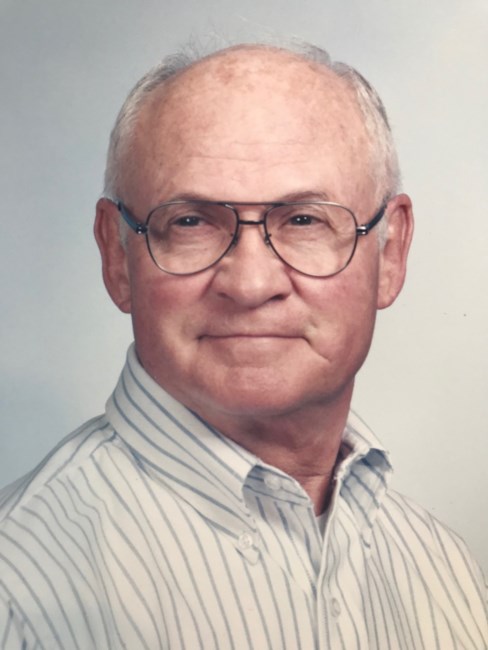
Bill Eikleberry was born on the eve of the Great Depression, to a family of sharecroppers in the path of the Dust Bowl. As a result of those two historical calamities, his young life was scarred by poverty. Those scars never left him, although he seldom mentioned the social stigma of being poor, the physical scrawniness of being malnourished, and the emotional shame of being ridiculed by the town kids for smelling like a barnyard, wearing the wrong clothes, and looking strangely lopsided after his mother cut his curly hair. As his oldest child, the daughter who inherited his hair’s color and curl, let me share with you who my father was, using some of his sayings.
Bill was a farm boy. He loved living on the land and working with the natural world. The first son for Ezra and Jessie Eikleberry (following sisters Velva Mae, Vera, and Ruth, and four years before brother Bob), Bill’s natural strength, stamina, energy, and mechanical talent made him a valued farm hand for tasks such as milking cows, driving tractors, spraying DDT, and repairing pretty much anything. As a teen, his labor was eagerly sought by neighboring farmers. All his life he valued the independent lifestyle and spirit of the farmer, and he dreamt about his childhood until the end of his days. As he put it, “You can take the boy off the farm, but you can’t take the farm out of the boy.”
Bill was a bright student. Teachers encouraged him to attend college, where he excelled despite working full time to pay his way. He started out in the ministry but quickly learned that he was by temperament much more of a scientist. Retaining the ministry’s social values, he then chose the field of medicine, ultimately marrying another physician, Lois Schillie Eikleberry, who was two years ahead of him at the State University of Iowa’s College of Medicine. Together they had four children: Carol, Linda, and twins Bill, Jr., and Bea. Bill Senior eventually settled into the specialty of anesthesia, moving from a residency in San Francisco to Longview, Washington, to Lakewood, Colorado. After many years of feeling that he was “born under a wandering star,” in Colorado he found the place he wanted to stay and made his home.
Bill was a doctor who put his patients first. Medical practice brought grueling hours—seventy, eighty, ninety and more a week. On one occasion he worked three days and two nights straight, a 64-hour period. Too often, he would enter the operating room before sunup and not leave the hospital until after the sun had set, performing a job he described as “hours of boredom punctuated by moments of stark terror.” He longed for a more creative outlet than medicine, about which he joked that, “If he got too creative on the job, someone was likely to die.” In matter of fact, however, nobody died: Bill’s conscientious and responsible nature protected his patients, not one of whom suffered an anesthetic death, when by numbers alone, two or three should have lost their lives.
Bill never saw medical practice as a route to riches. He felt privileged to have practiced during the Golden Era of American Medicine and bemoaned its transformation from “a science and profession into a business and technology.” He kept his fees low, which caused friction with some of his colleagues, who would come to him in protest: “You’re making the rest of us look bad, Ike. Raise your fees!” Instead, he invested in the business of a Longview couple who designed and manufactured attachments for lift trucks. It was a risky investment, but he recognized the creative and mechanical talents of his friend, Ron Brudi. Profits from the Brudi Equipment Company allowed Bill to retire early and begin the creative work he loved.
Bill’s creativity took the form of building projects. In the second half of his life, he designed and built his own passive solar home in Lakewood, Colorado, where he and Lois lived for almost forty years. The massive south facing walls of their house made its energy efficiency legendary. Winter after winter, their heating bills totaled less than ten dollars. He also designed and, along with his brother Bob, built an authentic log cabin on remote mountain property in Grand County, Colorado. They fenced sixty acres and added structures such as hunting blinds, a pump house and woodshed, and even a small observatory. For good measure he enlarged a beaver pond into a permanent fishing hole and maintained a used Snow Cat to climb the mountains when they were hushed in deep snow.
The last third of Bill’s life was a happy retirement, writing a philosophy book entitled Reality and Choice, living with Lois in the home he built in Lakewood, and spending as much time at their mountain cabin as possible, where he could hunt, fish, hike, read, stargaze, and sit by a roaring “coffee fire” while chatting with friends and family. Whether at 9,000 feet on the Western Slope or mile high on Colorado’s Front Range, he adored time with his children and their families: Bob, Carol, and Rob Pagano; Gary, Linda, and Kelly Lohr; John, Bea, Margaret, Katie, Johnny, and Billy Doyle; and great-granddaughter Molly Ailes. Quieter pastimes included reading about cosmology and watching Westerns. Mountain Man Ike, brought down by Covid-19, was somewhat surprised that he lived to 92. But after all, he reflected, he had not been “a state contender in the mile run for nothing.”
If Bill were speaking to us today, he would likely try to comfort us with the words of a man he admired, Albert Einstein: “I am but a passing event in the ongoing process of life on this planet, inconsequential to the whole.
Montrez votre soutien
Envoyez Vos
Condoléances
Partager
L'avis De Décès
Obtenir les mises à jour
Prestations de Service
Partager l'avis de décèsPARTAGER
- RECEVOIR DES RAPPELS
v.1.18.0