
OBITUARY
Thomas E. Coalson
March 2, 1924 – October 23, 2010
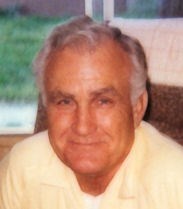
Thomas Ernest Coalson, third child of Edward Blackshear Coalson and Jessie Berry Minick Coalson, was born in Beaumont, CA on March 2, 1924. Ned was a building contractor from Texas and Jessie a housewife from Iowa who had met in the small town of Cloud Chief, OK. They had seven children: Margaret, Edward, Thomas, Stanley, Ann, Lois and Jane.
Tom idolized his father and older brother and would later characterize himself as a born "second louie" or lieutenant, forever searching for a good captain to follow.
Both his parents were adventurous and fond of traveling and learning new things. His mother's mother had been a schoolteacher and imparted her love of reading to virtually all of her descendants. The family farm was in Oklahoma, and Ned and Jessie had a homestead claim in southern Colorado. Ned was often at a construction site when Jessie would pack up kids and Ford and head to see her family in Oklahoma, visit with Ned at a site, spend the required time on the homestead and once, spend the summer panning for gold in northern California. Tom carried this love of travel (and rockhunting) all the rest of his life.
His father taught him many things that would become lifelong pursuits—fishing, hunting, carpentry, electrical work, tinkering with autos, and just plain tinkering. His sister Margaret relates that when he was a toddler, Tom was so enamored of fishing that he filled a bucket with water, tied a string to a stick and went to the backyard with these in the hopes of catching a fish.
When he was 5, the Great Depression descended upon the country. Construction dried up and times were very hard for a family with seven children. Everyone did whatever work he or she could, as Tom would later express it, "to put beans on the table." The hardship of these times made a deep impression on him. Already frugal, his parents taught him to garden and do any kind of work a growing boy could do. From this period stemmed Tom's lifelong devotion to the virtues of hard work and doing without.
Schooling was very important to Tom's family, and he was naturally very curious. He did well, ending up at Beaumont High School, graduating with the class of 1941. While there he discovered football, English literature and music appreaciation, some of the great loves of his life, and he also met Lois Wilson, to whom he was immediately attracted. He had grown up in a family of strong women and even stronger men, and her independent spirit and often devil-may-care attitude, added to her beauty, were more than he could resist. Lois had many admirers, so Tom was elated when she consented to go out with him. They worked together on the school yearbook. Perhaps because she sang and acted in so many plays and musicals, Tom became involved in drama and debate. He also played clarinet in the band. Tom's intelligence and humor, as well as his easygoing charm and natural friendliness soon captivated Lois' imagination, and they dreamed of being married after graduation.
The war interrupted their plans. Tom was 17 when he enlisted and needed his mother's signature to do so. His older brother Ned was testing planes for the Navy. His older sister Margaret was in a concentration camp in the Philippines and Tom was ready to go make the Japanese let her go. The Navy counseled him to finish his schooling first. He attended Pomona Junior College as a freshman and then went to Texas for basic training. He recounted tales in later years of the sailors passing out from the heat in Corpus Christi, but he never complained.
It was a time of chaos and tragedy in his family. In April, 1942, his father was injured when a piece of construction equipment overturned and crushed his spine. His sister Ann contracted rheumatic fever and was bedridden for a year. His father eventually died of his injuries in January, 1943, the same month that Tom entered active duty as a pilot stationed in the Pacific. His brother Ned crashed in a plane he was testing off Hawaii in April, 1943. The whole family was devastated. Needing some form of income, his mother Jessie studied for a real estate broker's license and began this new career at the age of 45, with four young children at home.
On leave in 1944, Tom married Lois in Daytona Beach, FL on September 13. He was stationed in Hawaii and was the youngest member of the VF8 squadron led by Hank Hagglund. Later in life, he would recall the thrill and the terror of making a night landing on an aircraft carrier on a pitching sea in total darkness. He would search and search the dark sea for the carrier, come down for a landing and drop a metal hook attached to a rope out the window and drag the hook over the deck, hoping it would catch on one of the fittings designed for that purpose. If not, he would rise and try again. Sometimes it happened that a plane would slide off the deck into the sea. The pilot in that event would receive a severe dressing down from his commanding officer. Sixty-eight years later, Tom still recalled the adrenaline rush of relief and joy when his tailhook was caught and the plane safely landed.
In August 1945, two days after Hiroshima, Tom received the news by telegraph that his first child, Susanne, had been born in California. Honorably discharged in December, he came home to his family. His sister Margaret had survived the brutal conditions of the prison camp from which she and her husband and two children had been liberated and they settled in McLean, VA. Tom and his family lived with them for part of the time while he attended George Washington University on the G.I. Bill. His second child, Edward, was born in Washington, D.C., in 1947. Tom graduated from GWU with a bachelor's in English literature in 1949. He always dreamed of being a writer like those he admired, including Ernest Hemingway and Wallace Stegner.
Tom's first job after graduation was as a technical writer. Margaret's husband had found them both jobs at a company in Florida called EECO. In May, 1951, Tom's second son, Thomas, Jr., was born. The family was living in a small house on the beach near Melbourne, and many were the nights of darkness lit only by candles or Army surplus generators as the hurricanes swept through. When EECO moved to California in 1951, both Tom's and Margaret's families were glad to move with it. Tom made many lifelong friends there, including Rae and Rollie Sandeen, Lloyd and Eleanor Scarsdale and their daughter, Valerie. His brother Stanley worked there as well during the early 1950's. He said once that it was strange to him how he ended up selling the work of engineers but being unable to explain to customers how the things worked. They were a merry band, and Tom's love of practical jokes revealed itself in many (to Tom) amusing ways.
The gypsy life did not end there. The family lived briefly in Oxnard, Port Hueneme (the sound of foghorns always depressed Tom), Arcadia, finally landing in West Covina in 1952. A loan from Jessie made possible the purchase of their first home (at the now incredible price of about $8,000!) and Tom and Lois threw themselves into the creation of a home for their three children, building a fence around their large lot (and 600-square-foot home), putting in a swimming pool which the whole neighborhood enjoyed.
Tom, when not at work, was most often to be found in the garage, tinkering and fixing things, his children watching and trying to help. He made many projects from plans in the newspaper, taking up both woodworking and ceramics at the same time.
Once this home was established, Tom began taking trips with the family of the sort he remembered from his boyhood—piling into the 1953 Ford 2-door sedan and driving to the ocean to fish or the mountains to pick apples or cherries or throw snowballs or camp out, or the desert to go rockhunting. In 1953, he left EECO to start a boat and tackle store that he called the Reel 'n' Keel. A severe recession that year sank this enterprise which he once called the most enjoyable job he'd ever had. After that, he began a series of jobs for friends like Bernie Blume and Pinkie Falk managing their production staff and/or sales force.
On July 21, 1958, Tom and Lois were delighted by the birth of twin sons, Alexander and Timothy, a total of 8 pounds' worth of baby. Though they were so small, they had a big place in the hearts of the family.
By summer of 1960, it became evident that the tiny West Covina home would no longer contain a family of seven, so they moved to a larger house in Rolling Hills Estates. As the children were growing, Tom decided that they should be able to "hold their own" in any argument, his early debate training kicking in. He and Lois purchased an encyclopedia, and he began bringing home topics from the news. At dinner, each child would take a position and run to the encyclopedia to support it with facts. Tom was an accomplished storyteller, and he loved a good joke. He often brought home stories of encounters at work as well as news headlines. Dinnertimes were often uproarious.
No child, however, was ever allowed to leave the table without eating everything on his or her plate. The Great Depression had left its mark. Tom, just like his parents, was a big believer in "spare the rod and spoil the child," so sometimes punishment was meted out after supper, and those were times when mealtime would last as long as it could be stretched out. No one of us was ever spoiled for want of a good spanking, or thumping on the head with one of his massive fingers.
With the family growing, Tom became more adventurous than ever in planning vacations—camping and hiking in the high Sierras, fishing trips to Ensenada, Baja, the Colorado River. In these years, Tom was working for a company named JUTCO owned by his friend, Jim Thompson. When Jim died suddenly, Dad rescued the company from collapse and sold it for a profit. In the next few years, Tom sent his daughter and first son to college, saw them married and starting families of their own. Many are the photos of him holding and smiling beatifically at grandbabies.
He and his brother Stanley bought a 75-acre piece of desert on Highway 60 outside Beaumont which they named Dos Hermanos Ranch. Initially, Stan grew Christmas trees there, and Tom and Lois gardened. By 1967, the family at home was reduced to six and they moved to Westminster. When Tom, Jr. married, reducing the family at home to four, vacations became more exotic still, venturing as far as Butchart Gardens in Canada, and England and Spain.
In 1975, Lois suffered a brain aneurysm, and two days before Thanksgiving, she died. She was 51. They had been companions through many, many vicissitudes over 31 years, and now she was gone.
He found solace in his friendship with Eleanor Scarsdale, nee Brumfield, from EECO days, who was now a single mom raising her daughter, Valerie. They had much in common and a similar sense of humor. Eleanor and Lois had been friends, and they even resembled each other. Tom and El married at Coto de Caza Country Club in June, 1976. Their first home together was in Fullerton, where Valerie and the twins attended high school. They were about the same age and got along together quite well. In 1978, when the three children had graduated and left home, they moved to the ranch on Highway 60. Stan and his wife Evelyn had by that time started selling Christmas trees grown on the ranch, and Tom and El's idea was to raise lilacs in spring and catfish and trout to sell the rest of the year. Valerie and her husband Kim Gibbons lived there as their children were born, and the kids all called our dad, "Tommy Tractor," because he would give them rides on the lawnmower, which they adored. Eleanor was very fond of animals, and they adopted a series of pets, mostly dogs, but one cat, Snafu. By 1988, Tom found the ranch work too taxing physically, and they retired to Highland Springs Village in Cherry Valley. They made many friends there and entertained old ones there, too, playing golf weekly and still taking the occasional fishing trip. Initially, he worked at Century 21 as a real estate broker in Beaumont. El was painting ceramics, and Tom decided to take up oil painting. He became quite an accomplished painter, producing dozens of paintings for friends and family.
Eleanor's health steadily declined until 2006, when Tom moved in with his son Thomas, Jr. and his wife Janis in Camarillo. Needing 24-hour care, El went to Alma Via, where Tom was a daily visitor, taking care of the garden there when El rested, sitting with her when she was awake. When she died in 2007, after 31 years of marriage, Tom told his daughter Susanne how grateful he was to have been married to two such great women for 31 years. After her death, Tom moved to Carmel Village, an assisted living facility in Fountain Valley, to be nearer to sons Tim and Alex. His dog Silver moved with him, but had arthritis so badly she did not live long after that. His deep grief for the loss of so many beloved companions was no less painful for being private. A month before El's death, he had a heart valve replacement, which did not turn out as well as he hoped, and he slowed down considerably. Eventually, he had a pacemaker put in which corrected the irregular heartbeat.
On September 15, 2010, he had a stroke, and on October 23, he passed from this life.
He leaves behind three sisters, Margaret, Ann, and Lois, six children, Susanne, Edward, Thomas, Jr., Timothy and Alexander, and Valerie, 16 grandchildren, Nat, Elizabeth, Margie, Sam, Josh, Ben, Kelly, Elspeth, Matthew, Jennifer Coalson, Christopher, Jennifer Gibbons, Shane, Justin, Trent and Seth, and 6 great-grandchildren, Shoshanna, Amber, Elijah, Aria, Jack and Kayla.
His life was one of great joy in his family and friends, adventure and also heartache. A good friend and father, we miss his presence among us, but find comfort that he is now at peace. Memorial service Saturday, November 13 at 2 pm, Weaver Mortuary Chapel, 1177 Beaumont Avenue, Beaumont, CA 92223.
Show your support
Add a Memory
Share Obituary
Get Reminders
Services
SHARE OBITUARYSHARE
- GET REMINDERS
v.1.18.0