
OBITUARY
Dr. Kathleen Ann Galbraith
March 15, 1949 – March 14, 2017
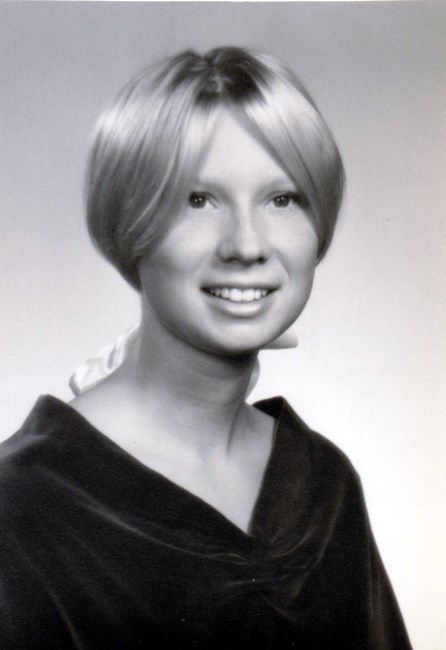
Dr. Kathleen Ann Galbraith, a long-time resident of Harford County, passed away peacefully at her home in Joppa, MD on Tuesday, March 14 at the age of 67.
Born Kathleen Ann Hebeler in Buffalo, New York, Dr. Galbraith was raised in Seaford, Delaware. Daughter of Kathleen Ann Hebeler and Harold Hebeler, she is survived by her devoted husband of 41 years, James Francis Galbraith, Jr., and her four children, Kathleen Sarah Emami, Allison Claire Galbraith, James Francis Galbraith III, and Caroline Marie Galbraith. She also leaves behind four grandchildren, Alex Emami, Dominic Emami, Riley Atkins, and Benjamin Atkins-Galbraith, and siblings, Patricia M. Larrimore, Stephen P. Hebeler, and Bruce Hebeler.
A graduate of Seaford Senior High School, Dr. Galbraith earned a Bachelor of Science in Nursing from Villanova University, a Masters of Science in Nursing from the University of Delaware, and a Doctor of Science in Public Health from the Johns Hopkins University School of Public Health and Hygiene. Both her graduate and doctoral studies were focused in Maternal and Child Health.
Dr. Galbraith dedicated her career to addressing critical healthcare issues in the state of Maryland. After teaching nursing at Harford Community College and University of Maryland, Dr. Galbraith went to work for the State of Maryland, where she served as the Director of Research Offices at the Maryland State Department of Health and Mental Hygiene, the Department of Human Resources, and in the Governor's Office of Children, Youth and Families. She also served on the Mayor's Task Force on Assessing the Baltimore City Health Department and on the Governor's Task Force on the Nursing Shortage. In her spare time, she offered private lessons on how to use personal computers. She would later introduce use of technology into her teaching methodology, at a time when this was not common practice. Recalling the difficulty of raising children while working full-time and pursuing her doctorate degree, Dr. Galbraith pursued many initiatives to improve the lives of working parents, to include lobbying for flex or part-time positions for new parents. This understanding of balancing demands of daily life with desire to progress professionally is a theme which would be repeated throughout her career; she worked determinedly to ease this struggle for others, helping hundreds pursue higher education in healthcare.
After leaving the State of Maryland, Dr. Galbraith took a position with University of Baltimore (UB), where she was instrumental in establishing their Health Systems Management (HSMG) Program. Despite limited resources, the program, which started as an accelerated Bachelor of Science in Health Administration expanded a few years later to include a graduate program, rapidly grew from 18 to more than 100 students, becoming one of the larger health administration programs available at the time. The program was designed for maximum flexibility; a unique weekend program tailored towards working professionals with experience in the health industry, thus bringing extensive practical experience to the classroom. In 2005, Dr. Galbraith was nominated for the President’s Faculty Award by Dr. Regina Bento, a distinguished professor at University of Baltimore’s Merrick School of Business:
“In her 6 years at UB, Dr. Galbraith has done so much for the university and the community that I consider her a true ‘UB Hero.’ She was the creative and tireless leader behind the creation of our Health System Program… The program has strong retention and graduation records, and has made a profound impact in the lives of its students and in health care organizations throughout the region. Most of the students in the program work full-time and already have 10-15 years of experience in health care, but lack the formal management education that the program provides. The program allows those students to realize their dreams of lifelong learning, promotion and professional advancement. As a matter of fact, the rewards from the program start even before graduation, with 25% of the students reporting a raise or promotion within six months of starting the program.
Anyone who has ever tried to start a new university program with a very low budget, during times of declining enrollments, can imagine the challenges faced by Dr. Galbraith. She met those challenges with creativity and courage and under her leadership the program experienced rapid growth, going from 18 to 125 students in its first two years. Most importantly, Dr. Galbraith helped create a sense of community and inspiration among the students, faculty and administrators in the program that should serve as a model to all of us at UB. The factors that contributed to making the program such a significant success reflect Dr. Galbraith's obsession with "putting the customer first" and concern about student satisfaction and learning:
- Academics: Emphasis on quality; a strong curriculum, relevant to the working student; motivated and expert faculty; creative use of the student's wealth of practical experience and industry contacts
- Community building: cohort format, student "buddy" program (where senior students were paired up with new students), virtual communities for interaction and support within and outside of classes, Student Affairs activities specifically created for HSMG students, HSMG Student Association
- Accessibility: Saturday scheduling, web-enhanced classes, scholarships
- Non-traditional marketing: inexpensive yet very effective efforts such as: e-mail and brochures sent to opinion leaders at major health care facilities in the region; strategies to personalize mass mailings; events and student-organized public symposia that brought high profile speakers to campus and generated free publicity; Dr. Galbraith's personal handling of admissions inquiries and follow-ups; and initiatives such as events honoring and celebrating the success of outstanding students, and then sending reports of those events to the students' hometown newspapers and workplaces.”
In 2006, when asked what she believed the most pressing ethical issues in health care in the US were, Dr. Galbraith listed: “1 ) Racial Disparities in Health care 2) Unethical aspects of Access, Cost and Quality 3) Ethical aspects of manpower shortage issues with a special emphasis on the need for a more diverse work force, 4) Ethics in research 5) Medical Errors (Our errors are the equivalent of crashing a fully loaded Boeing 747 every single day! and have been for a long time) 6) lingering problems with managed care.” Dr. Galbraith was actively involved in Nursing Associations and was aware of the nursing shortages facing the profession. She felt it was essential for Historically Black Colleges and Universities (HBCUs) to play a role in helping to meet the need for a more diverse workforce. She shared her ideas with Morgan State University (MSU) and was hired on as the Director of Nursing shortly after, tasked to establish a new nursing program at the university.
In 2008, the Maryland Higher Education Commission (MHEC), in affiliation with the Maryland Health Services Cost Review Commission, announced Dr. Galbraith as one of the 32 winners of the 2008 New Nursing Faculty Fellowships. The New Nursing Faculty Fellowships were funded under the Nurse Support Program II. The goal of the NSP II is to increase the number of qualified bedside nurses in Maryland hospitals. These fellowships allow the nursing schools and departments to expand their capacity for nursing students by hiring highly qualified nurse educators. According to MHEC, “These grants were intended to help address Maryland’s nursing shortage, one of the O’Malley-Brown administration’s top priorities. The recipients of these grants are to be commended for providing their considerable instruction skills to a valuable and necessary service.”
In 2009, led by Dr. Galbraith, MSU received a grant from the MHEC to institute three new nursing programs in direct response to the nursing shortage and the critical need for increased diversity in the nursing workforce and in academic settings. The BSN, MSN, and PHD programs established as a direct result of Dr. Galbraith’s efforts have increased the number of seats available at a public university at both undergraduate and graduate levels and aimed in particular, to help increase the numbers of minority nurse faculty with MSN degrees. The funding facilitated initial staffing costs associated with the new program implementation. The BSN and MSN programs started by Dr. Galbraith were designed to meet the needs of working students by adapting to their schedules and providing maximum flexibility. Dr. Galbraith’s dream of establishing a PhD program was realized in 2016.
Much like she had with her students at UB, Dr. Galbraith went out of her way to assist students with admission and to ensure their continued success in the program. Her motto, to both her children and her students, was “the best degree is the completed degree.” Dr. Galbraith saw the challenges of traditional education as challenges that could be overcome, rather than impossible roadblocks, and she imparted this wisdom on her students – many of her students believed they had “little hope” before finding Dr. Galbraith. She offered personalized guidance and conditional acceptance to promising applicants struggling with minimum GPA requirements, intentionally designed programs to be flexible to accommodate students’ personal and professional obligations, encouraged students who had been out of school for many years to further their education, and worked tirelessly to help students obtain financial aid. The weekend cohort model and partially online formats initially adapted by the HSMG program in the late 1990s are now commonplace in Maryland’s higher education programs.
Dr. Galbraith was a fierce advocate for students, and saw their successes as her own. According to a colleague, “She was a very determined person,” and “I know she dispelled doubts that something couldn’t be accomplished.” Another said, “Kathleen was a local pioneer in Healthcare management education. Her loss leaves a void.” Dr. Galbraith’s passion and enthusiasm for teaching endeared her to her students. She knew everyone’s name, even in the big classes. She got to know each student personally, and took the time to understand what their goals were and struggles were. A former graduate assistant said, “[she had] such a big and lovely heart.” An assistant from Morgan State wrote, “She was amazing in every sense of the word. I can’t think of anything to say because words can’t express. I will deeply miss her, especially her kindness, persistence, and sense of humor.” One of her students, echoing many, wrote “If it was not for Dr. G’s support, mentoring and tutelage, I would not be where I am today. She truly embraces the concept that the best degree is a well-earned degree.” A MSU Doctoral Nursing Student wrote, “The MSU Nursing Program owes its existence to her. Her dream of a PhD Nursing Program came true.” If a student was having any difficulty, Dr. Galbraith was there to guide them to completion. “Dr. G. was the reason was able to complete my nursing career at Morgan, both Bachelors and Masters Degree. She has a heart of gold.” She truly touched the lives and careers of many and made a lasting impact on the Maryland nursing community.
To honor Dr. Galbraith’s heritage of helping students overcome obstacles to pursuing higher education, the family has established a memorial fund in her name. The memorial fund will be used to maintain the existing Dr. Kathleen Galbraith Scholarship fund through Morgan State University, and also to establish a state-wide scholarship for non-traditional students wishing to pursue a higher degree in health management or nursing from an accredited public university, particularly those who are interested in sharing their knowledge with future students through the gift of teaching.
The viewing will be held at Schimunek Funeral Home at 610 W. MacPhail Road, Bel Air, MD on Sunday, March 19th from 3:00pm to 5:00pm and 7:00pm to 9:00pm. Services will be held at St. Margaret Church, 141 N. Hickory Avenue, Bel Air, MD on Monday, March 20th at 9:30 am.
In lieu of flowers, contributions can be made to the Dr. Kathleen Galbraith Health Education Fund at https://www.YouCaring.com/DrKathleenGalbraithHealthEducationFund. Alternatively, a donation in memory of Dr. Kathleen Galbraith may be made directly to the Morgan State University Foundation to benefit The Kathleen Galbraith Scholarship Fund. Checks should be made payable to the Morgan State University Foundation and sent to Morgan State University, 1700 E. Cold Spring Lane, Baltimore, MD 21251.
Show your support
Add a Memory
Share Obituary
Get Reminders
Services
SHARE OBITUARYSHARE
- GET REMINDERS
v.1.18.0