
OBITUARY
Paul Snowden Russell Jr.
January 22, 1925 – August 22, 2026
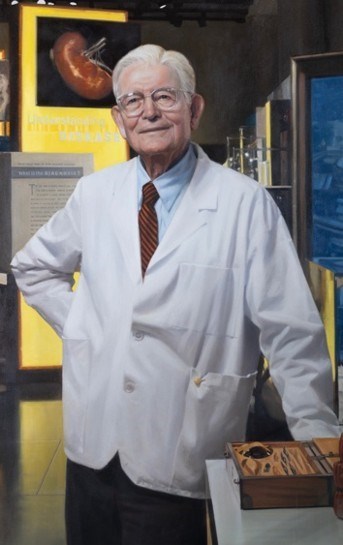
Dr. Paul S. Russell Jr., the John Homans Distinguished Professor of Surgery at Harvard Medical School, died on August 22, 2026, at the age of 101 at home in Westwood, MA. During a renowned career that spanned more than three-quarters of a century at Harvard and Massachusetts General Hospital, Dr. Russell was widely recognized as a “surgeon’s surgeon,” immunologist and educator. In a statement, George Q. Daley, the dean of Harvard Medical School, called Dr. Russell “a legendary figure at Harvard Medical School.”
He first came to prominence as a leader in the generation of physician-scientists and innovators who developed organ transplantation from an audacious, dangerous experiment into a consistently effective mode of treatment, thereby founding a lifesaving medical discipline. His specialty emerged from two crucial early experiences: as a student, and then young physician, he sought out positions in the laboratories of Charles Huggins at the University of Chicago and of Peter Medawar at University College London, both of whom later became Nobel laureates. Those laboratories were central to two great medical revolutions of the 20th century. Under Huggins, surgeon scientists were discovering the effects of hormones on cancer, while immunologists, led by Medawar, were studying why the human body so vigorously rejected transplants. Dr. Russell, who joined Harvard and MGH in 1947, forged a career that brought the discipline of a surgical scientist to bear on the puzzle of transplantation, along with a noted focus on patient care. In 1962, his early promotion to chief of surgery drew notice from the Boston Globe which reported, “One of Boston’s most prized medical posts — surgeon-in-chief at Massachusetts General Hospital and John Homans Professor of Surgery at Harvard Medical School — is going to a 37-year old doctor who has managed to combine a highly technical research career with a warm, human approach to his patients.”
He went on to author more than 280 original papers and serve on the editorial board of many scientific journals. In scientific terms, Dr. Russell's most notable personal contributions included developing surgical techniques for heart and kidney transplantation in mice, the first demonstration of gene therapy to treat diabetes, and the first use of a monoclonal antibody in humans using OKT3 to prevent or treat acute transplant rejection.
Yet Dr. Russell’s legacy extended beyond scientific achievements. To generations of surgeons and scientists, he became a mentor, sounding board, and role model. In the 1980s, he was appointed chairman of the medical school’s Faculty Conduct Committee which is dedicated to safeguarding integrity in science, a position that reflected, in the words of the official announcement, “the universal respect he was accorded.” He held that position for several decades. A 1997 article published by MGH sought to convey Dr. Russell's standing in the community: “Hailed as a ‘father figure’ of transplantation, Russell founded the MGH Transplantation Unit in 1963, the same year he performed the hospital’s first kidney transplant. Since then, Russell has led or been a vital part of a rich chain of MGH transplant accomplishments. Such milestones include New England’s first successful small bowel, pancreas liver, liver-heart, and living-related lung transplants.” In a measure of his extraordinary impact, the hospital honored him in 2018 by creating its first-ever 70-year service pin.
Over the course of five decades, the transplantation program that Dr. Russell created became a center of innovation in transplant immunology and surgery reflecting his belief that successful transplantation required multidisciplinary teamwork and collaborative scientific rigor as much as surgical virtuosity. He was a founding member and fifth President of the Transplantation Society which awarded him its highest honor, the Medawar Prize, in 2004. The scientists he trained, and the team he assembled, translated mixed hematopoietic chimerism as a means of inducing immune tolerance from experiments in mice through primate studies and eventually into patients and contributed many of the mechanistic observations critical to successful xenotransplantation. Success also depended on understanding the underlying science of organ rejection and on building an infrastructure capable of bringing together transplant candidates, potential donors, hospitals, and physicians around shared goals to solve unmet clinical needs. Most recently, in 2024, MGH performed the first transplant of a genetically-engineered pig kidney xenograft into a human, based largely on insights gained in preclinical models over twenty-five years by the team that Dr. Russell assembled.
In addition to teaching and conducting research, Dr. Russell proved to be a keen business person. Recruited to the board of the pharmaceutical company Warner-Lambert (later acquired by Pfizer), he was the only doctor among the directors, but his colleagues later credited him with crucial business insight. It was Dr. Russell who persuaded them to commercialize Atorvastatin, now widely known by its commercial name Lipitor. (In 2011, the Lancet identified Lipitor as the bestselling drug of all time). In 1991, in recognition of Dr. Russell’s contributions, Warner-Lambert endowed a Harvard professorship in his honor.
Well into his nineties, Dr. Russell presided over the weekly “Russell Rounds” at MGH, meetings he created in which transplantation trainees presented research to a multidisciplinary audience, and difficult or unusual cases were subjected to vigorous discussion. These sessions became an institution in their own right. Dr. Russell listened closely, asked penetrating questions and expected intellectual rigor, but his feedback was constructive, focused on highlighting key teaching points, and identifying questions that merited further study. His intellect and curiosity about other people and the world around him were accompanied by genuine warmth, courtesy, and humility.
Dr. Russell became a devoted custodian of medical history. He was a longtime chair of the history committee at MGH, one of the country’s oldest hospitals with an illustrious role in the development of modern medicine. And though he worked at the frontier of innovation, he insisted that each new generation understand the path that came before. That conviction found lasting expression in 2012, when MGH opened the Paul S. Russell, MD Museum of Medical History and Innovation. Named in his honor, it collects and exhibits artefacts and photographs from more than two centuries’ worth of medical progress, offering interactive displays to enliven the history of discovery.
Outside of his work, Dr. Russell served on or led the boards of such diverse institutions as the Boston Fulbright Committee, the Jackson Laboratory, and several academic institutions including the University of Chicago’s Pritzker School of Medicine. From 1988 until 2021, he was Chair, Vice-Chair, or member of the Joint Committee for the Countway Library, where the Paul and Allene Russell Reading Room now memorializes his contributions.
Paul S. Russell Jr. was born in Chicago on January 22, 1925 to Carroll (Mason) who was an early patron of modern dance and of the Chicago art scene and Paul Snowden Russell, the president of the Harris Trust and Savings Bank and a trustee of the University of Chicago. Dr. Russell attended the Groton School and then the University of Chicago, receiving a Bachelor of Arts in Philosophy in 1944, a Bachelor of Science in 1945, and a doctoral degree in medicine in 1947 at age 22. Dr. Russell received a Professional Achievement Award from the University of Chicago in 1970 and a Distinguished Alumni Award from Groton in 1988.
In 1951, while stationed in Texas during his two-year service in the U.S. Air Force, he met Allene Lummis, a teacher from a well-established family in Houston. They married the following year and remained devoted to each other until her death in 2010. He is survived by four children: Katherine McCurdy (Stephen), Paul S. Russell III (Sara), Allene Pierson (Richard) and Laura Malkin (Scott). He had 12 grandchildren and 22 great grandchildren.
A Memorial Service for Dr. Paul S. Russell will be held in the Harvard Memorial Church in Cambridge, MA on Friday, October 23, 2026 at 2:00 pm. All are welcome. In lieu of flowers, the family suggests donations to The Paul S. Russell, MD Museum of Medical History and Innovation at MGH using this link: https://giving.massgeneral.org/donate?is_designation=1&designation=Russell%20Museum
Show your support
Add a Memory
Share Obituary
Get Reminders
Services
SHARE OBITUARYSHARE
- GET REMINDERS
v.1.18.1